Sarnath
Where the Buddha gave his first sermon, marked by a great brick stupa and the lion capital that became India's emblem.
Updated 21 October 2026
AI illustration
UNESCO World Heritage
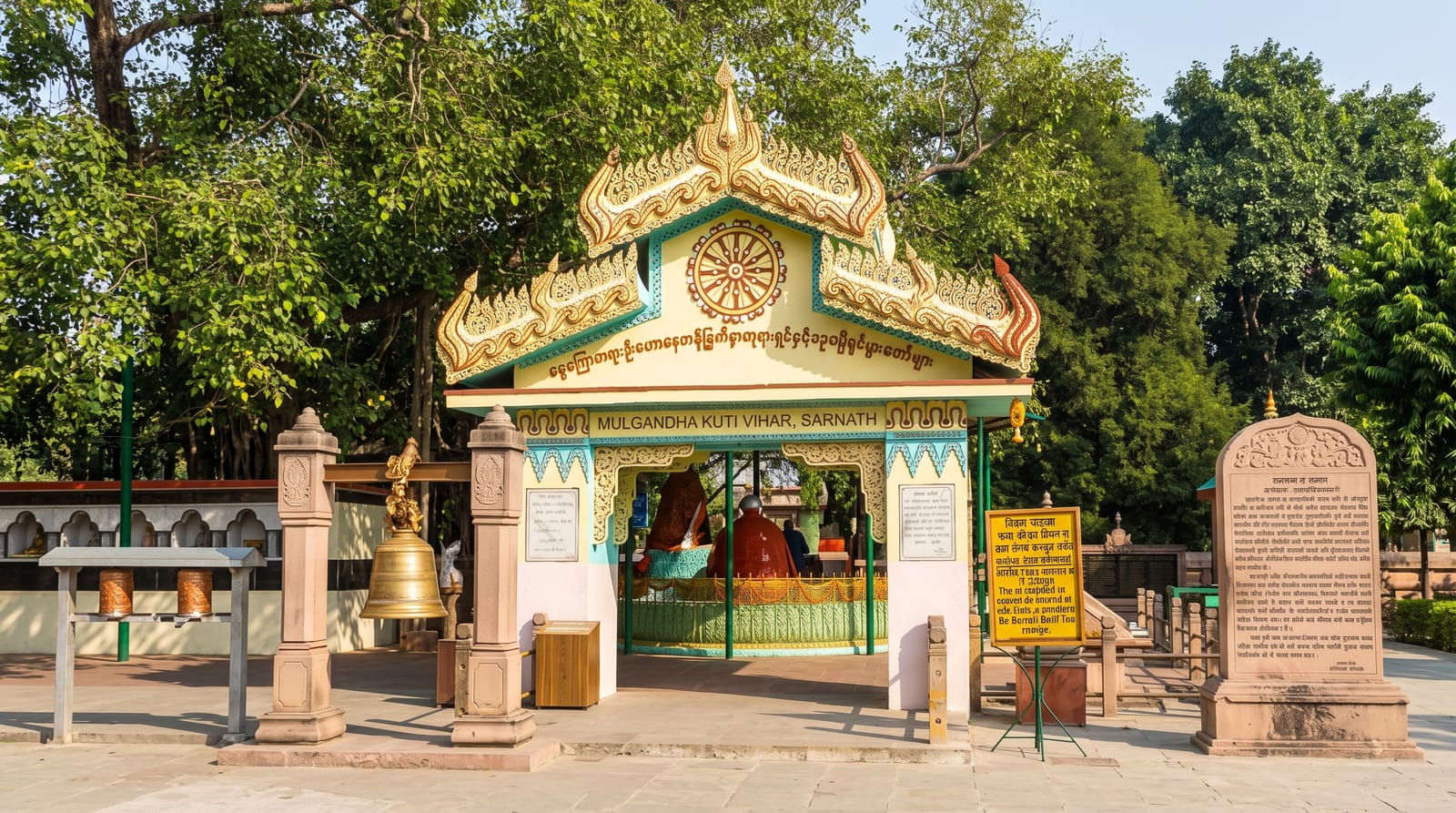
After his enlightenment the Buddha came to the deer park at Sarnath and taught the first sermon there, setting the wheel of dharma in motion, which makes this one of the four principal Buddhist pilgrimage sites. The Dhamek Stupa, a cylinder of brick and stone some forty-three metres high with carved geometric bands, marks the traditional spot. Around it lie monastery foundations and the base of an Ashokan pillar. The lion capital that stood on that pillar is in the site museum, and it was adopted in 1950 as the state emblem of India, its wheel appearing on the national flag. Modern temples from several Buddhist countries stand nearby.
History
Here the Buddha gave his first teaching to his five original disciples, and around 250 BC the emperor Ashoka raised a column topped by the Lion Capital to mark the event. Buddhism flourished at Sarnath with the patronage of kings and Varanasi merchants; the Chinese monk Faxian, travelling between 400 and 411, saw four large towers and two monasteries, and Xuanzang, around 640, found hundreds of shrines, a 61-metre monastery hall and about 1,500 monks. The Pala kings supported its monasteries, and in the mid 12th century Queen Kumaradevi recorded building monks' quarters, among the last works before the site was wrecked in 1194; in 2026 Sarnath was inscribed as a World Heritage Site (Wikipedia, Sarnath).
What you'll find
- The Dhamek Stupa - a forty-three metre brick cylinder with carved bands.
- The lion capital - the Ashokan sculpture that became India's state emblem.
- The monastery ruins - excavated foundations across the archaeological park.
- The international temples - Thai, Japanese, Tibetan and other modern monasteries.
When to go
October to March; the site is open ground with little shade and Varanasi summers are severe. Buddha Purnima in spring brings pilgrims. Mornings are quietest.
Before you go
Photography is prohibited in the museum. Ruins are foundations rather than standing buildings. The site is a short trip from Varanasi and often rushed into a half day.
Nearby
Varanasi lies southwest; the Ganges ghats are there.
Key facts
Source: Wikidata, item Q324394, read on 18 October 2026.
What to pack for Sarnath
Chosen from what this place is for. Tap a kit for the full checklist.
- Comfortable walking shoes - Sightseeing means kilometres of pavement and cobbles daily. Find on Amazon
- Modest clothing - Shoulders and knees covered - the single most common requirement. Find on Amazon
- A slim anti-theft daypack - Zips that close properly; keep it in front in crowds and on transit. Find on Amazon
- A scarf or shawl - To cover the head or shoulders on entry; women especially at mosques. Find on Amazon
Some links on this page are Amazon affiliate links - if you buy through them we may earn a small commission at no extra cost to you.
All packing kitsPlan your trip
Where to start if Sarnath is going on the list.
Booking links on this page are affiliate links - if you book through them we may earn a small commission at no extra cost to you. It never changes what we write about a place.
Opening times, ticket prices and seasonal closures change - check the official source before you go: official site.