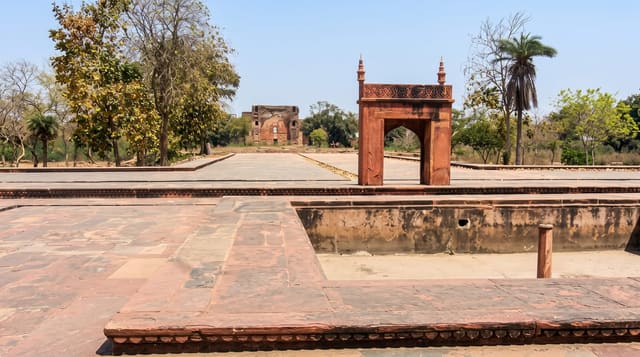
Itimad-ud-Daulah's Tomb
The first Mughal building faced entirely in marble, and the first to use inlaid stone on this scale.
Updated 4 September 2026
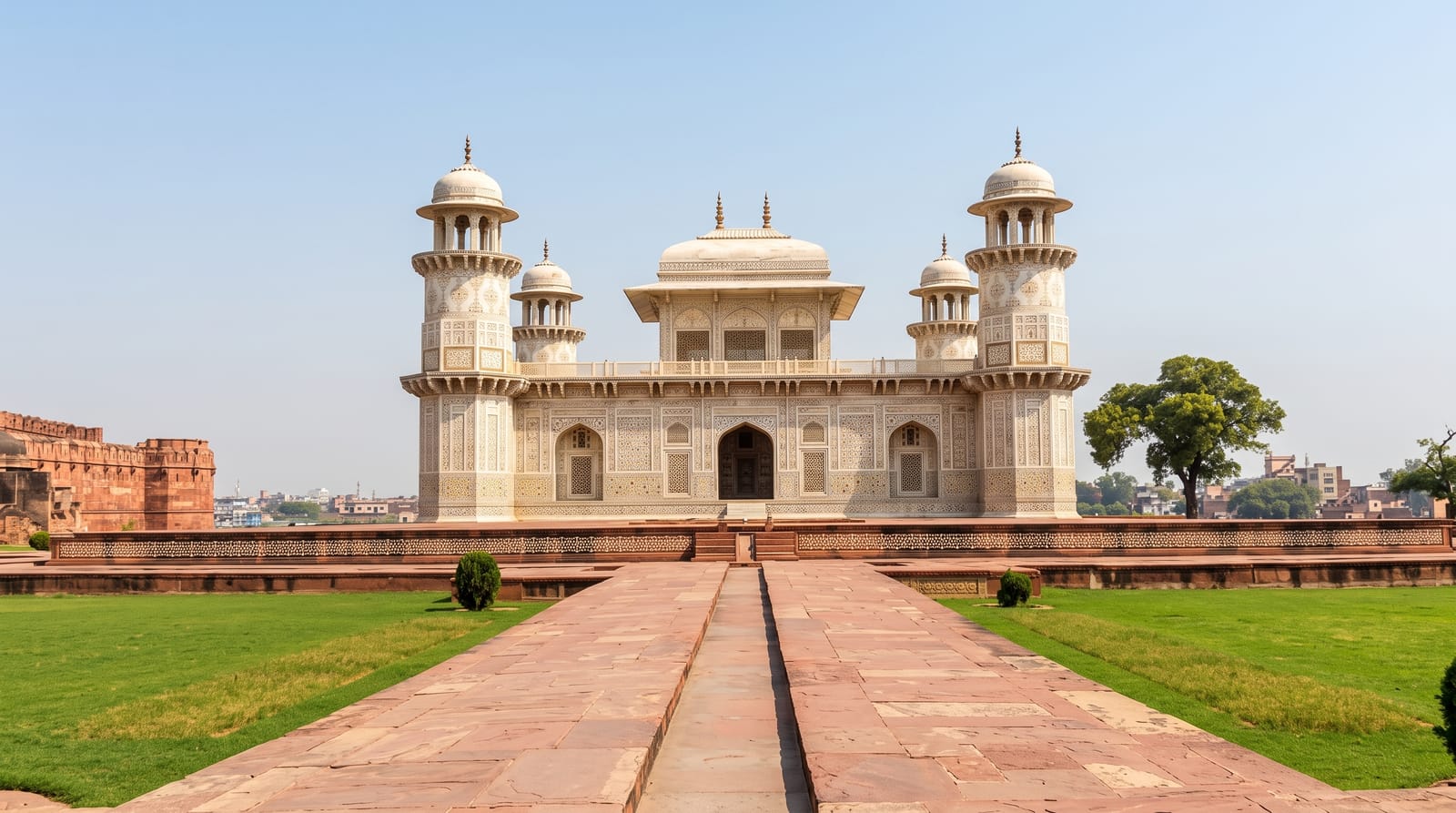
AI illustration
Built between 1622 and 1628 by Nur Jahan for her father Mirza Ghiyas Beg, who held the title Itimad-ud-Daulah, this tomb marks the point where Mughal architecture shifted from red sandstone to white marble, and where pietra dura, coloured stone inlaid into marble, was first used across whole surfaces. The result is a small square building with corner towers, its walls covered in inlaid cypresses, wine flasks, vases and geometric patterns, and its interior painted as well as inlaid. It is often called the Baby Taj because it anticipates so much of what the Taj Mahal did on a larger scale a generation later.
What's there
- The inlaid surfaces - pietra dura patterns of cypress, flask and vase.
- The marble facing - the first Mughal building clad entirely in white marble.
- The painted interior - painted and inlaid decoration in the chambers.
- The riverside garden - the charbagh setting on the Yamuna bank.
When to go
October to March; Agra summers are severe. Morning light suits the inlay work, and the site is far quieter than the Taj Mahal at any hour.
Before you go
The building is small and a visit is short. The Yamuna beside it is heavily polluted and often low. Entry is charged separately from other Agra monuments.
Nearby
Mehtab Bagh lies south on the same bank; the Taj Mahal is across the river.
What to pack for Itimad-ud-Daulah's Tomb
Chosen from what this place is for. Tap a kit for the full checklist.
- Comfortable walking shoes - Sightseeing means kilometres of pavement and cobbles daily. Find on Amazon
- A slim anti-theft daypack - Zips that close properly; keep it in front in crowds and on transit. Find on Amazon
- A refillable water bottle - Many cities have public fountains; save money and plastic. Find on Amazon
- A light layer + compact umbrella - For museum air-con and a sudden shower. Find on Amazon
Some links on this page are Amazon affiliate links - if you buy through them we may earn a small commission at no extra cost to you.
All packing kitsPlan your trip
Where to start if Itimad-ud-Daulah's Tomb is going on the list.
Booking links on this page are affiliate links - if you book through them we may earn a small commission at no extra cost to you. It never changes what we write about a place.
Opening times, ticket prices and seasonal closures change - check the official source before you go: official site.