Agra Fort
The mighty red-sandstone fort of the Mughals - a walled city of palaces, mosques and courts where an emperor was imprisoned gazing at the Taj Mahal he built, a UNESCO site.
Updated 18 October 2026
AI illustration
UNESCO World Heritage
Real photos (1)
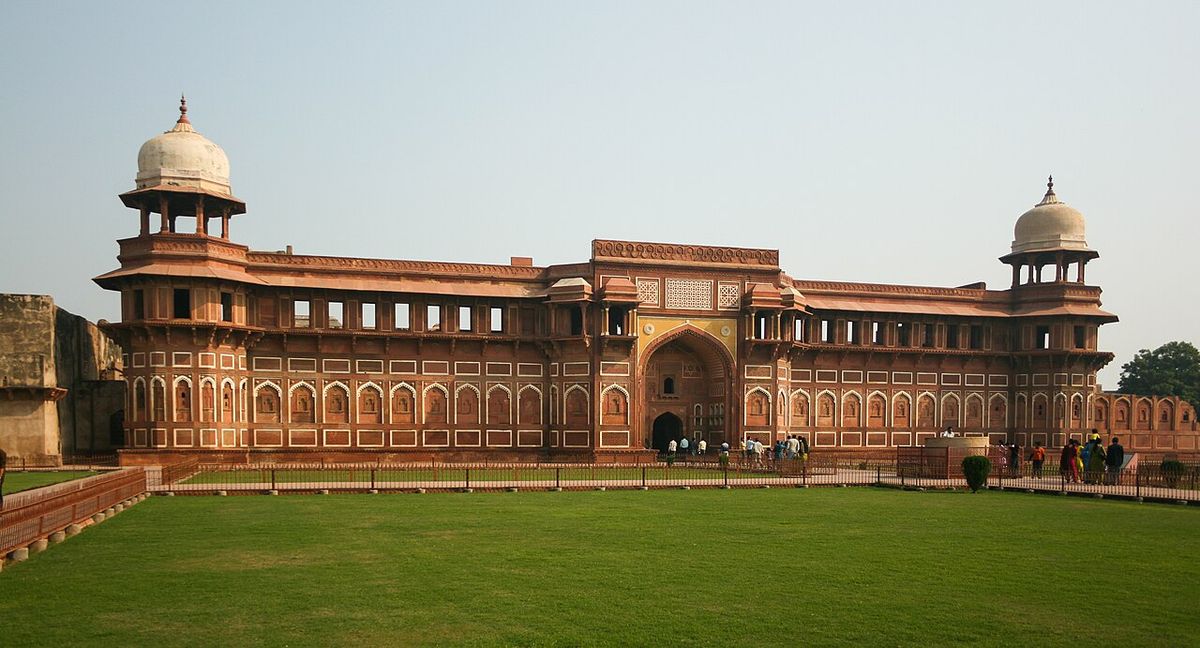
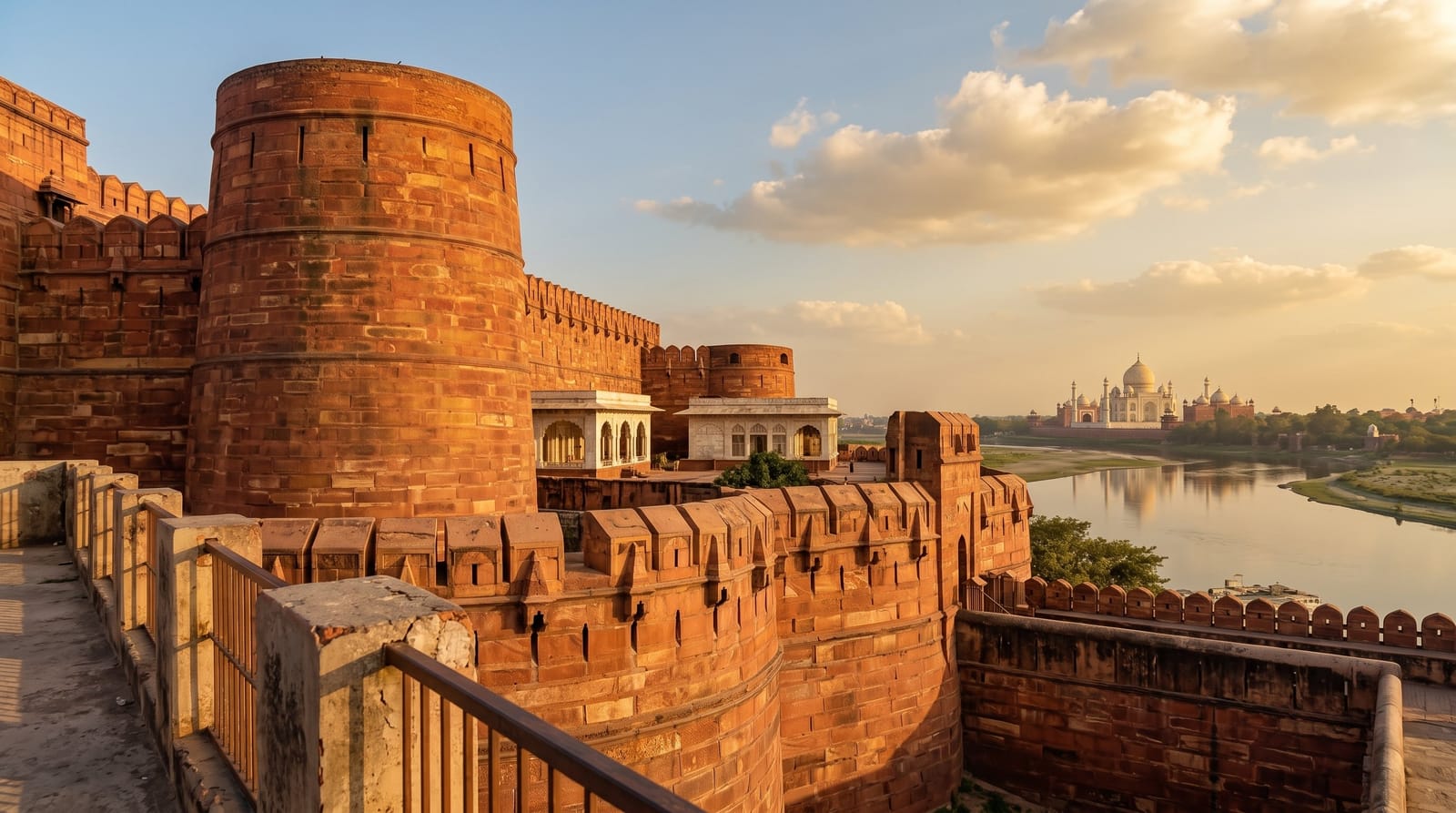
Agra Fort is a mighty walled city of red sandstone on the Yamuna river, the main residence of the Mughal emperors before Delhi, and a UNESCO site. Behind its massive ramparts lie a wealth of palaces, audience halls, mosques and courtyards in red stone and white marble. From its towers the emperor Shah Jahan, imprisoned by his own son in his final years, gazed out at the Taj Mahal he had built for his wife.
History
The earliest written reference to a fort at Agra comes from a Ghaznavid raid of 1068-1070, and local tradition says Raja Badal Singh built a fort called Badalgarh here in 1475; Sultan Sikandar Lodi moved his capital to Agra and died in the fort in 1517, and after his son Ibrahim was killed at Panipat in 1526 the Mughals took it, Babur ruling from Ibrahim's palace and Humayun being crowned here in 1530. Akbar made Agra his capital in 1558 and in 1565-1573, with some 4,000 workers a day, rebuilt the ruined brick fort in red sandstone from Dhaulpur; Shah Jahan added white marble palaces and mosques after 1628, and the fort remained the main Mughal residence until the capital moved to Delhi in 1638. The Marathas were the last Indian rulers to hold it before the British captured it in 1803 (Wikipedia, Agra Fort).
What to look for
- The red ramparts - the massive double walls and gates of the fort.
- The marble palaces - the ornate royal apartments and audience halls.
- The view of the Taj - the distant Taj Mahal seen from the fort's towers.
- The courtyards and mosque - the gardens, courts and the Pearl Mosque.
When to go
October to March for the coolest weather; pair it with the Taj Mahal, ideally the fort in the afternoon after a dawn visit to the Taj. Go early or late to avoid the midday heat.
Practical notes
Much of the fort is still used by the military and closed to visitors, so you see a portion of the complex. It is best paired with the Taj Mahal, though seeing both makes a full day in hectic Agra. The distant view of the Taj from the fort is poignant but hazy on poor-air days.
Nearby
The Taj Mahal is across the city; Fatehpur Sikri is a short drive.
Key facts
Source: Wikidata, item Q171857, read on 18 October 2026.
What to pack for Agra Fort
Chosen from what this place is for. Tap a kit for the full checklist.
- Comfortable walking shoes - Sightseeing means kilometres of pavement and cobbles daily. Find on Amazon
- Modest clothing - Shoulders and knees covered - the single most common requirement. Find on Amazon
- A slim anti-theft daypack - Zips that close properly; keep it in front in crowds and on transit. Find on Amazon
- A scarf or shawl - To cover the head or shoulders on entry; women especially at mosques. Find on Amazon
Some links on this page are Amazon affiliate links - if you buy through them we may earn a small commission at no extra cost to you.
All packing kitsPlan your trip
Where to start if Agra Fort is going on the list.
Booking links on this page are affiliate links - if you book through them we may earn a small commission at no extra cost to you. It never changes what we write about a place.
Opening times, ticket prices and seasonal closures change - check the official source before you go: official site.