Akbar's Tomb, Sikandra
A five-storey sandstone mausoleum in a deer park, its gateway topped with four early marble minarets.
Updated 4 September 2026
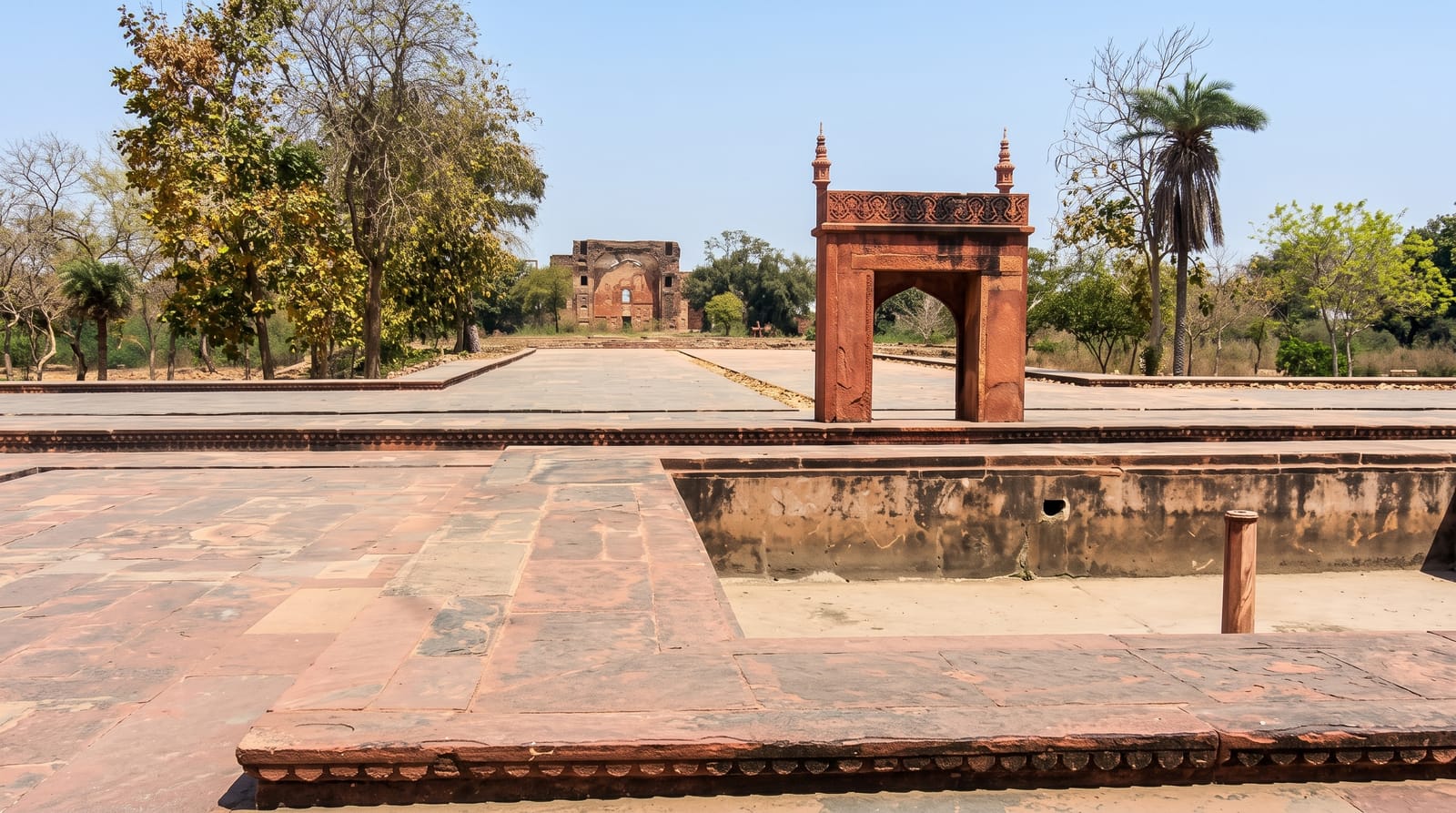
AI illustration
Akbar began his own tomb and Jahangir completed it around 1613, producing something unlike other Mughal mausolea: a stepped pyramid of five diminishing storeys in red sandstone, the upper level in marble with an open court rather than a dome, standing at the centre of a walled garden of about a hundred and twenty acres. The south gateway is inlaid with coloured stone in bold patterns and carries four marble minarets, among the earliest on a Mughal building and a direct ancestor of the Taj Mahal's. Blackbuck, deer and langurs graze the garden, and the actual grave lies in a plain vaulted chamber below.
The main sights
- The five-storey tomb - a stepped sandstone and marble structure.
- The inlaid gateway - bold stone patterns and four early marble minarets.
- The walled garden - a hundred and twenty acres with grazing deer and blackbuck.
- The burial vault - the plain underground chamber holding the grave.
When to go
October to March; Agra summers are severe and the garden has patchy shade. Early morning is best for animals in the garden and for light on the gateway inlay.
What to expect
Langurs in the garden can be aggressive around food. The interior chamber is plain and dimly lit. The site is a drive out from Agra and often skipped by short itineraries.
Nearby
Agra lies southeast; Fatehpur Sikri is west.
What to pack for Akbar's Tomb, Sikandra
Chosen from what this place is for. Tap a kit for the full checklist.
- Head torch + spare batteries - Hands-free light is essential; caves are truly dark. Find on Amazon
- Comfortable walking shoes - Sightseeing means kilometres of pavement and cobbles daily. Find on Amazon
- Grippy closed shoes - Cave floors are wet, muddy and slick with formations. Find on Amazon
- A slim anti-theft daypack - Zips that close properly; keep it in front in crowds and on transit. Find on Amazon
Some links on this page are Amazon affiliate links - if you buy through them we may earn a small commission at no extra cost to you.
All packing kitsPlan your trip
Where to start if Akbar's Tomb, Sikandra is going on the list.
Booking links on this page are affiliate links - if you book through them we may earn a small commission at no extra cost to you. It never changes what we write about a place.
Opening times, ticket prices and seasonal closures change - check the official source before you go: official site.


