Uch Sharif
A cluster of half-ruined tiled tombs on a mound in southern Punjab, their domes collapsed but their blue tilework still extraordinary.
Updated 21 October 2026
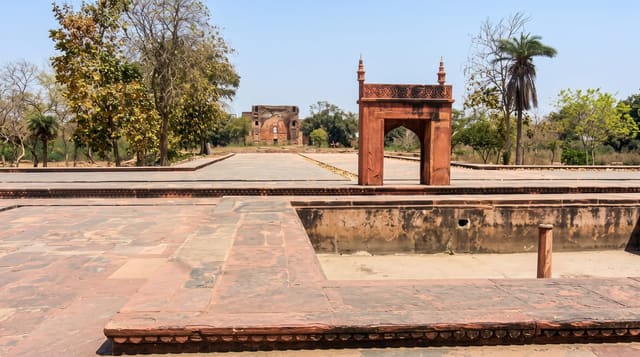
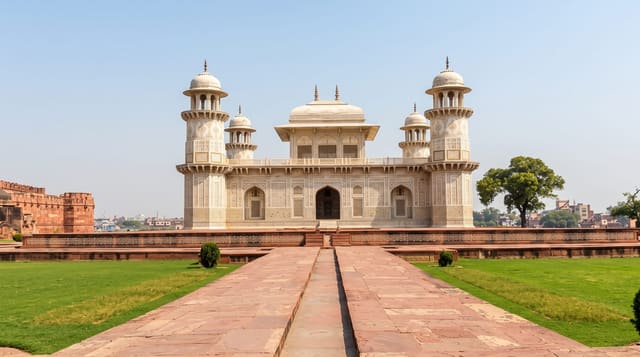
Uch was a significant city long before the Mughals, a centre of learning and Sufi orders sitting near the meeting of the Chenab and Sutlej, and what draws visitors now is a group of monumental tombs built for saints and their families in the fourteenth and fifteenth centuries. The finest is the tomb of Bibi Jawindi, built around 1493 for the great-granddaughter of a Suhrawardi saint: an octagonal brick structure with tapering buttressed corners and a covering of blue and white glazed tile, of which roughly half survives. Floods in 1817 washed away the other half, leaving the building sheared open like an architectural section, which is precisely why photographs of it are so striking. Neighbouring tombs, of Baha al-Halim and the architect Ustad Nuriya, share the style. Conservation has been intermittent and the monuments are on watch lists for endangered heritage.
History
Alexander Cunningham suggested that Uch was Alexandria on the Indus, founded by Alexander the Great in 325 BCE; until the 12th century the town was known as Bhatiah, and it later became a centre of Suhrawardi Sufism (Wikipedia, Uch). The tomb of Bibi Jawindi, great-granddaughter of the saint Jahaniyan Jahangasht, was built in 1494, and half of it was washed away in the floods of 1817 (Wikipedia, Tomb of Bibi Jawindi).
What's there
- Bibi Jawindi's tomb - the half-collapsed tiled octagon, the emblem of Uch.
- The tomb group - neighbouring shrines in the same style on the mound.
- Blue and white tilework - surviving glazed decoration on the standing walls.
- The old town - lanes and shrines around the monuments.
When to go
November to February; southern Punjab is extremely hot from spring to autumn. Morning and late afternoon light bring out the tile colours. Urs festivals bring crowds to the working shrines nearby.
Things to know
The monuments are ruins in fragile condition, fenced in parts and with restoration work sometimes obstructing views. Interpretation is almost nonexistent. Facilities in the town are minimal. Visitors should treat the working shrines with the usual respect for dress and behaviour.
Nearby
Bahawalpur and Noor Mahal are northeast; Derawar Fort lies south in the desert.
What to pack for Uch Sharif
Chosen from what this place is for. Tap a kit for the full checklist.
- Loose, light, long clothing - Covering up beats bare skin in the desert - and locals dress this way for a reason. Find on Amazon
- Comfortable walking shoes - Sightseeing means kilometres of pavement and cobbles daily. Find on Amazon
- Modest clothing - Shoulders and knees covered - the single most common requirement. Find on Amazon
- A wide-brim hat + sunglasses - Shade for your face and eyes where there is none overhead. Find on Amazon
Some links on this page are Amazon affiliate links - if you buy through them we may earn a small commission at no extra cost to you.
All packing kitsPlan your trip
Where to start if Uch Sharif is going on the list.
Booking links on this page are affiliate links - if you book through them we may earn a small commission at no extra cost to you. It never changes what we write about a place.
Opening times, ticket prices and seasonal closures change - check the official source before you go: official site.