Jhansi Fort
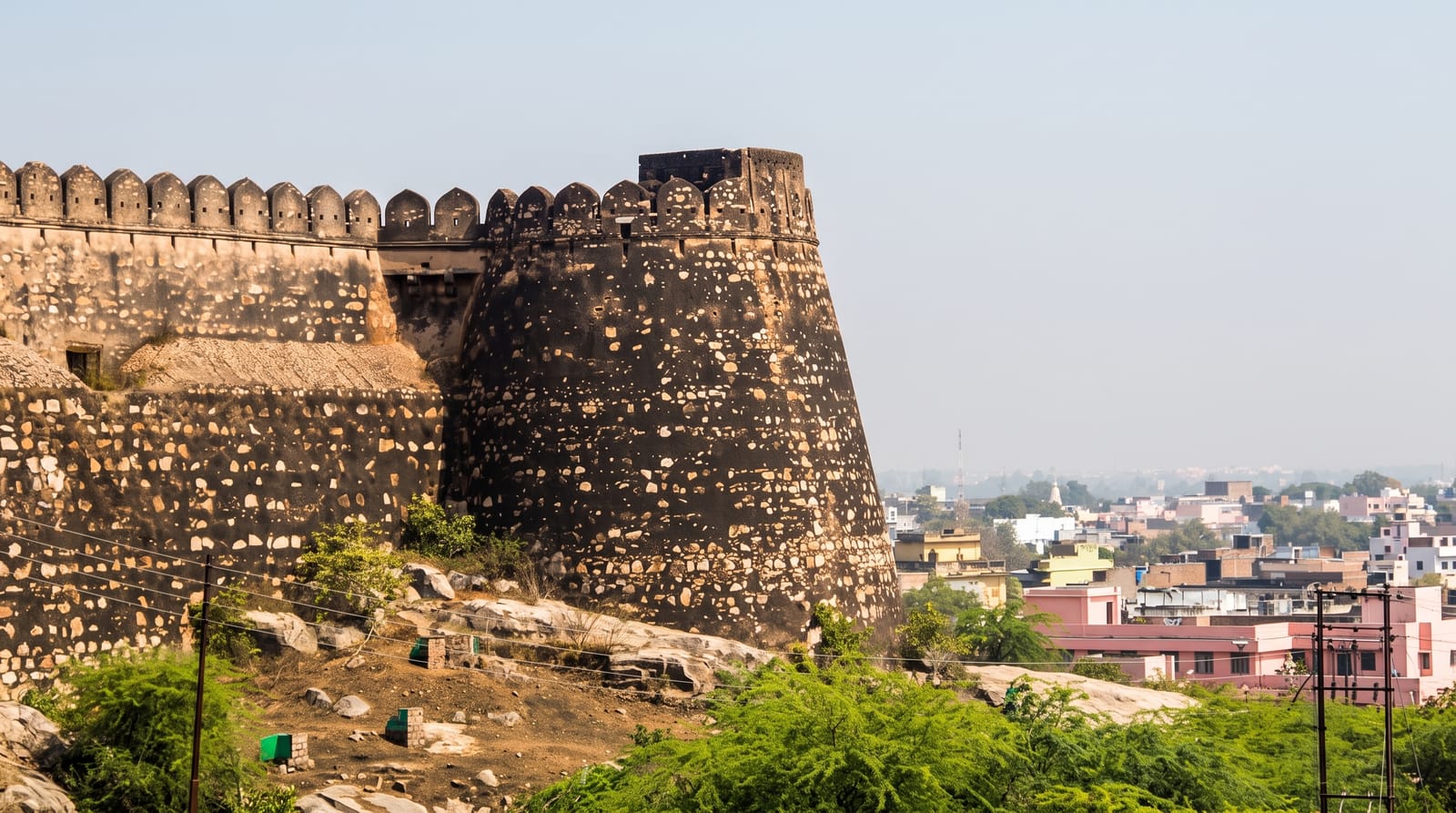
A hilltop Bundela fortress with granite walls up to five metres thick and a rock outcrop for a floor.
Updated 19 October 2026
AI illustration
Bir Singh Deo of Orchha built the fort on Bangira hill in 1613, using the granite outcrop itself as the base and raising walls between four and five metres thick around a circuit with twenty-two bastions and ten gates. Inside are a Shiva temple, a Ganesh temple, a well, stables and an execution tower, with the rock breaking through the ground in places. It is chiefly known for the events of 1858, when it was besieged and taken, and the queen of Jhansi, Lakshmibai, left the fort in the fighting; a memorial and museum below cover the period. The walls give a wide view across the city.
History
In 1728 Mohammed Khan Bangash attacked Maharaja Chhatrasal, and in gratitude for Peshwa Bajirao's help Chhatrasal gave him part of his state, including Jhansi. Raja Gangadhar Rao, accepted by the British as Raja of Jhansi after 1838, married Manikarnika Tambe in 1842, who took the name Lakshmi Bai; in March and April 1858 the East India Company's forces under General Hugh Rose besieged the fort and captured it on 4 April 1858, after Rani Lakshmi Bai escaped on horseback (Wikipedia, Jhansi Fort).
What you'll find
- The granite walls - fortifications up to five metres thick with bastions.
- The rock base - the natural outcrop showing through the fort floor.
- The temples and well - the structures within the walls.
- The city view - Jhansi spread out below the ramparts.
When to go
October to March; Bundelkhand summers are extremely hot with no shade on the walls. Evenings bring a sound and light show. Mornings are best for the walk around the ramparts.
Good to know
Interior buildings are limited and much of the visit is walking the walls. Interpretation is thin. Summer heat on bare granite is severe.
Nearby
Orchha lies south in Madhya Pradesh; Khajuraho is southeast.
Key facts
Source: Wikidata, item Q12429726, read on 18 October 2026.
What to pack for Jhansi Fort
Chosen from what this place is for. Tap a kit for the full checklist.
- Comfortable walking shoes - Sightseeing means kilometres of pavement and cobbles daily. Find on Amazon
- Modest clothing - Shoulders and knees covered - the single most common requirement. Find on Amazon
- A slim anti-theft daypack - Zips that close properly; keep it in front in crowds and on transit. Find on Amazon
- A scarf or shawl - To cover the head or shoulders on entry; women especially at mosques. Find on Amazon
Some links on this page are Amazon affiliate links - if you buy through them we may earn a small commission at no extra cost to you.
All packing kitsPlan your trip
Where to start if Jhansi Fort is going on the list.
Booking links on this page are affiliate links - if you book through them we may earn a small commission at no extra cost to you. It never changes what we write about a place.
Opening times, ticket prices and seasonal closures change - check the official source before you go: official site.