Lucknow Kebabs
Galouti kebabs made so soft, by legend for a toothless nawab, that they collapse on the tongue.
Updated 4 September 2026
AI illustration
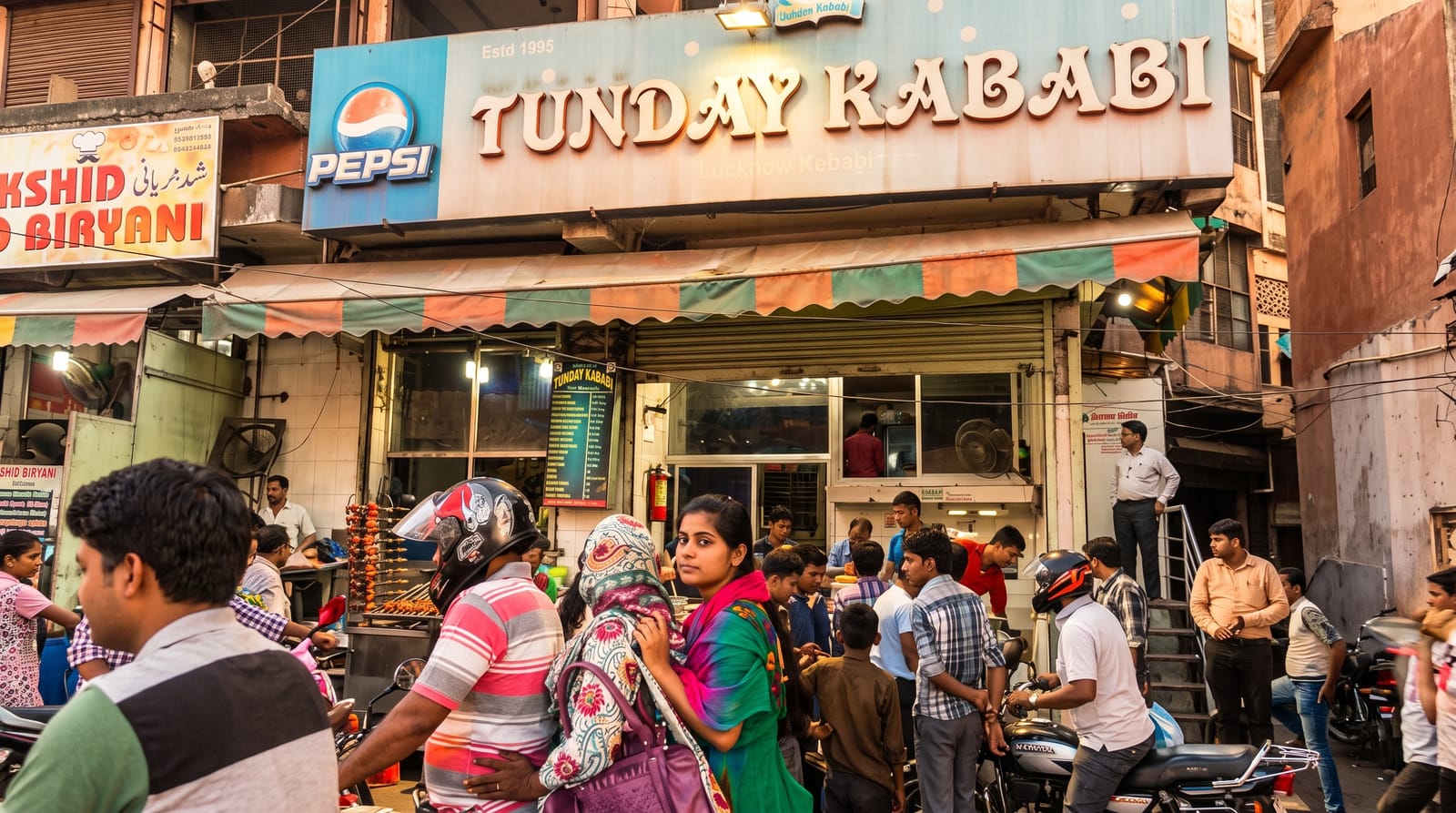
Awadhi cooking developed in the nawabi kitchens of Lucknow, and its best-known product is the galouti kebab: minced meat worked with raw papaya as a tenderiser and a spice blend said to run to dozens of ingredients, then shaped into small patties and cooked on a griddle until they hold together barely, dissolving when eaten. The story attaches them to a nawab who had lost his teeth but not his appetite. Tunday Kababi in Chowk is the shop most associated with them. Alongside run seekh and kakori kebabs, nihari, biryani in the Awadhi dum style, and sheermal, a saffron-scented flatbread eaten with them.
What to look for
- Galouti kebabs - patties tender enough to collapse when eaten.
- The griddle cooking - kebabs turned in ghee on flat iron plates.
- Sheermal - saffron flatbread served alongside.
- The old-city shops - long-established kitchens in Chowk and Aminabad.
When to go
October to March for comfortable weather in the old city; shops run from afternoon into the night, and Ramadan evenings in the Muslim quarters are a particular time for kebab eating.
Things to know
The lanes are crowded and hygiene at street level varies. Vegetarian options at the famous kebab shops are limited or absent. Queues at the best-known places are long in the evening.
Nearby
Bara Imambara lies in the same quarter; Aminabad market is south.
What to pack for Lucknow Kebabs
Chosen from what this place is for. Tap a kit for the full checklist.
- A reusable bag or container - For market produce and cutting down on packaging. Find on Amazon
- Wet wipes + hand sanitiser - Street food and washbasins do not always go together. Find on Amazon
Some links on this page are Amazon affiliate links - if you buy through them we may earn a small commission at no extra cost to you.
All packing kitsPlan your trip
Where to start if Lucknow Kebabs is going on the list.
Booking links on this page are affiliate links - if you book through them we may earn a small commission at no extra cost to you. It never changes what we write about a place.
Opening times, ticket prices and seasonal closures change - check the official source before you go: official site.