Vatnajokull National Park
One of the largest glaciers in Europe and the fire beneath it - a UNESCO park of ice caps, volcanoes, ice caves and the green oasis of Skaftafell.
Updated 16 October 2026
AI illustration
UNESCO World Heritage
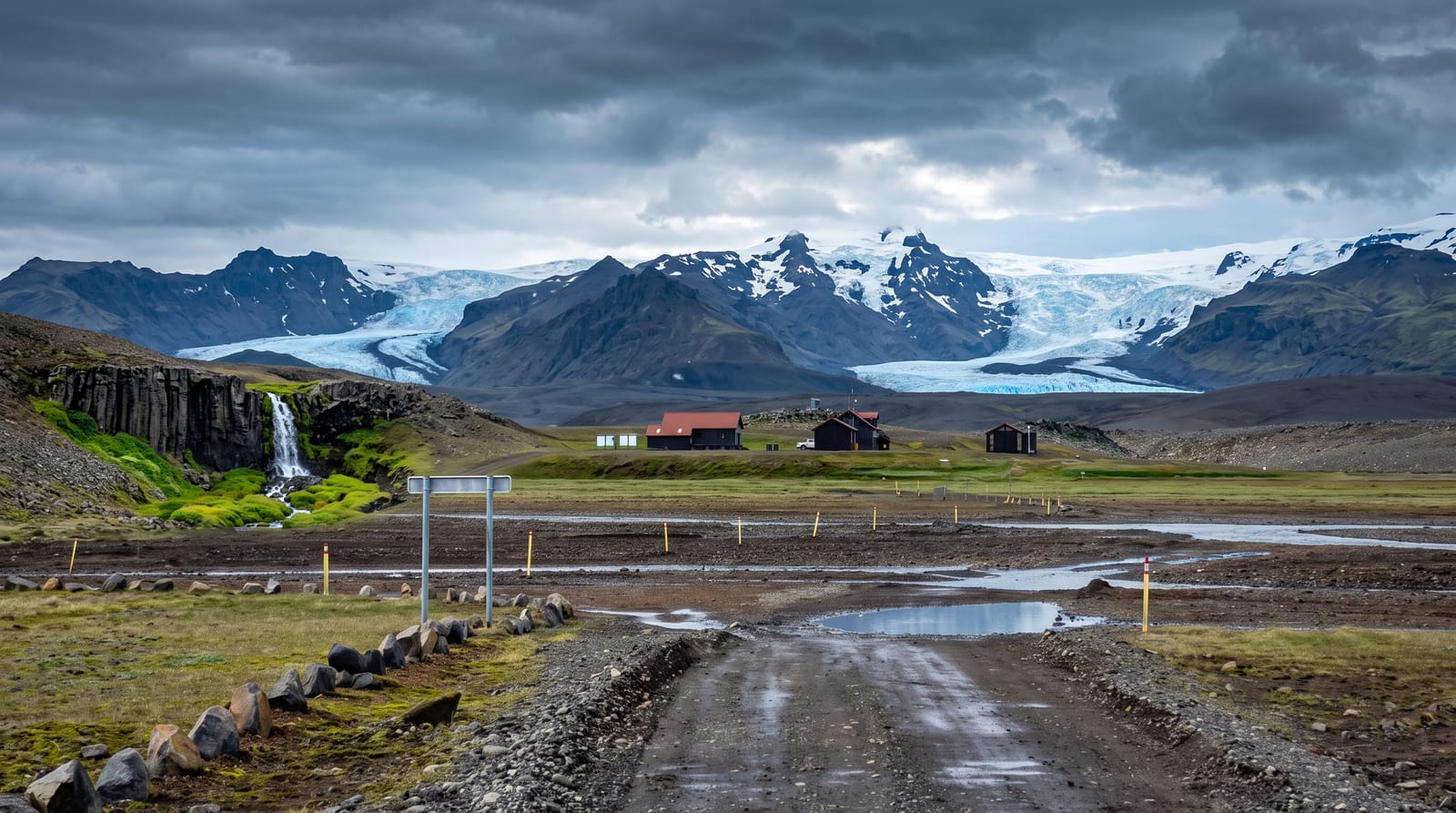
Vatnajokull National Park is built around one of Europe's largest ice caps, a vast glacier hiding active volcanoes beneath it, making it a UNESCO site of fire and ice. It contains glacier tongues, blue ice caves, roaring waterfalls, black deserts and the green oasis of Skaftafell, the classic base for glacier hikes and exploration.
Background
Set up on 7 June 2008, the park took in the older national parks at Skaftafell and Jökulsárgljúfur and is the largest of Iceland's three. It began at 12,000 km², and with Lakagígar, Langisjór, Krepputunga and Jökulsárlón added it now covers 14,967 km², about 14% of the country, second in Europe only to Yugyd Va. It was extended northward in 2019 and inscribed as a World Heritage Site on 5 July 2019. The ice is mostly 400-600 m thick, 950 m at most, and buries mountains, valleys and plateaus. Its surface rises to over 2,000 m, while its base drops to 300 m below sea level. West of the ice, Eldgjá erupted in 934 and Lakagígar in 1783-1784.
Source: Wikipedia, "Vatnajökull National Park"
Highlights
- Skaftafell - the green oasis, base for glacier hikes and the Svartifoss waterfall.
- Blue ice caves - the natural caves in the glacier, explored in winter with guides.
- Glacier tongues - the tongues of ice reaching down to the lowlands.
- Svartifoss - the waterfall framed by black basalt columns.
When to go
Summer for glacier hikes, waterfalls and the full green landscape; winter for the natural blue ice caves, which need a guided tour. Each season offers a different face of the ice.
Good to know
The glacier must never be walked on without a guide and proper equipment, as crevasses are deadly. Ice caves are winter-only and guided. It is far from Reykjavik, so it needs at least an overnight on the south coast.
Nearby
Jokulsarlon lagoon is along the same coast; Hofn is the nearest town.
Key facts
Source: Wikidata, item Q1353292, read on 18 October 2026.
What to pack for Vatnajokull National Park
Chosen from what this place is for. Tap a kit for the full checklist.
- Broken-in walking shoes or boots - Grip and ankle support matter more than looks; never hike in brand-new boots. Find on Amazon
- Reef-safe sunscreen - High SPF that will not bleach the coral you are swimming over. Find on Amazon
- Head torch + spare batteries - Hands-free light is essential; caves are truly dark. Find on Amazon
- Binoculars - The single best wildlife tool - even a compact pair transforms a sighting. Find on Amazon
Some links on this page are Amazon affiliate links - if you buy through them we may earn a small commission at no extra cost to you.
All packing kitsPlan your trip
Where to start if Vatnajokull National Park is going on the list.
Booking links on this page are affiliate links - if you book through them we may earn a small commission at no extra cost to you. It never changes what we write about a place.
Opening times, ticket prices and seasonal closures change - check the official source before you go: official site.