Wood Buffalo National Park
Canada's largest national park, bigger than Switzerland, protecting a whooping crane nesting ground, free-roaming bison and the world's biggest beaver dam.
Updated 18 October 2026
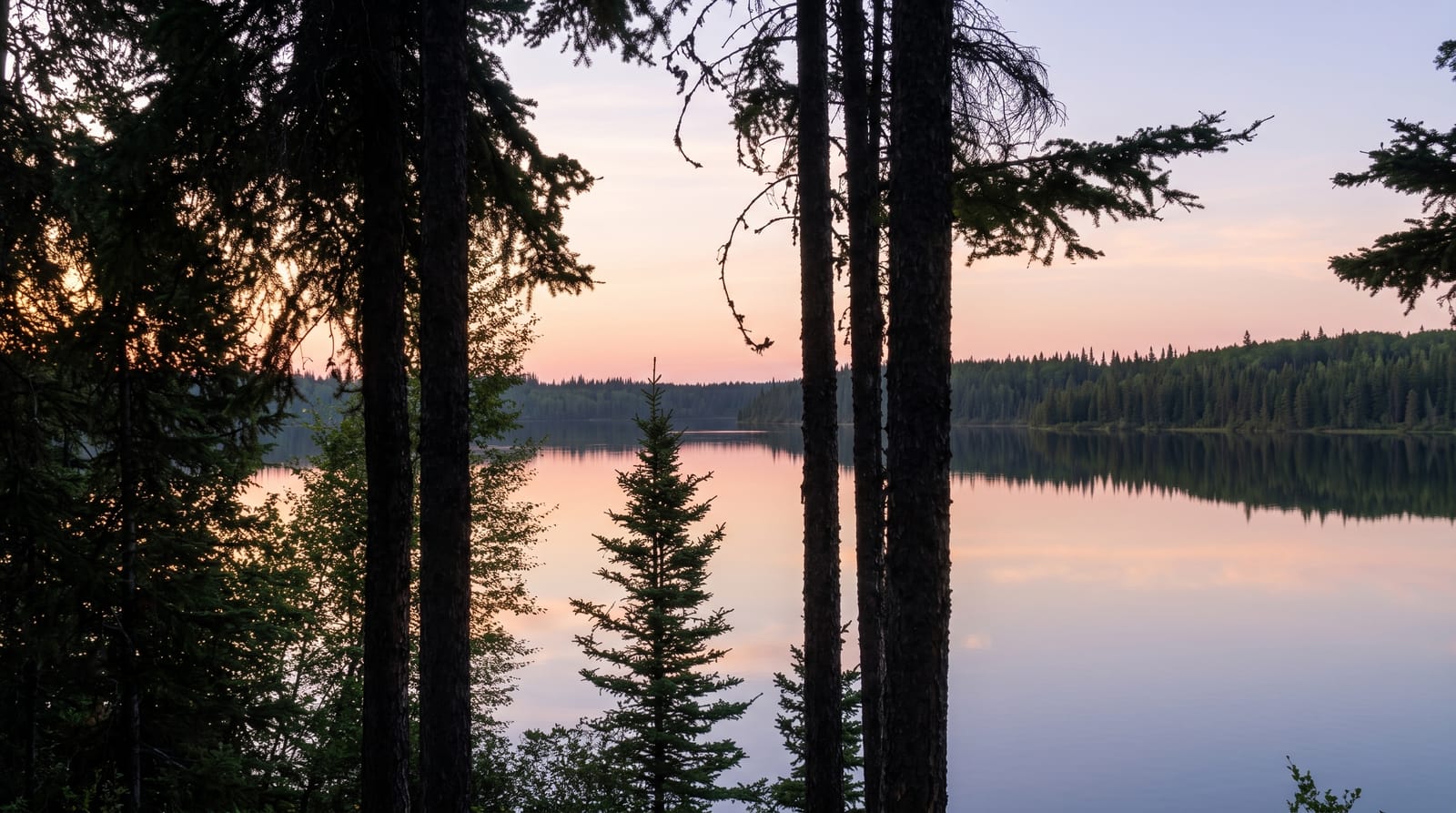
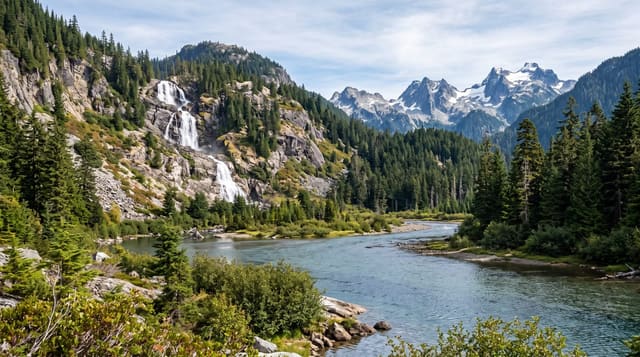
AI illustration
UNESCO World Heritage
Wood Buffalo covers around forty-five thousand square kilometres of boreal forest, salt plains and wetland, which makes it the largest national park in Canada and larger than Switzerland. It was created in 1922 to protect the last northern herd of wood bison, several thousand of which still range free here, and it turned out to hold something rarer: one of only two known nesting sites of the whooping crane, a bird that fell to about twenty individuals in the 1940s and that still returns to these marshes each summer. The Peace-Athabasca Delta at its heart is one of the largest freshwater deltas on earth. A beaver dam here, spotted from satellite imagery, runs for roughly eight hundred metres.
History
People have lived in the region since the end of the last ice age, and in recorded times it was the land of the Dane-zaa, Chipewyan, South Slavey and Woods Cree; sometime after a smallpox epidemic in 1781 the Dene and Cree made peace at Peace Point, which gave the Peace River its name. Peter Pond probably passed through in 1785, Alexander Mackenzie three years later, and in 1788 fur traders built Fort Chipewyan and Fort Vermilion near today's boundaries. On 21 June 1899 the Crown signed Treaty 8 with the First Nations of the area, and on that land the park was established in 1922 to protect the largest herd of free-roaming wood bison in the world, now about 3,000 animals (Wikipedia, Wood Buffalo National Park).
What's there
- Free-roaming wood bison - the herd the park was created to save.
- The salt plains - white mineral flats with bison tracks across them.
- The Peace-Athabasca Delta - one of the world's great freshwater deltas.
- Dark skies - a vast designated dark sky preserve, with aurora in season.
When to go
June to September for road access, paddling and the salt plains, accepting heavy insects in early summer. Late August through winter for aurora, when the park's dark sky preserve comes into its own. Winter access is limited to the roads that stay open.
Before you go
This is a remote wilderness park with very little infrastructure: a handful of roads, basic campgrounds, and enormous areas reachable only by float plane or canoe. Mosquitoes and black flies from June into July are severe. Whooping crane nesting areas are strictly closed to visitors, so the birds are not something you go and see. Fort Smith is a long drive from anywhere.
Nearby
Fort Smith and the Slave River rapids are at the northern edge; Hay River is further north.
Key facts
Source: Wikidata, item Q391338, read on 18 October 2026.
What to pack for Wood Buffalo National Park
Chosen from what this place is for. Tap a kit for the full checklist.
- Broken-in walking shoes or boots - Grip and ankle support matter more than looks; never hike in brand-new boots. Find on Amazon
- Quick-dry clothing - Board shorts or synthetics that shrug off spray and dry fast. Find on Amazon
- Binoculars - The single best wildlife tool - even a compact pair transforms a sighting. Find on Amazon
- Spare batteries + cards - Cold and long shoots drain power; never run out at the good light. Find on Amazon
Some links on this page are Amazon affiliate links - if you buy through them we may earn a small commission at no extra cost to you.
All packing kitsPlan your trip
Where to start if Wood Buffalo National Park is going on the list.
Booking links on this page are affiliate links - if you book through them we may earn a small commission at no extra cost to you. It never changes what we write about a place.
Opening times, ticket prices and seasonal closures change - check the official source before you go: official site.