Paregoretissa Church
A cube-shaped Byzantine church whose dome is carried on columns cantilevered out of the walls, an engineering oddity of the 1290s.
Updated 4 September 2026

AI illustration
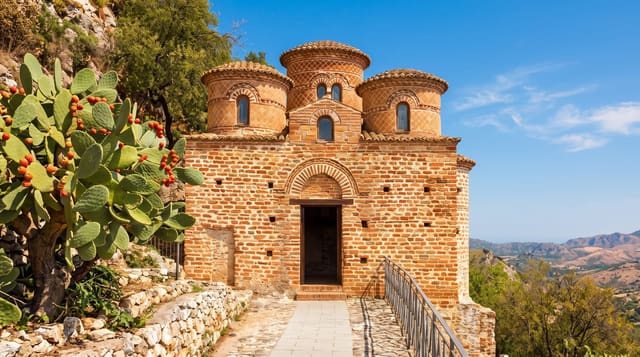
The Paregoretissa, the Consoling Virgin, was built around 1290 by Nikephoros I of Epirus and his wife Anna, and it looks unlike any other Byzantine church in Greece: a tall brick and stone cube of three storeys with five domes on the roof, more like a palace than a church from outside. The interior explains the shape: the central dome rests on columns that are supported on stone brackets projecting from the walls, stacked in tiers, an experimental system with no close parallel. The dome mosaic of Christ Pantokrator with prophets survives from the original decoration, the finest late Byzantine mosaic in western Greece. Around the church are the remains of the monastery, and a small collection of sculpture is displayed in the courtyard.
What to look for
- The cube exterior - three storeys of brick and stone under five domes.
- The cantilevered columns - the unusual bracket system carrying the dome.
- The dome mosaic - a Pantokrator with prophets from the 1290s.
- The monastery remains - foundations and sculpture in the enclosure.
When to go
Year-round; the church is in the town centre and easily combined with the bridge. Opening hours are limited and it closes on some weekdays.
Good to know
The interior is dark and the mosaic is high above, so binoculars help. Restoration scaffolding has been present at times. The surrounding town is ordinary, and the visit takes under an hour.
Nearby
The Bridge of Arta is at the edge of town; the Ambracian Gulf lies south.
What to pack for Paregoretissa Church
Chosen from what this place is for. Tap a kit for the full checklist.
- Comfortable walking shoes - Sightseeing means kilometres of pavement and cobbles daily. Find on Amazon
- Modest clothing - Shoulders and knees covered - the single most common requirement. Find on Amazon
- A slim anti-theft daypack - Zips that close properly; keep it in front in crowds and on transit. Find on Amazon
- A scarf or shawl - To cover the head or shoulders on entry; women especially at mosques. Find on Amazon
Some links on this page are Amazon affiliate links - if you buy through them we may earn a small commission at no extra cost to you.
All packing kitsPlan your trip
Where to start if Paregoretissa Church is going on the list.
Booking links on this page are affiliate links - if you book through them we may earn a small commission at no extra cost to you. It never changes what we write about a place.
Opening times, ticket prices and seasonal closures change - check the official source before you go: official site.