Ioannina Castle
A walled quarter on a promontory in Lake Pamvotida, still inhabited, holding two citadels, a silversmithing museum and Ottoman-era mosques.
Updated 19 October 2026

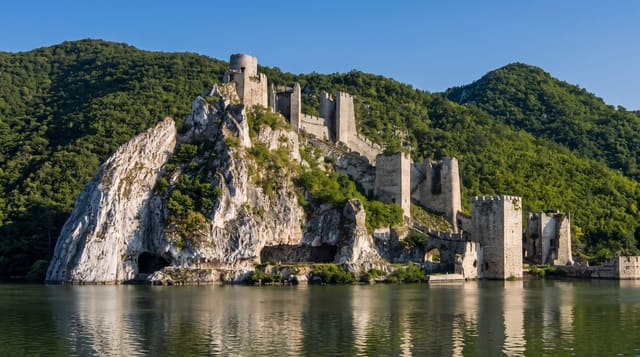
AI illustration
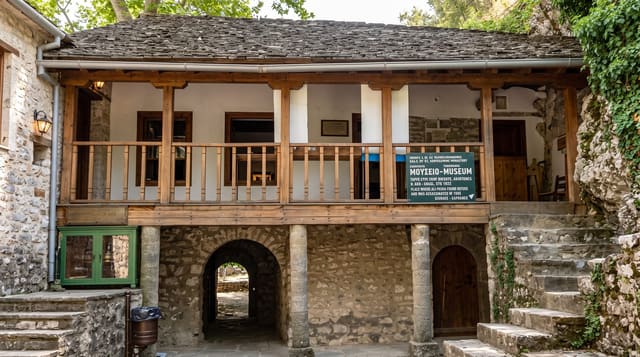
The kastro of Ioannina is not a ruin but a lived-in neighbourhood behind walls, occupying a promontory that pushes into Lake Pamvotida. Its Byzantine core was rebuilt into its present shape in the early nineteenth century, and the result is two separate citadels within one enclosure. The southeastern one, Its Kale, holds the domed Fethiye mosque, the silversmithing museum built into the old casemates and a terrace over the water. The northeastern acropolis keeps the Aslan Pasha complex, now the municipal ethnographic museum. Between them run quiet lanes of low houses, workshops and courtyards, with the lake visible at the end of most of them.
History
Ioannina is first certainly mentioned in a decree of the Byzantine emperor Basil II in 1020, though it existed long before, and tradition places its founding and first fortification in the 6th century, when Procopius records a new, "well-fortified" city. After 1204 it belonged to the Despotate of Epirus, passed to the Palaiologan empire in 1319 and was taken by Stefan Dushan in 1346, and from 1430 it was under Ottoman rule, prospering above all under Ali Pasha, whose semi-independent state covered much of modern Greece and Albania from 1787 (Wikipedia, Ioannina Castle).
What's there
- Its Kale - the inner citadel with the Fethiye mosque and a terrace above the lake.
- The Silversmithing Museum - the local filigree trade shown in the citadel's vaulted casemates.
- The Aslan Pasha complex - mosque, medrese and cells, now the ethnographic collection.
- The lanes and walls - a lived-in quarter you can walk around the ramparts of in half an hour.
When to go
Late spring and early autumn give the clearest lake views and comfortable walking. Ioannina sits high and gets properly cold and damp from November, with mist sitting on the water for days. Museums inside the walls close in the early afternoon several days a week, so aim for a morning and leave the ramparts walk for the light before sunset.
Things to know
The two museums are small and can be seen faster than their tickets suggest, and labelling is uneven in English. The Fethiye mosque interior is often closed. Lakeside restaurants outside the gate are pitched squarely at visitors and priced accordingly. The lake itself is shallow and can smell in high summer, which surprises people expecting alpine water.
Nearby
Boats cross to the lake island in ten minutes, and the Zagori villages and Perama cave are within an hour.
Key facts
Source: Wikidata, item Q17496804, read on 18 October 2026.
What to pack for Ioannina Castle
Chosen from what this place is for. Tap a kit for the full checklist.
- Head torch + spare batteries - Hands-free light is essential; caves are truly dark. Find on Amazon
- Comfortable walking shoes - Sightseeing means kilometres of pavement and cobbles daily. Find on Amazon
- Modest clothing - Shoulders and knees covered - the single most common requirement. Find on Amazon
- Grippy closed shoes - Cave floors are wet, muddy and slick with formations. Find on Amazon
Some links on this page are Amazon affiliate links - if you buy through them we may earn a small commission at no extra cost to you.
All packing kitsPlan your trip
Where to start if Ioannina Castle is going on the list.
Booking links on this page are affiliate links - if you book through them we may earn a small commission at no extra cost to you. It never changes what we write about a place.
Opening times, ticket prices and seasonal closures change - check the official source before you go: official site.