Kipoi Stone Bridges
Single, double and triple-arched packhorse bridges built by Epirot masons across the streams of central Zagori.
Updated 14 October 2026
AI illustration
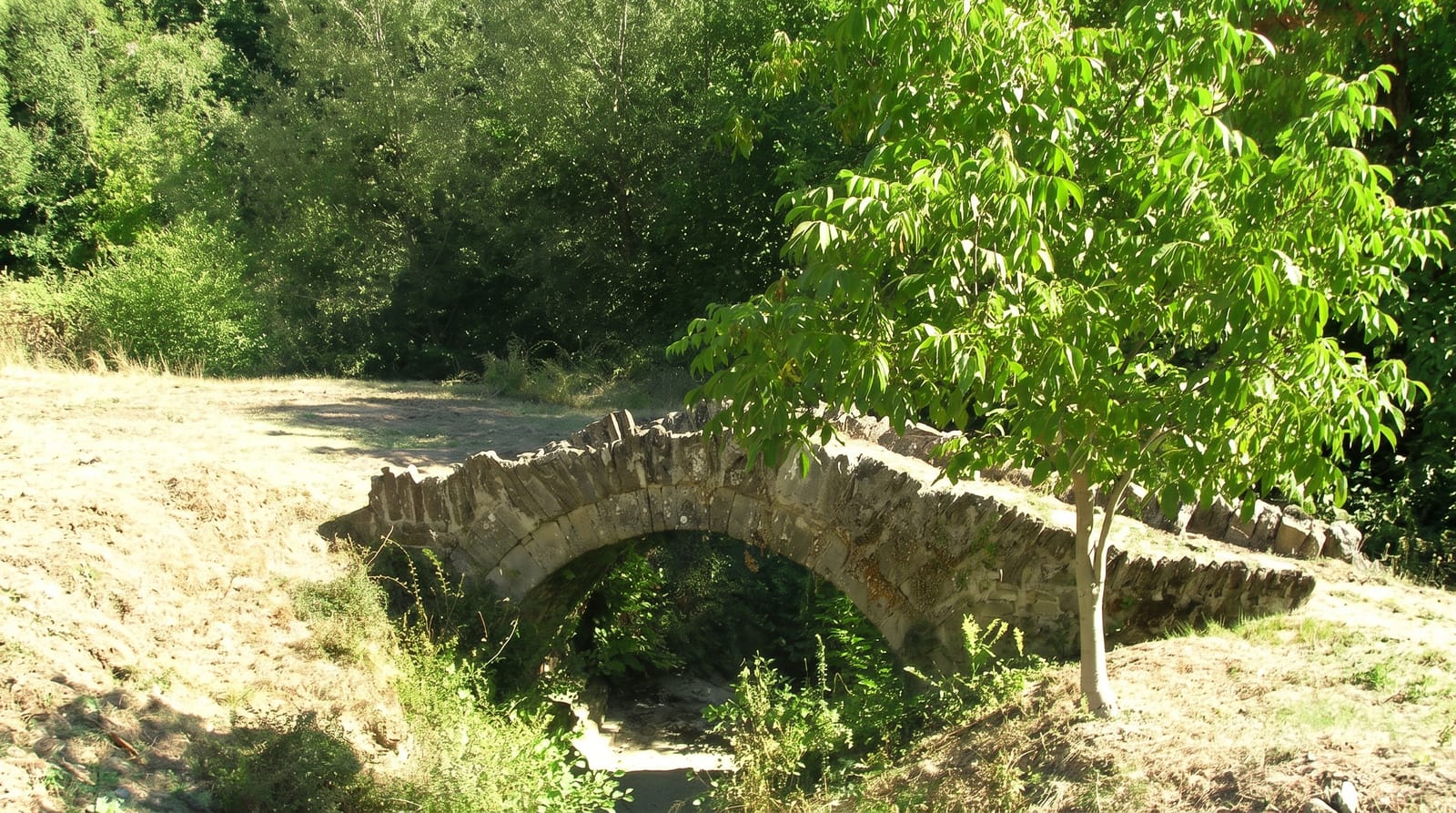
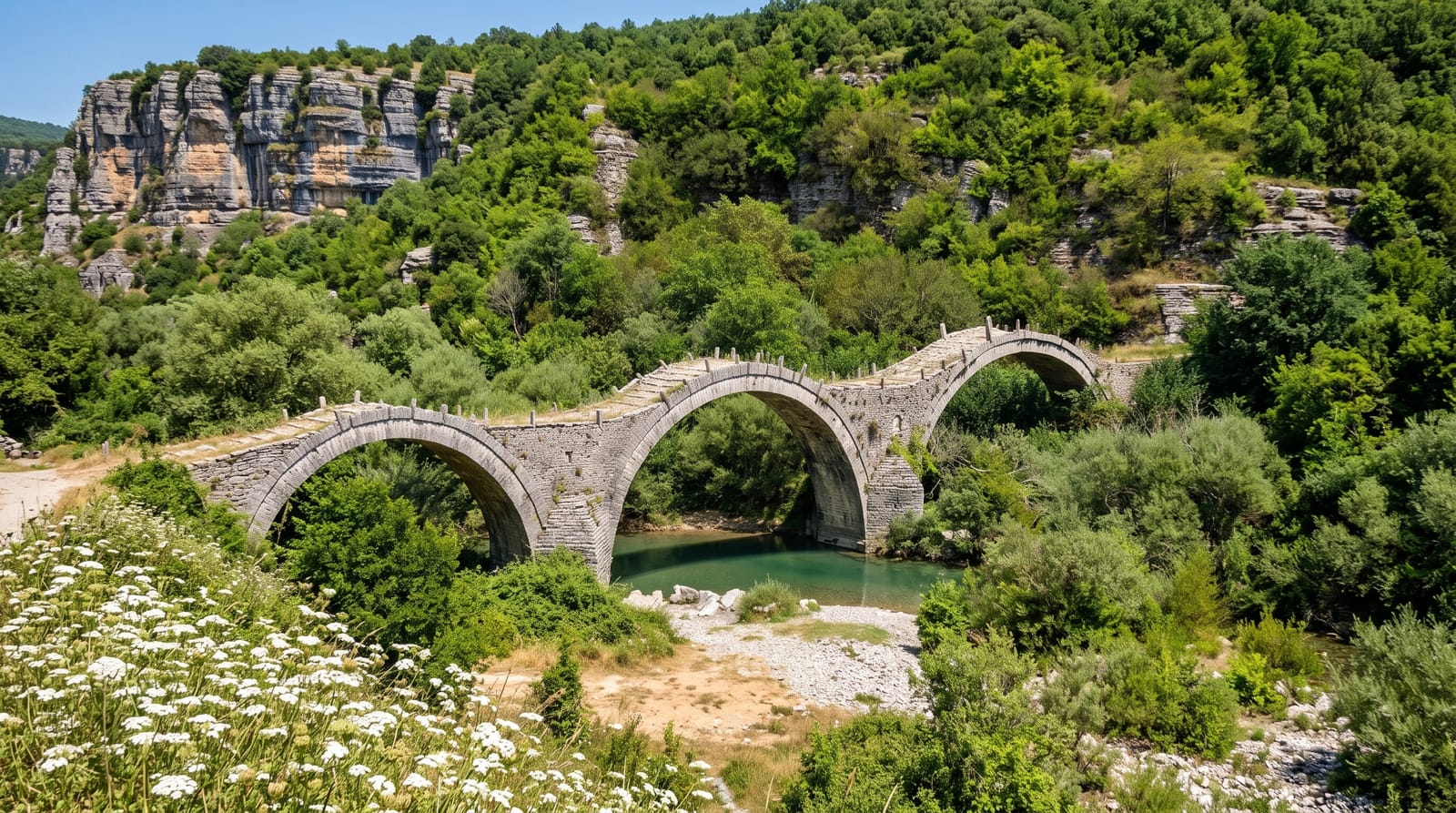
Zagori's stone bridges were built mostly in the eighteenth and nineteenth centuries by itinerant masons from the region, funded by wealthy villagers and merchants, to carry mule tracks over torrents that flood in spring, and the cluster around Kipoi is the finest. The triple-arched Plakidas or Kalogeriko bridge of 1814 curves across the Bagiotiko in three unequal spans and is the most photographed structure in Zagori. Nearby stand the single-arched Misios bridge, the tall Kokkorou bridge of 1750, and Lazaridis. All are dry-stone or lime-mortared, unusually thin in profile, and still crossable on foot. Short marked paths link several of them, and the whole area falls inside the Vikos-Aoos UNESCO Global Geopark.
What you'll find
- Plakidas bridge - the three-arched 1814 span, Zagori's signature.
- Kokkorou bridge - a tall single arch of 1750 over the gorge.
- Misios bridge - a slender single-arch crossing near the village.
- The connecting paths - short trails between bridges along the streams.
When to go
Spring for full water under the arches and green slopes, autumn for colour; both give the best photographs. Summer streams can dry to a trickle, which flattens the effect.
Good to know
Parking at the bridges is informal and tight, and the approach paths are steep and slippery in wet weather. The bridges are close to the road, so they are not remote discoveries. Winter ice makes the stone dangerous.
Nearby
Kipoi village and Dilofo are minutes away; the Vikos gorge viewpoints and Papingo lie north.
What to pack for Kipoi Stone Bridges
Chosen from what this place is for. Tap a kit for the full checklist.
- Comfortable walking shoes - Sightseeing means kilometres of pavement and cobbles daily. Find on Amazon
- A slim anti-theft daypack - Zips that close properly; keep it in front in crowds and on transit. Find on Amazon
- A refillable water bottle - Many cities have public fountains; save money and plastic. Find on Amazon
- A light layer + compact umbrella - For museum air-con and a sudden shower. Find on Amazon
Some links on this page are Amazon affiliate links - if you buy through them we may earn a small commission at no extra cost to you.
All packing kitsPlan your trip
Where to start if Kipoi Stone Bridges is going on the list.
Booking links on this page are affiliate links - if you book through them we may earn a small commission at no extra cost to you. It never changes what we write about a place.
Opening times, ticket prices and seasonal closures change - check the official source before you go: official site.