Stone Bridges of Zagori
Arched packhorse bridges built by travelling masons, some with three spans, scattered along the streams around Kipoi.
Updated 4 September 2026
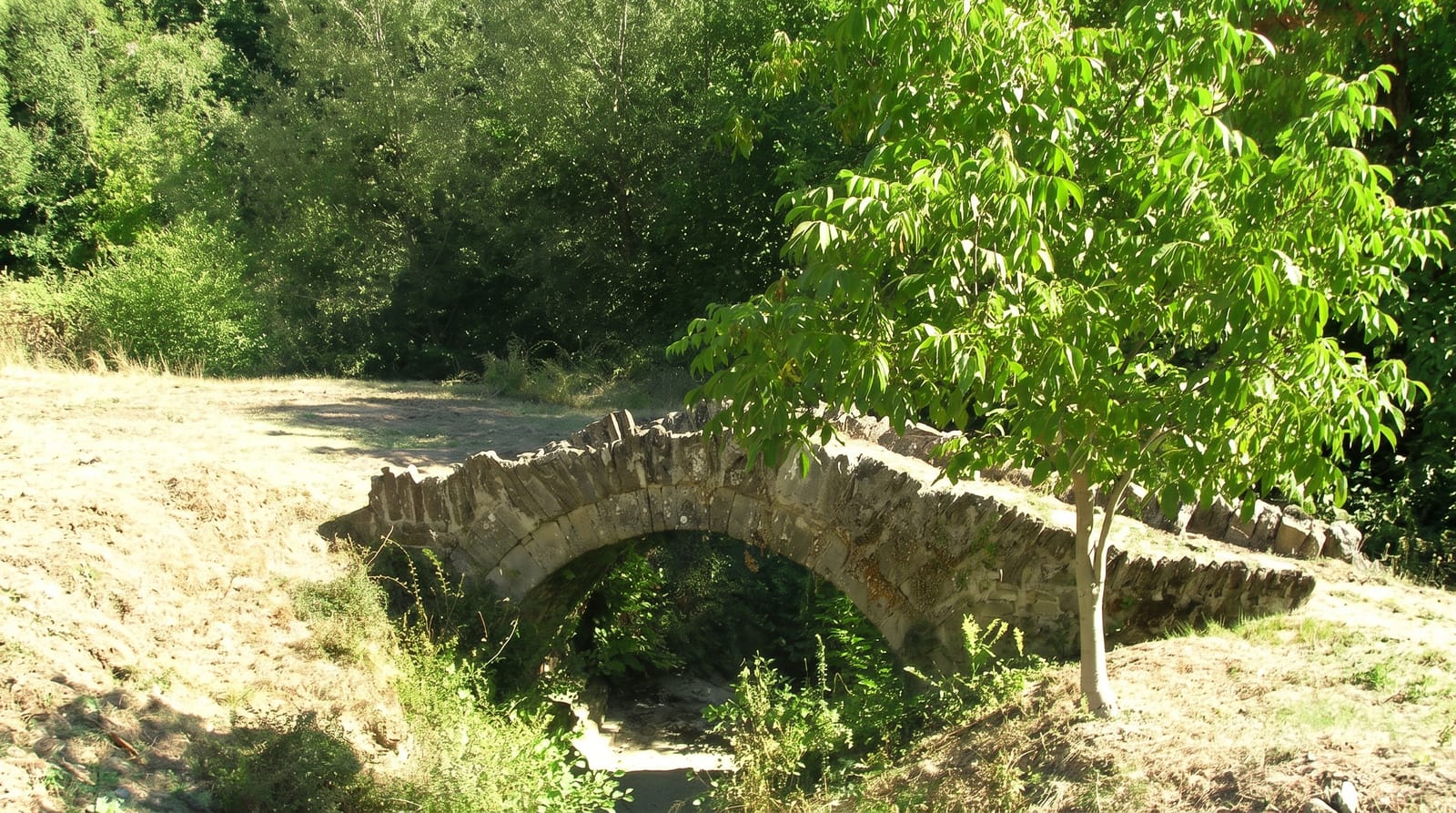
AI illustration
Zagori's bridges were built mostly in the eighteenth and nineteenth centuries by itinerant masons from Konitsa and Pyrsogianni, funded by wealthy villagers or emigrant merchants whose names the bridges still carry. They were the infrastructure of a region without roads, carrying mule trains between forty-six villages across gorges and torrents. Around Kipoi the finest cluster within a short drive: the three-arched Plakidas or Kalogeriko bridge stepping across the stream in a curve, the tall single arch of Kokkorou, the Milos bridge beside an old watermill, and Lazaridis nearby. Each is dry-stone, mortared with lime, and shaped so precisely that many have survived floods that destroyed modern concrete. Paths link several of them, and swimming pools lie beneath some in summer.
The main sights
- Kalogeriko - the three-arched bridge curving across the stream near Kipoi.
- Kokkorou bridge - a tall single arch over the Bagiotiko.
- The Milos bridge - an arch beside a restored watermill.
- The connecting paths - short trails linking bridges through the woods.
When to go
Spring for full streams and green, autumn for colour. Summer allows swimming in the pools beneath the arches. Winter floods can make some approaches muddy.
Good to know
The bridges are scattered and need a car plus short walks; signposting is decent but not comprehensive. Each visit is brief, so the pleasure is in linking several. Parking near Kalogeriko is limited on busy weekends.
Nearby
Kipoi and Koukouli villages are alongside; Monodendri and the Vikos gorge lie west.
What to pack for Stone Bridges of Zagori
Chosen from what this place is for. Tap a kit for the full checklist.
- Reef-safe sunscreen - High SPF that will not bleach the coral you are swimming over. Find on Amazon
- Comfortable walking shoes - Sightseeing means kilometres of pavement and cobbles daily. Find on Amazon
- Quick-dry towel - A microfibre towel packs small and dries in minutes. Find on Amazon
- A slim anti-theft daypack - Zips that close properly; keep it in front in crowds and on transit. Find on Amazon
Some links on this page are Amazon affiliate links - if you buy through them we may earn a small commission at no extra cost to you.
All packing kitsPlan your trip
Where to start if Stone Bridges of Zagori is going on the list.
Booking links on this page are affiliate links - if you book through them we may earn a small commission at no extra cost to you. It never changes what we write about a place.
Opening times, ticket prices and seasonal closures change - check the official source before you go: official site.


