National Garden of Athens
Fifteen shaded hectares behind parliament, laid out for a queen in the 1830s and still the coolest place in central Athens.
Updated 19 October 2026

AI illustration
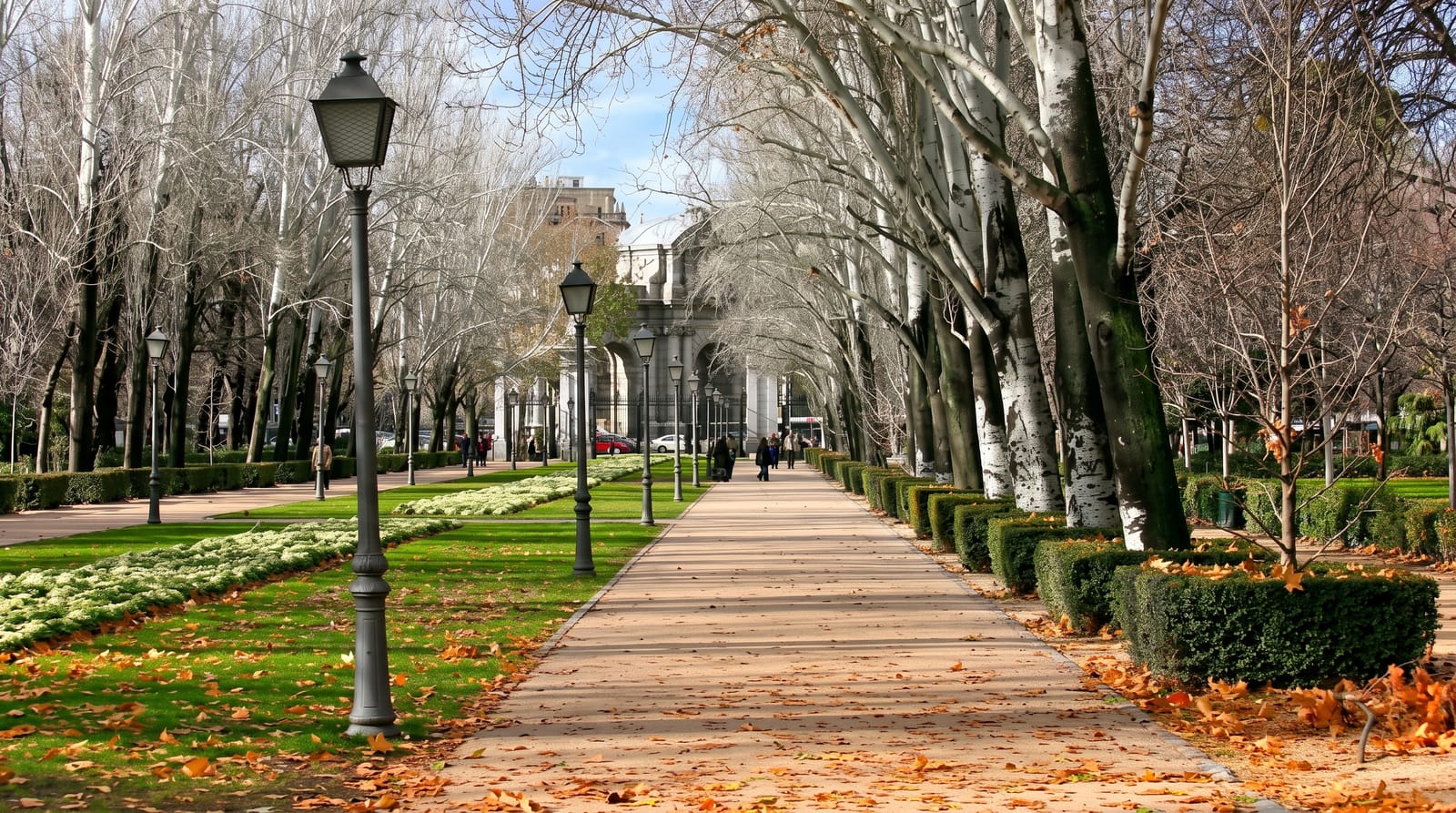
Queen Amalia ordered the garden in 1838 and reportedly spent three hours a day on it; its designer, the German agronomist Friedrich Schmidt, brought in over 500 species, and the work included planting the avenue of Washingtonia palms that still runs through the middle. Fifteen and a half hectares of dense, deliberately tangled planting sit directly behind the parliament, with ponds of ducks and terrapins, a small duck-filled lake, ancient column drums and mosaic fragments placed among the beds, a sundial, and a botanical museum in a former greenhouse. There is a modest zoo of goats and birds that children find sufficient, a playground, and a cafe under the trees. The Zappeion Hall, a nineteenth-century exhibition building with a circular colonnaded courtyard, stands at the southern edge.
History
Queen Amalia commissioned the Royal Garden in 1838, and it was completed by 1840 to a design by the German agronomist Friedrich Schmidt, who brought in over 500 species of plants along with peacocks, ducks and turtles, though many plants did not survive the dry climate. Part of the upper garden behind the old palace was fenced off as the king and queen's private retreat, and the public was let in during the afternoons; nearby, in 1878, the Zappeion Hall was built, designed by Theophil von Hansen (Wikipedia, National Garden, Athens).
What to look for
- The palm avenue - Amalia's Washingtonia palms crossing the garden.
- The ponds - terrapins, ducks and shaded benches.
- The scattered antiquities - column drums and mosaics among the planting.
- The Zappeion - the colonnaded hall at the garden's southern gate.
When to go
Any month; in July and August this is the one central space with real shade, which the city uses accordingly. Spring brings the citrus and jacaranda into flower. The garden closes at sunset.
Practical notes
It is a nineteenth-century pleasure garden rather than a botanical showpiece: paths are informal, some corners are neglected, and the little zoo is basic. Signage is minimal and getting lost inside is part of the experience.
Nearby
Syntagma Square and the parliament are at the north gate; the Temple of Olympian Zeus and Plaka lie south and west.
Key facts
Source: Wikidata, item Q646284, read on 18 October 2026.
What to pack for National Garden of Athens
Chosen from what this place is for. Tap a kit for the full checklist.
- Binoculars - The single best wildlife tool - even a compact pair transforms a sighting. Find on Amazon
- Comfortable walking shoes - Sightseeing means kilometres of pavement and cobbles daily. Find on Amazon
- Modest clothing - Shoulders and knees covered - the single most common requirement. Find on Amazon
- A zoom camera or long lens - Animals rarely come close; reach beats megapixels. Find on Amazon
Some links on this page are Amazon affiliate links - if you buy through them we may earn a small commission at no extra cost to you.
All packing kitsPlan your trip
Where to start if National Garden of Athens is going on the list.
Booking links on this page are affiliate links - if you book through them we may earn a small commission at no extra cost to you. It never changes what we write about a place.
Opening times, ticket prices and seasonal closures change - check the official source before you go: official site.