Koutouki Cave
A single lit chamber of dense stalactites inside Mount Hymettus, found when a goat fell through the roof.
Updated 4 September 2026
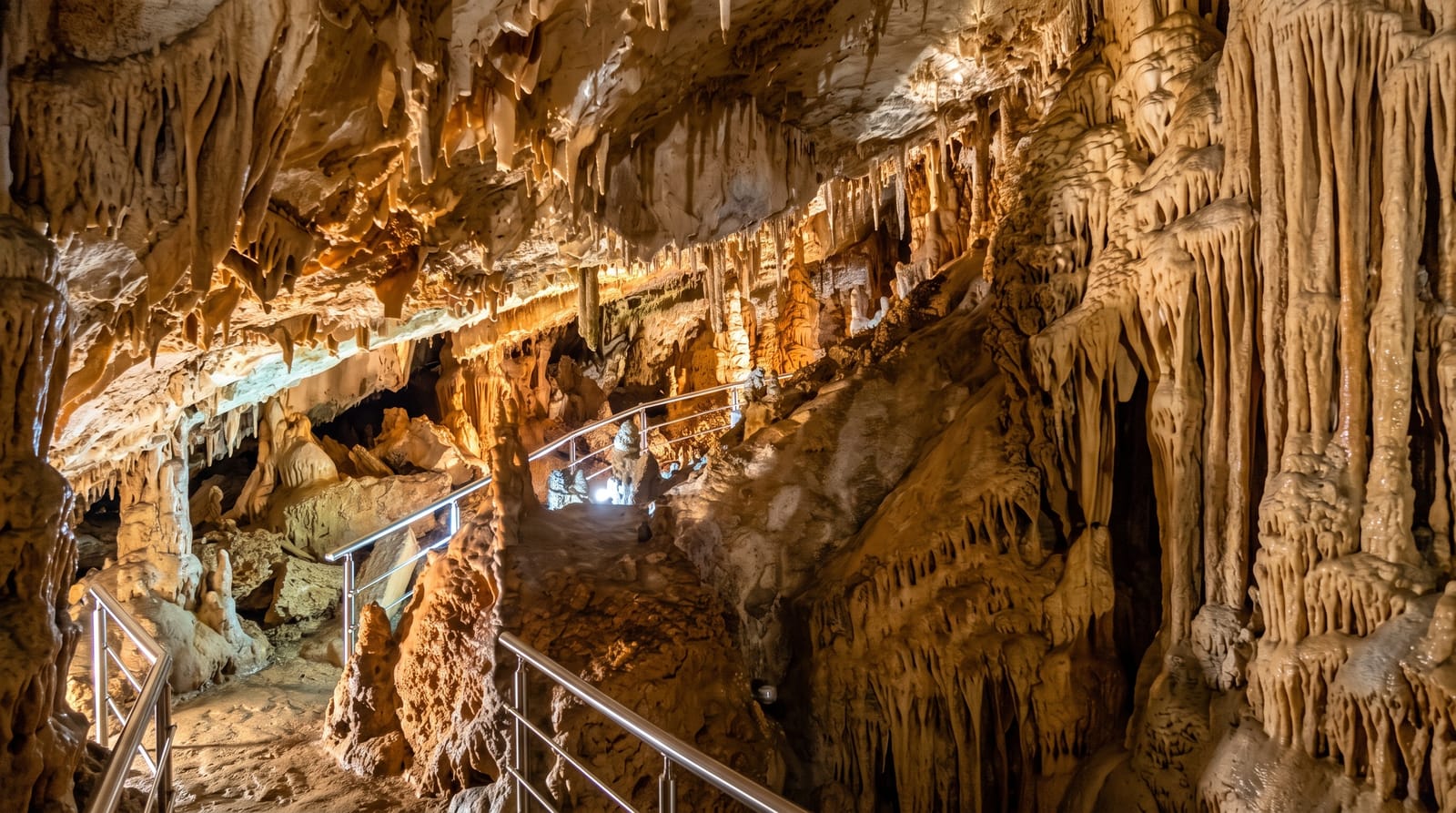
AI illustration
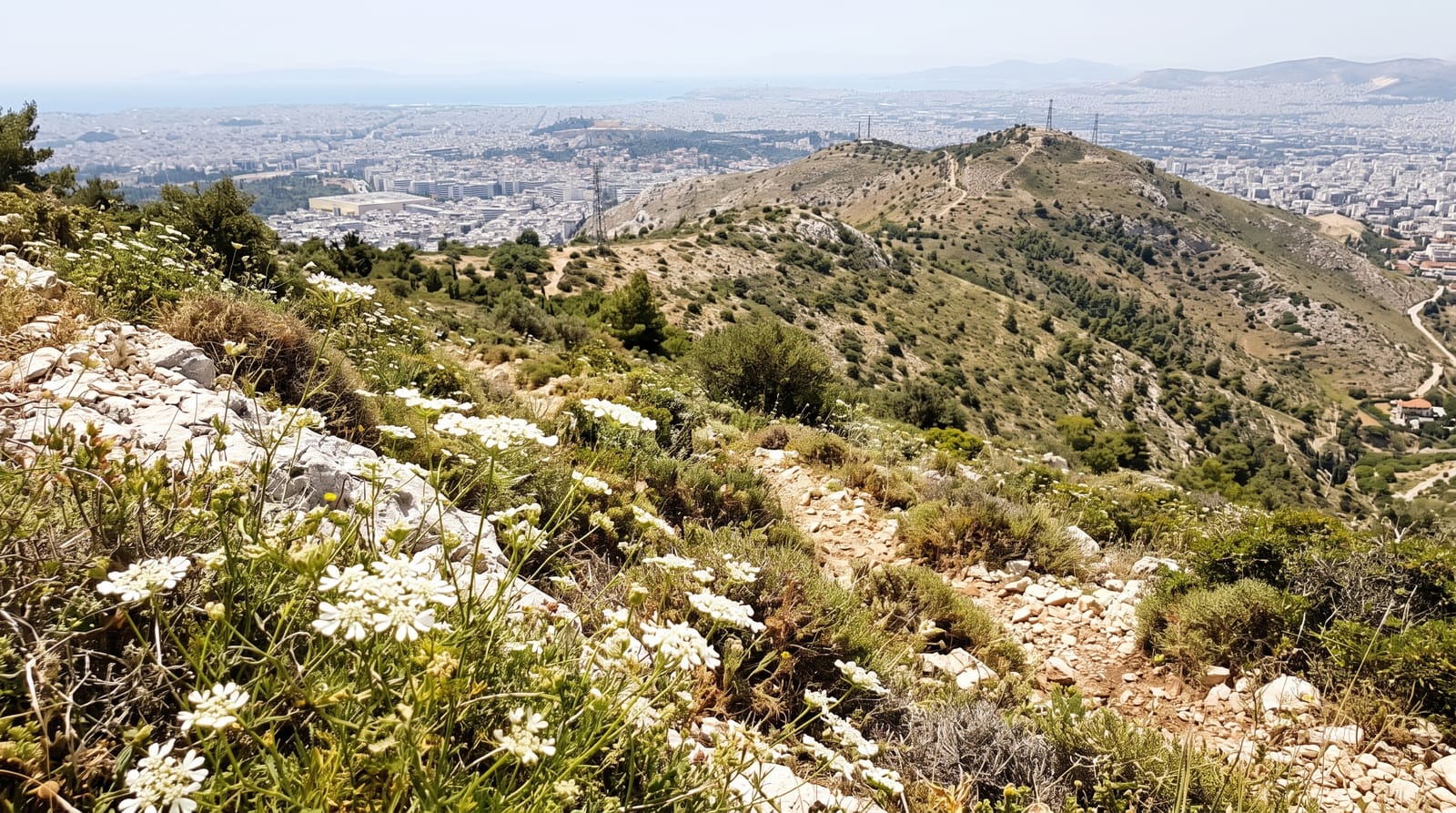
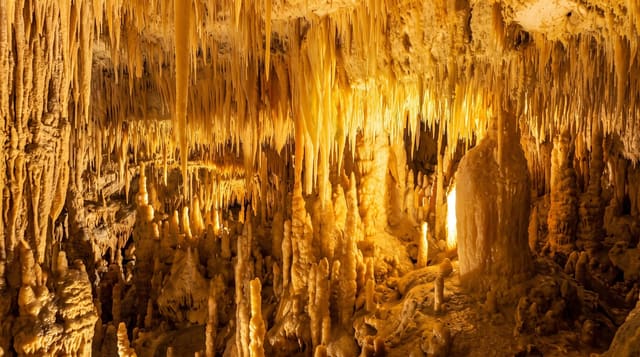
The cave was discovered in 1926 when a shepherd's goat fell through a hole in the hillside and the man climbed down after it; systematic exploration followed and it opened to visitors in 1978. The show cave is essentially one chamber about sixty by sixty metres and up to twenty metres high, packed with stalactites, stalagmites, columns and curtains lit along a short walkway, with the formations still growing under a steady drip. The temperature holds around seventeen degrees and humidity is high. It is the closest cave of its kind to Athens, reachable in half an hour from the centre, and the drive up the eastern flank of Hymettus gives views over the Mesogeia plain toward the airport and the Aegean.
Highlights
- The main chamber - a single large hall dense with formations.
- The lit walkway - a short circuit through the cave with coloured lighting.
- The growing formations - active drip and fresh calcite on the columns.
- The Mesogeia view - the plain and the sea from the cave entrance.
When to go
Year-round; the constant temperature makes it a useful hot-day or rainy-day trip from Athens. Tours run at set times and are shorter in winter.
Practical notes
The visit is brief, about thirty minutes inside, and guided at a fixed pace, usually in Greek. There is no public transport to the cave, so a car is needed. The coloured lighting is dated in style.
Nearby
Paiania and the Vorres Museum lie below; Mount Hymettus trails run above.
Key facts
Source: Wikidata, item Q38279664, read on 18 October 2026.
What to pack for Koutouki Cave
Chosen from what this place is for. Tap a kit for the full checklist.
- Broken-in walking shoes or boots - Grip and ankle support matter more than looks; never hike in brand-new boots. Find on Amazon
- Head torch + spare batteries - Hands-free light is essential; caves are truly dark. Find on Amazon
- Strong insect repellent - DEET or picaridin; the jungle is where bites and disease risk are highest. Find on Amazon
- Layers + a waterproof shell - Mountain weather turns fast; a packable rain jacket saves the day. Find on Amazon
Some links on this page are Amazon affiliate links - if you buy through them we may earn a small commission at no extra cost to you.
All packing kitsPlan your trip
Where to start if Koutouki Cave is going on the list.
Booking links on this page are affiliate links - if you book through them we may earn a small commission at no extra cost to you. It never changes what we write about a place.
Opening times, ticket prices and seasonal closures change - check the official source before you go: official site.