Kaisariani Monastery
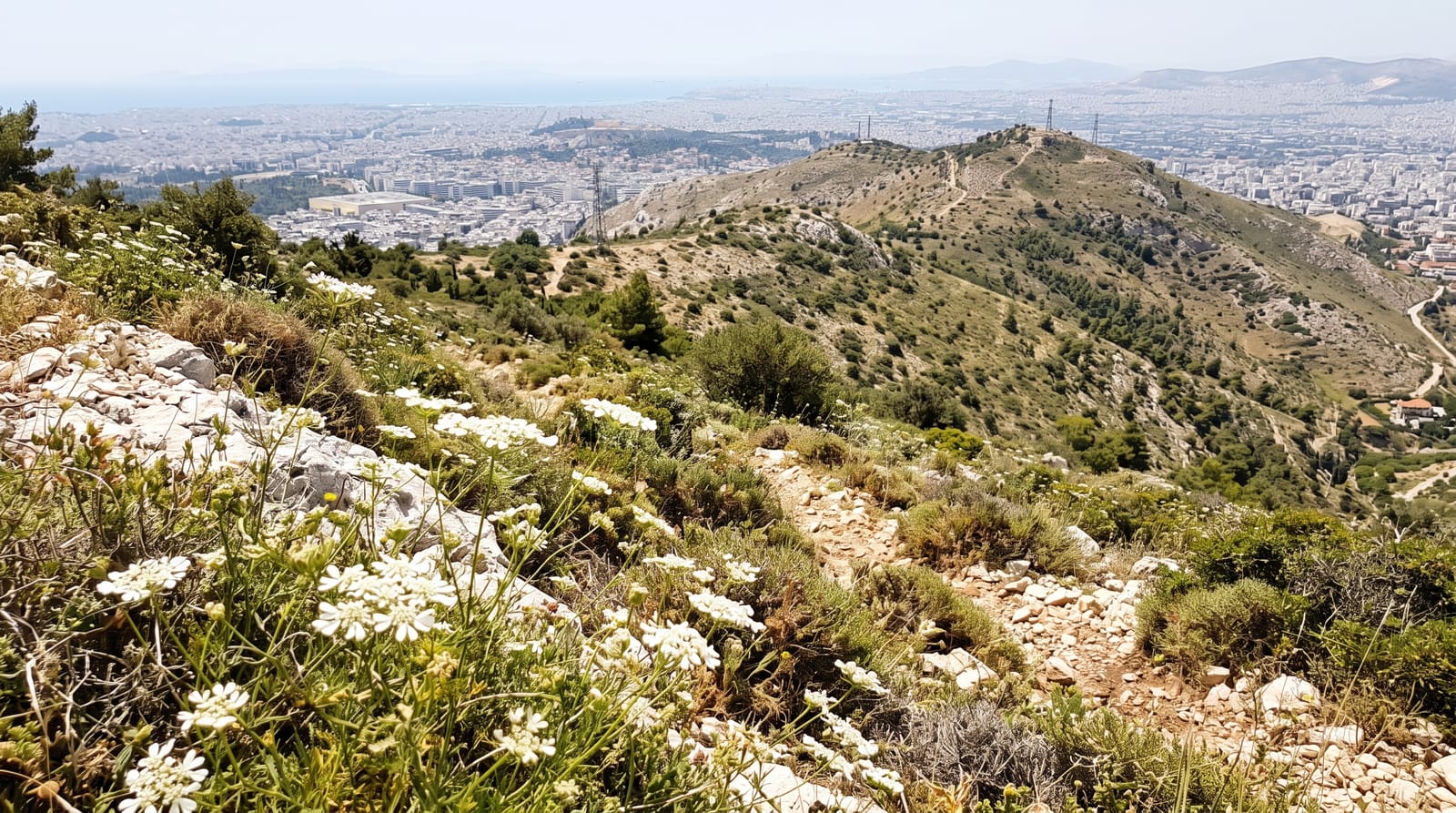
An eleventh-century monastery in a fold of Mount Hymettus, surrounded by planted forest and a spring known since antiquity.
Updated 19 October 2026

AI illustration
The monastery was founded in the eleventh century on a site sacred long before, where a spring fed by Hymettus was thought to cure infertility and where a temple of Aphrodite once stood; the ram's-head spout that still pours water into the courtyard is ancient. The church is a classic cross-in-square with a tiled dome, its interior covered in frescoes painted in the seventeenth and eighteenth centuries, dark and complete. Around it sit the refectory, bathhouse and mill, and beyond the wall spreads the Aesthetic Forest of Kaisariani, replanted from bare hillside by the Athens Friends of the Trees Society from 1930 onward, now dense pine and cypress laced with walking trails and picnic clearings. Hymettus was famous in antiquity for its honey, and the bees are still there.
History
The monastery was probably established around 1100, the date of its surviving church, on a site with a much longer history: in antiquity it was probably sacred to Aphrodite, Christians took it over in the 5th/6th centuries, and a large early Christian basilica lies to the west, with a smaller church of the 10th/11th centuries built over it. It stayed Orthodox after the Fourth Crusade, and in 1458, by the account of Jacob Spon in 1675, Sultan Mehmed II received the key of Athens here; in 1678 the patriarch made it independent of the bishop, a privilege withdrawn in 1792. Its famous library was dispersed, and during the Ottoman siege of the Acropolis in 1826-1827 its manuscripts were used to light fuses (Wikipedia, Kaisariani Monastery).
The main sights
- The frescoed church - a complete post-Byzantine painted interior.
- The ancient spring - the ram's-head spout in the monastery courtyard.
- The monastic buildings - refectory, bath and mill around the cloister.
- The planted forest - trails through pines grown on a once-bare mountain.
When to go
Autumn to spring, when the forest is green and the walking is comfortable; summer on Hymettus is hot and fire risk closes trails. The monastery keeps limited hours and closes on some weekdays.
Things to know
The monastery is small and quickly seen; the visit works best combined with a walk in the forest. Access without a car means a bus to Kaisariani and an uphill walk of about half an hour. Frescoes are dim, and photography inside is restricted.
Nearby
The Hymettus ridge trails run above; central Athens is twenty minutes down the hill.
Key facts
Source: Wikidata, item Q1168003, read on 18 October 2026.
What to pack for Kaisariani Monastery
Chosen from what this place is for. Tap a kit for the full checklist.
- Comfortable walking shoes - Sightseeing means kilometres of pavement and cobbles daily. Find on Amazon
- Modest clothing - Shoulders and knees covered - the single most common requirement. Find on Amazon
- A slim anti-theft daypack - Zips that close properly; keep it in front in crowds and on transit. Find on Amazon
- A scarf or shawl - To cover the head or shoulders on entry; women especially at mosques. Find on Amazon
Some links on this page are Amazon affiliate links - if you buy through them we may earn a small commission at no extra cost to you.
All packing kitsPlan your trip
Where to start if Kaisariani Monastery is going on the list.
Booking links on this page are affiliate links - if you book through them we may earn a small commission at no extra cost to you. It never changes what we write about a place.
Opening times, ticket prices and seasonal closures change - check the official source before you go: official site.