Ancient Eleutherna
A city inhabited for two thousand years on a narrow ridge, with a modern museum built for the finds beside it.
Updated 19 October 2026

AI illustration
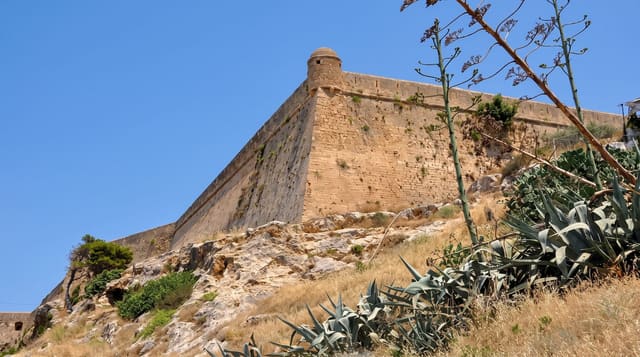
Eleutherna occupies a long narrow ridge with steep sides, occupied from the ninth century BC through the Roman and early Byzantine periods, and Cretan-led excavations since 1985 have produced some of the most important finds on the island: the necropolis at Orthi Petra yielded warrior burials, a funeral pyre matching Homeric descriptions in detail, and the so-called Lady of Auxerre style of early Greek sculpture. The site spreads over the ridge with a Hellenistic tower, a Roman bridge, cisterns, basilicas and the terraces of the ancient town. The museum, opened in 2016 as the first archaeological museum in Crete devoted to a single site, presents the material in three halls, and it is one of the best-designed small museums in Greece.
History
Eleutherna was a city-state on a narrow northern spur of Mount Ida, 25 km southeast of Rethymno, that flourished from the Greek Dark Ages until Byzantine times. The museum opened on 19 June 2016, the fourth in Greece devoted to a single archaeological site after Olympia, Delphi and Vergina, with finds spanning three and a half millennia, from 3000 BC to 1300 AD (Wikipedia, Museum of Ancient Eleutherna).
The main sights
- The Orthi Petra necropolis - the excavated cemetery that produced the key finds.
- The site museum - three halls of finds, purpose-built for Eleutherna.
- The Roman bridge - a stone crossing surviving below the ridge.
- The ridge town - terraces, cisterns and basilica foundations.
When to go
Spring and autumn; the ridge is exposed and hot in summer. Site and museum need separate time, and the museum closes on some weekdays.
What to expect
The excavations are spread along the ridge and involve walking on uneven ground with limited shade. Some sectors are fenced. The museum carries the interest for most visitors.
Nearby
Margarites potteries are minutes away; Arkadi monastery lies south, Rethymno northwest.
What to pack for Ancient Eleutherna
Chosen from what this place is for. Tap a kit for the full checklist.
- Comfortable walking shoes - Sightseeing means kilometres of pavement and cobbles daily. Find on Amazon
- Modest clothing - Shoulders and knees covered - the single most common requirement. Find on Amazon
- A slim anti-theft daypack - Zips that close properly; keep it in front in crowds and on transit. Find on Amazon
- A scarf or shawl - To cover the head or shoulders on entry; women especially at mosques. Find on Amazon
Some links on this page are Amazon affiliate links - if you buy through them we may earn a small commission at no extra cost to you.
All packing kitsPlan your trip
Where to start if Ancient Eleutherna is going on the list.
Booking links on this page are affiliate links - if you book through them we may earn a small commission at no extra cost to you. It never changes what we write about a place.
Opening times, ticket prices and seasonal closures change - check the official source before you go: official site.