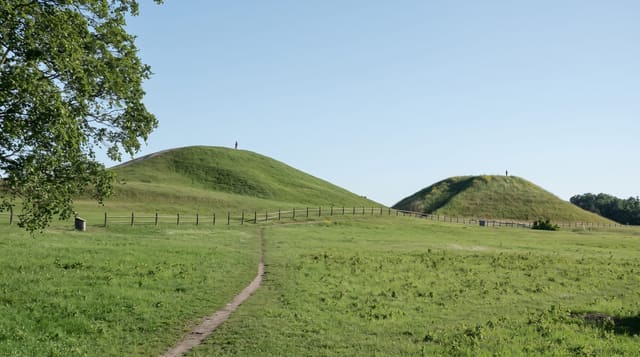
Al Zubarah
A ruined pearling and trading town on the north-west coast - Qatar's only cultural UNESCO site, with a restored desert fort beside it.
Updated 18 October 2026
AI illustration
UNESCO World Heritage
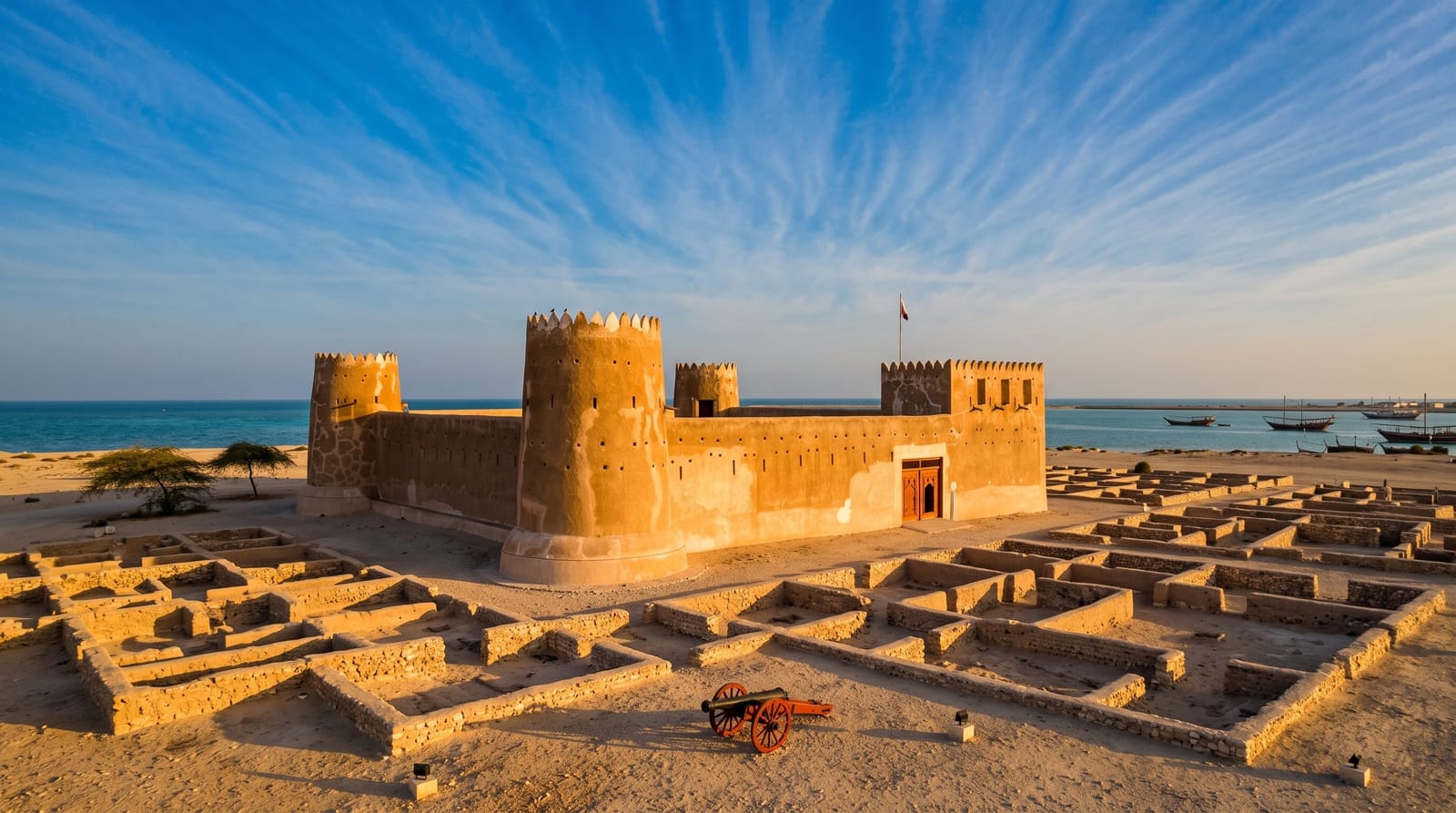
Al Zubarah was a pearling and trading town on the Gulf coast that flourished in the eighteenth century, connected to trade networks stretching to India and East Africa, and was abandoned in the early twentieth. Because it was never built over, the site preserves the full plan of a Gulf merchant town beneath the sand - walls, courtyard houses, mosques, a harbour and a defensive wall - and UNESCO listed it as the most complete surviving example of its kind. A short distance inland stands the restored Al Zubarah fort, built in 1938, which now houses the visitor centre and explains the excavation.
History
The name most likely comes from an Arabic word for a raised sand mound, fitting a town founded on high ground over the sea. Its origins are disputed: a 1986 book claimed a self-governing settlement there before the Bani Utbah, but the two documents it cited were later exposed as forgeries made amid a territorial dispute with Bahrain, and the more accepted account ties its rise to the Bani Utbah clans, who reached nearby Freiha from Najd before 1698, left for Iraq and Kuwait in 1716, and in the mid-18th century, probably in the 1760s, returned to settle Zubarah, about 100 metres from Freiha; a manuscript of 1766 already records it as a port. It grew into a centre of pearling and trade midway between the Strait of Hormuz and the western Gulf, Danish archaeologists surveyed it from 1956, Qatari teams excavated it in the 1980s and in 2002-2003, a ten-year research and conservation project with the University of Copenhagen began in 2009, and in 2013 it became a World Heritage Site (Wikipedia, Zubarah).
Highlights
- The excavated town - walls and house plans of the pearling settlement.
- Al Zubarah fort - the restored 1938 fort and visitor centre.
- The coastal setting - the harbour and shoreline the town depended on.
- The desert road north - the drive through empty Qatari interior.
When to go
The cool season from November to March is the only comfortable window - the site is entirely exposed and summer temperatures make it dangerous. Mornings are best. Weekends bring Qatari families to the fort.
Practical notes
Much of the town remains buried and what is visible is low walls and foundations - visitors expecting standing ruins will find something more archaeological than picturesque. There is no shade at all. The drive is long and there is little else nearby. The fort and its displays carry most of the interpretation, so start there rather than at the excavations.
Nearby
The northern coast, Madinat ash Shamal and the road back toward Doha.
Key facts
Source: Wikidata, item Q2727469, read on 18 October 2026.
What to pack for Al Zubarah
Chosen from what this place is for. Tap a kit for the full checklist.
- Loose, light, long clothing - Covering up beats bare skin in the desert - and locals dress this way for a reason. Find on Amazon
- Comfortable walking shoes - Sightseeing means kilometres of pavement and cobbles daily. Find on Amazon
- Modest clothing - Shoulders and knees covered - the single most common requirement. Find on Amazon
- A wide-brim hat + sunglasses - Shade for your face and eyes where there is none overhead. Find on Amazon
Some links on this page are Amazon affiliate links - if you buy through them we may earn a small commission at no extra cost to you.
All packing kitsPlan your trip
Where to start if Al Zubarah is going on the list.
Booking links on this page are affiliate links - if you book through them we may earn a small commission at no extra cost to you. It never changes what we write about a place.
Opening times, ticket prices and seasonal closures change - check the official source before you go: official site.