Goa Gajah
An eleventh-century rock-cut cave near Ubud whose entrance is carved as a huge open mouth, with bathing pools uncovered in front of it.
Updated 19 October 2026
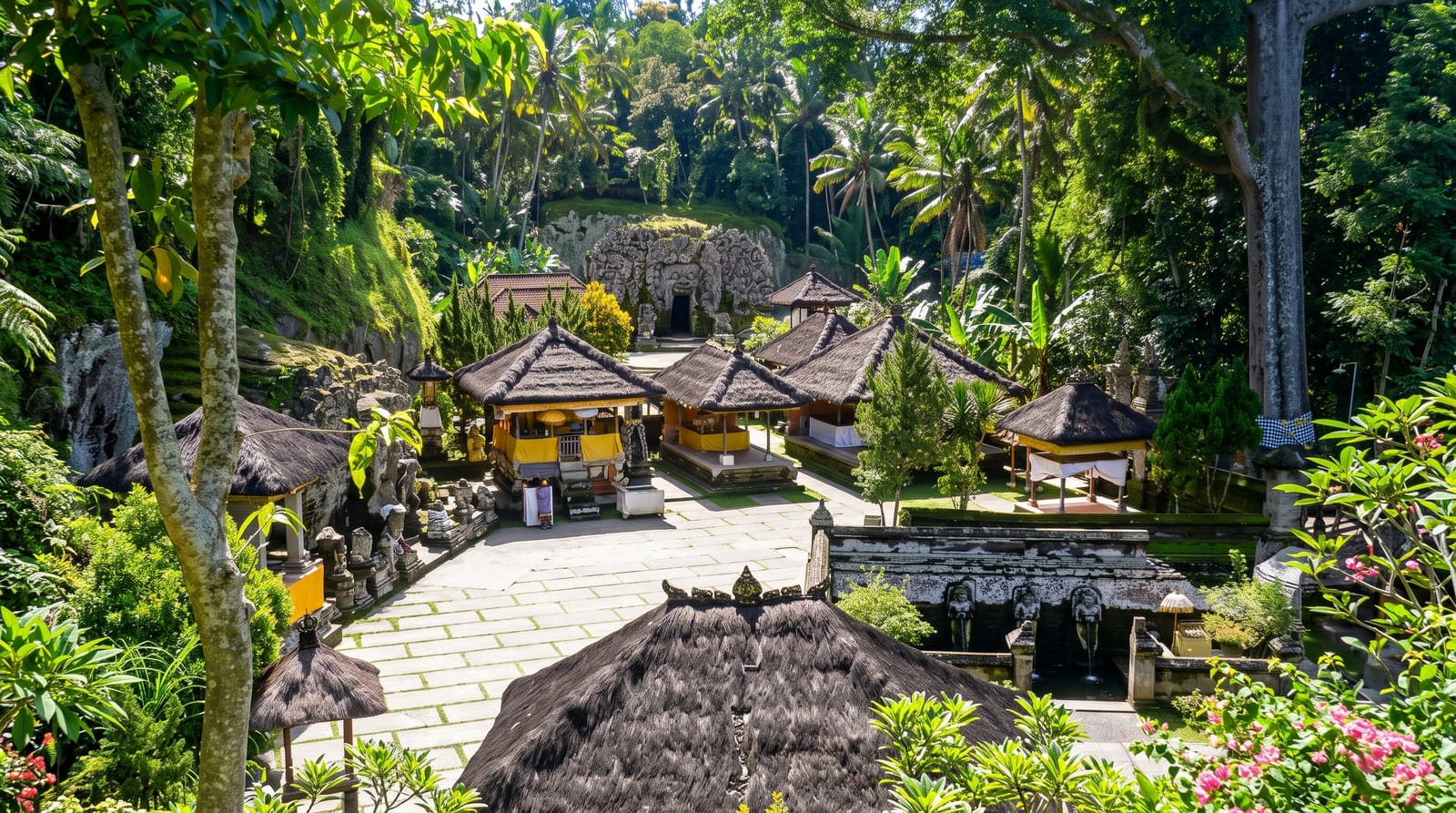
AI illustration
Goa Gajah, the Elephant Cave, is a small site with one very strong image: a doorway cut into a rock face and framed by a swarming carved relief, the entrance itself formed as an open mouth you step through. Inside, a short T-shaped passage smells of incense and holds stone niches with lingams and a figure of Ganesha. In front of it, a rectangular bathing place with stone figures pouring water from jars was uncovered in the 1950s after centuries under earth. Below the terrace, steps drop into a ravine where fragments of a Buddhist stupa lie among the trees and a stream. The name is old and nobody is certain where it came from.
History
Folklore says the cave was made with the fingernail of the giant Kebo Iwa, though its style suggests the 11th-century Bali kingdom, and it holds both Hindu and Buddhist imagery, a lingam and yoni and a Ganesha. Dutch archaeologists rediscovered the cave in 1923, and the fountains and bathing pool were found only in 1954 (Wikipedia, Goa Gajah).
What to look for
- The carved entrance - the cave mouth cut as a face amid a mass of rock relief.
- The inner passage - the T-shaped chamber with lingams and a Ganesha figure.
- The bathing pools - stone figures pouring water into rectangular basins.
- The ravine below - steps down to stupa fragments, a stream and rice fields.
When to go
Open through the day, and best in the first hour after opening before the Ubud tour circuit arrives; by mid-morning the small terrace can hold several coach groups at once. April to October is drier. The steps to the ravine are slick after rain, and the cave interior is dark and cramped whatever the weather.
What to expect
It is a small site and a fast visit, and the entrance carving is the only thing most people remember. Parking touts and a gauntlet of stalls come with it, and the ticket, parking and sarong hire add up for what may be twenty minutes of real interest. The cave interior is tight, hot and often queued. It works best combined with something else nearby.
Nearby
Ubud is fifteen minutes west; the Yeh Pulu rock reliefs are a short walk away through the fields.
Key facts
Source: Wikidata, item Q2037360, read on 18 October 2026.
What to pack for Goa Gajah
Chosen from what this place is for. Tap a kit for the full checklist.
- Head torch + spare batteries - Hands-free light is essential; caves are truly dark. Find on Amazon
- Comfortable walking shoes - Sightseeing means kilometres of pavement and cobbles daily. Find on Amazon
- Grippy closed shoes - Cave floors are wet, muddy and slick with formations. Find on Amazon
- A slim anti-theft daypack - Zips that close properly; keep it in front in crowds and on transit. Find on Amazon
Some links on this page are Amazon affiliate links - if you buy through them we may earn a small commission at no extra cost to you.
All packing kitsPlan your trip
Where to start if Goa Gajah is going on the list.
Booking links on this page are affiliate links - if you book through them we may earn a small commission at no extra cost to you. It never changes what we write about a place.
Opening times, ticket prices and seasonal closures change - check the official source before you go: official site.


