Agia Triada Monastery
A Venetian-era monastery of ochre stone among olive groves and vineyards, still pressing its own oil and wine.
Updated 21 October 2026
AI illustration
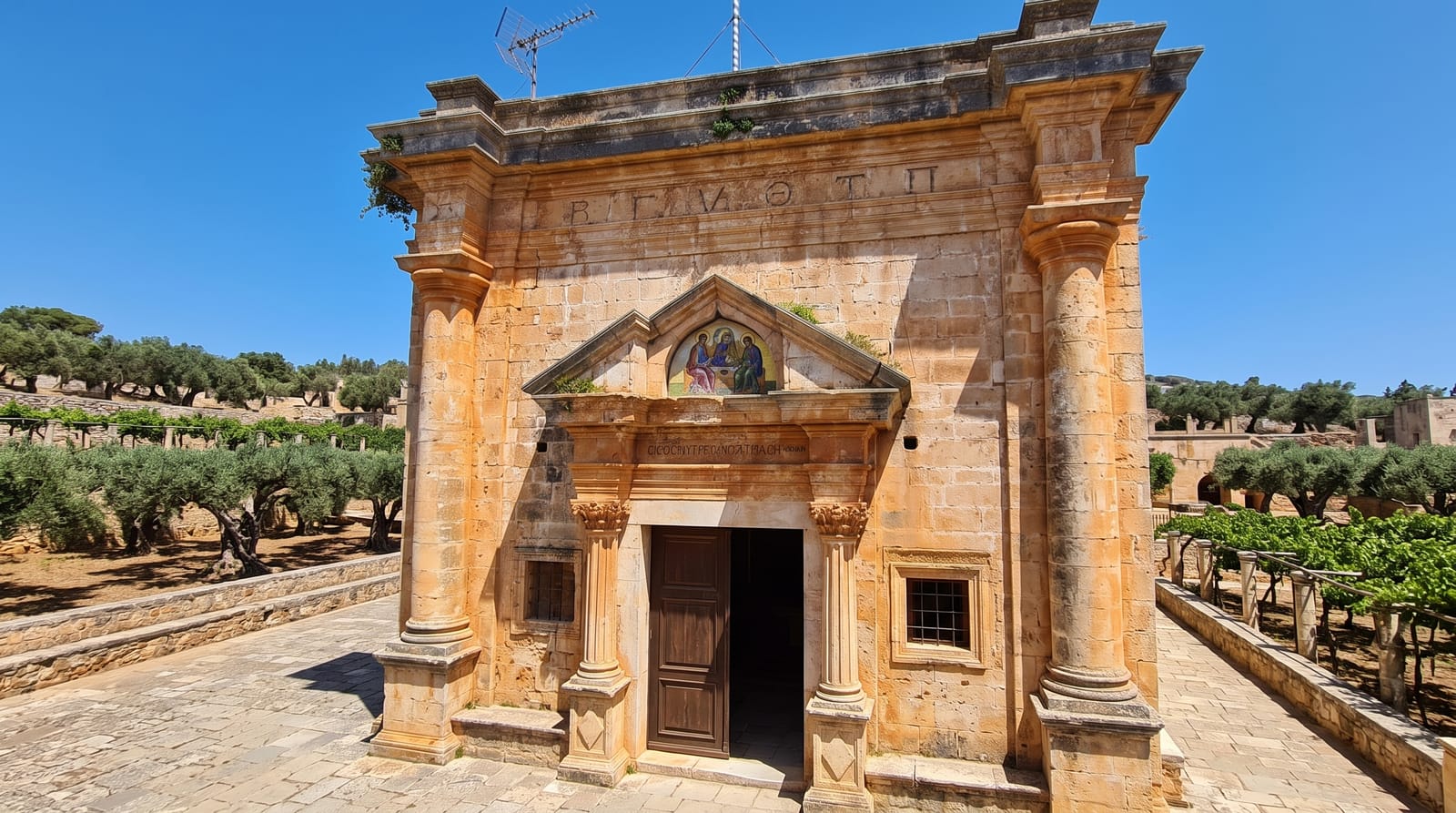
Agia Triada Tsagarolon was founded in the early seventeenth century by two brothers of the Venetian-Cretan Zangaroli family, and the architecture shows it: a Renaissance facade with Doric and Corinthian columns fronts an Orthodox church, an unusual hybrid, set in a courtyard of ochre walls with palms and cypresses. The monastery kept an important library and school, and today its working estate is part of the attraction: olive groves and vineyards on the surrounding slopes produce olive oil and wine sold at the gate, with a small production area open to view. A museum room holds icons and manuscripts. The setting on the dry Akrotiri plateau, with the White Mountains on the horizon, is quiet and unspoiled.
What to look for
- The Venetian facade - classical columns fronting an Orthodox church.
- The courtyard - ochre walls, palms and cypresses around the church.
- The estate production - olive oil and wine made on site.
- The museum room - icons, manuscripts and monastic objects.
When to go
Spring and autumn for the grounds at their best; the monastery keeps a midday break and modest dress is required. Harvest work is visible in late autumn.
Before you go
The visit is short, about an hour, and part of the complex is closed to visitors as a working community. Photography inside the church is restricted. The shop is a genuine part of the operation rather than a souvenir stand.
Nearby
Stavros lies north-west and Seitan Limania east on the peninsula; Chania is twenty minutes west.
Key facts
Source: Wikidata, item Q4301534, read on 18 October 2026.
What to pack for Agia Triada Monastery
Chosen from what this place is for. Tap a kit for the full checklist.
- Comfortable walking shoes - Sightseeing means kilometres of pavement and cobbles daily. Find on Amazon
- Modest clothing - Shoulders and knees covered - the single most common requirement. Find on Amazon
- A slim anti-theft daypack - Zips that close properly; keep it in front in crowds and on transit. Find on Amazon
- A scarf or shawl - To cover the head or shoulders on entry; women especially at mosques. Find on Amazon
Some links on this page are Amazon affiliate links - if you buy through them we may earn a small commission at no extra cost to you.
All packing kitsPlan your trip
Where to start if Agia Triada Monastery is going on the list.
Booking links on this page are affiliate links - if you book through them we may earn a small commission at no extra cost to you. It never changes what we write about a place.
Opening times, ticket prices and seasonal closures change - check the official source before you go: official site.