Salers
A village of dark volcanic stone at a thousand metres, giving its name to a cattle breed and a cheese.
Updated 21 October 2026
AI illustration
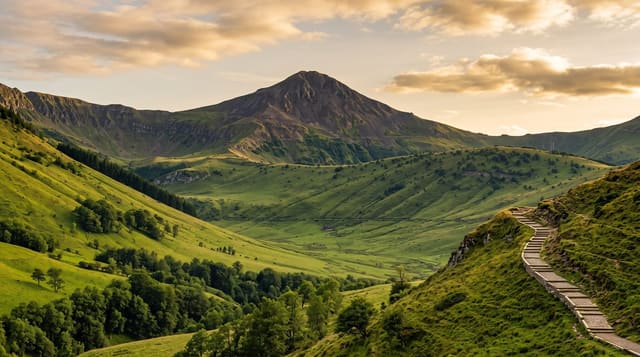
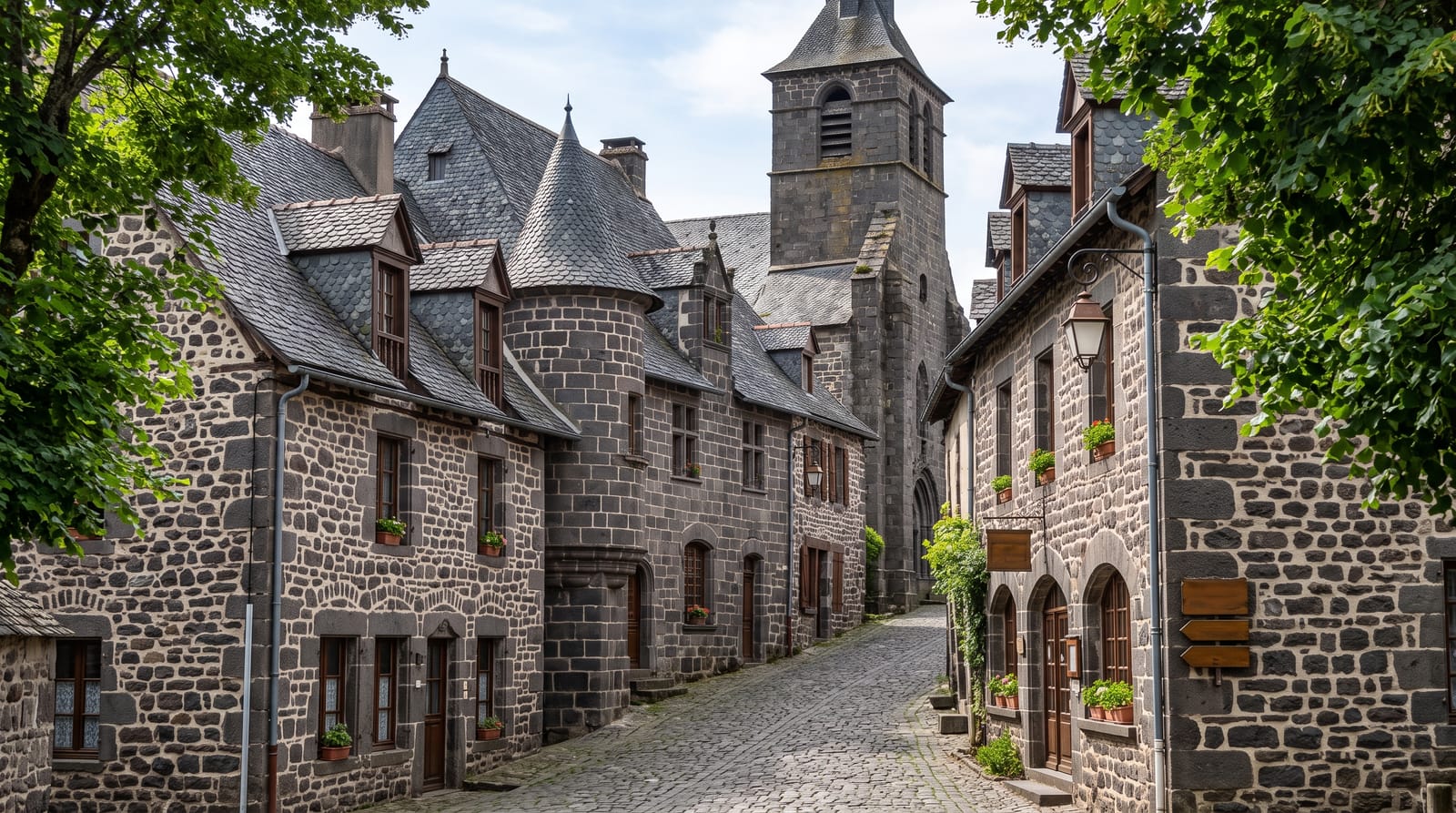
Salers stands at about nine hundred and fifty metres on a basalt shoulder of the Cantal volcano, and it is built entirely from that black-grey stone with lauze slab roofs, turrets and mullioned windows from the sixteenth century when it was a regional seat of justice. Three things carry the name: the village, the mahogany-red Salers cattle with their long lyre horns, and the cheese, which by rule can only be made on the farm between mid-April and mid-November, while the cows are on mountain pasture, in a wooden vat called a gerle. That seasonal restriction is unusual: the cheese is made only while the herds are on the grass.
What's there
- The black stone village - basalt houses with turrets and lauze roofs.
- The Salers cattle - red cows with lyre horns on the high pastures.
- The farm cheese - made only from mid-April to mid-November in wooden gerles.
- The Grande Place - a square of sixteenth-century judicial houses.
When to go
May to October, inside the season when Salers cheese is made. The village is at altitude and cold outside summer. August weekends are busy.
Things to know
The village is small and almost entirely given to shops selling cheese and the local gentian aperitif. It is high, exposed and often wet. Winter closes most of it.
Nearby
Puy Mary lies east; Aurillac is south.
Key facts
Source: Wikidata, item Q658602, read on 18 October 2026.
What to pack for Salers
Chosen from what this place is for. Tap a kit for the full checklist.
- Comfortable walking shoes - Sightseeing means kilometres of pavement and cobbles daily. Find on Amazon
- A slim anti-theft daypack - Zips that close properly; keep it in front in crowds and on transit. Find on Amazon
- A refillable water bottle - Many cities have public fountains; save money and plastic. Find on Amazon
- A light layer + compact umbrella - For museum air-con and a sudden shower. Find on Amazon
Some links on this page are Amazon affiliate links - if you buy through them we may earn a small commission at no extra cost to you.
All packing kitsPlan your trip
Where to start if Salers is going on the list.
Booking links on this page are affiliate links - if you book through them we may earn a small commission at no extra cost to you. It never changes what we write about a place.
Opening times, ticket prices and seasonal closures change - check the official source before you go: official site.