Ceret
A cherry town in the Pyrenean foothills where Picasso and Braque worked out cubism over two summers.
Updated 4 September 2026
AI illustration
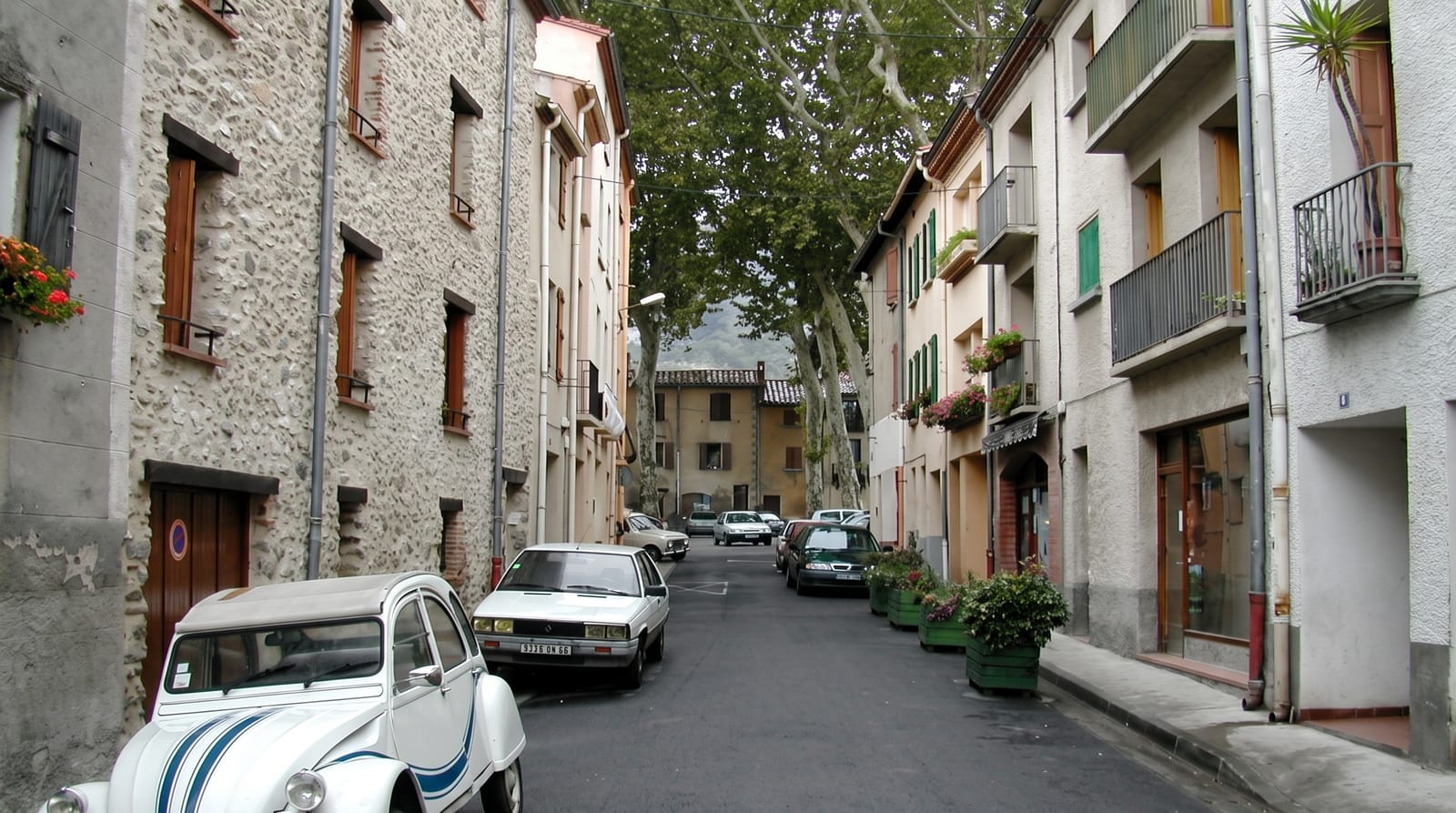
The sculptor Manolo settled in Ceret in 1910 and drew others after him: Picasso and Braque spent the summers of 1911 and 1912 here working in parallel on analytic cubism, and Soutine, Chagall, Gris and Masson came later, which is why the town is sometimes called the mecca of cubism. The Musee d'Art Moderne, founded in 1950 with donations from Picasso and Matisse among others, holds the results. Ceret also produces the first cherries in France each year, and by tradition the first crate of the season is sent to the president. Plane-shaded squares and a fourteenth-century single-arch bridge complete it.
Highlights
- The modern art museum - work by Picasso, Braque, Soutine and Chagall.
- The cubist summers - the town where analytic cubism was worked through.
- The Pont du Diable - a fourteenth-century single-arch bridge.
- The cherry orchards - France's earliest cherry harvest each spring.
When to go
April to June for cherries, with the fete in late May; the museum opens year-round but closes Tuesdays out of season and for rehanging. Summer is hot.
Before you go
The museum has closed for long renovation periods, so check before travelling. The cubist connection is history rather than anything visible in the streets. The town is small.
Nearby
Collioure lies east; the Spanish border is south.
Key facts
Source: Wikidata, item Q6643, read on 18 October 2026.
What to pack for Ceret
Chosen from what this place is for. Tap a kit for the full checklist.
- Comfortable walking shoes - Sightseeing means kilometres of pavement and cobbles daily. Find on Amazon
- A slim anti-theft daypack - Zips that close properly; keep it in front in crowds and on transit. Find on Amazon
- A refillable water bottle - Many cities have public fountains; save money and plastic. Find on Amazon
- A light layer + compact umbrella - For museum air-con and a sudden shower. Find on Amazon
Some links on this page are Amazon affiliate links - if you buy through them we may earn a small commission at no extra cost to you.
All packing kitsPlan your trip
Where to start if Ceret is going on the list.
Booking links on this page are affiliate links - if you book through them we may earn a small commission at no extra cost to you. It never changes what we write about a place.
Opening times, ticket prices and seasonal closures change - check the official source before you go: official site.