Orgues d'Ille-sur-Tet
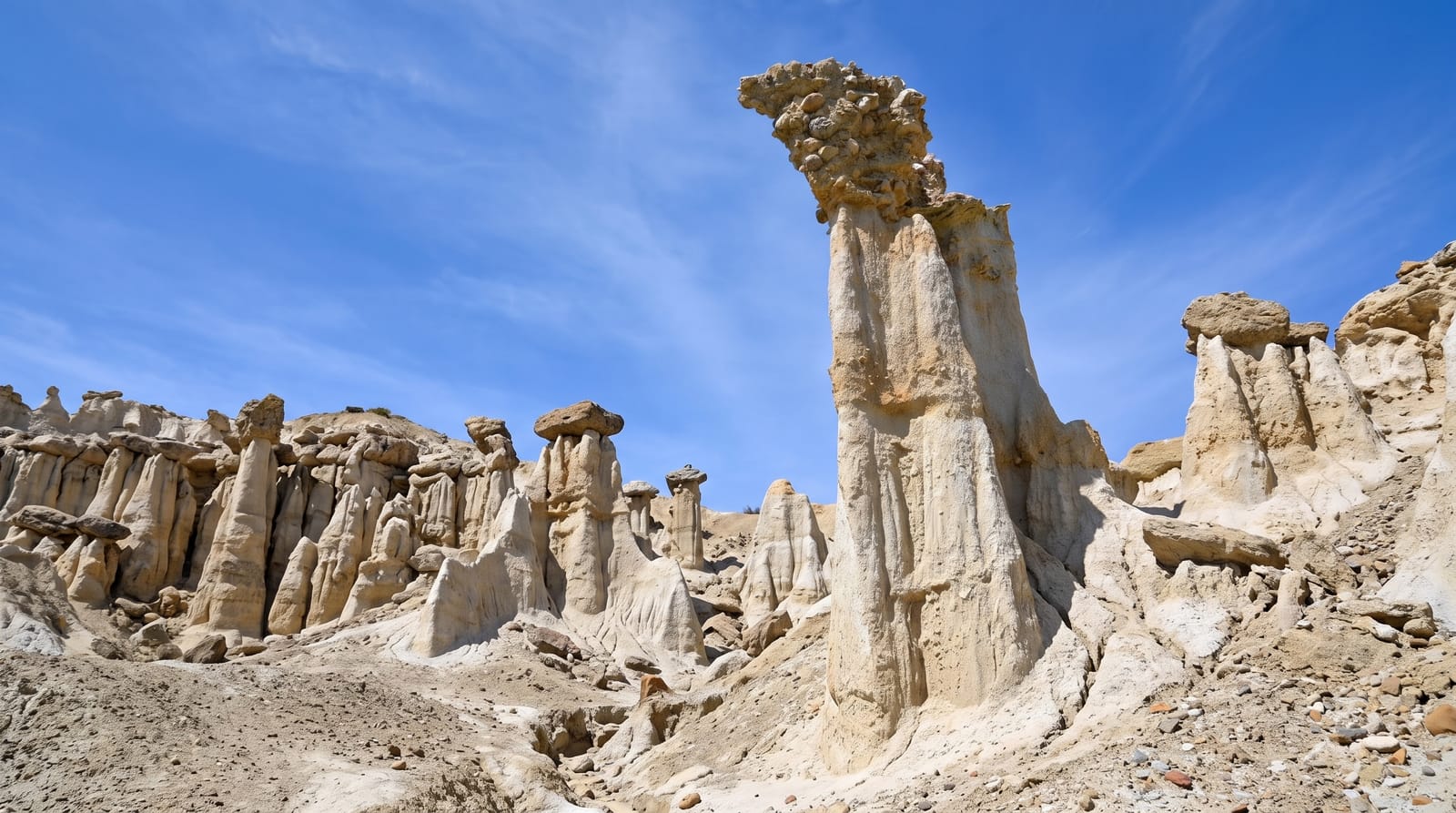
Pale sand columns capped by protective stones, eroding fast enough that the shapes visibly change.
Updated 4 September 2026
AI illustration
The Orgues are hoodoos formed in soft Pliocene sands and clays: rain washes the loose material away except where a harder stone caps a column, so the pillars stand while the ground around them lowers, giving fluted shapes that gave them the name organ pipes. They are pale cream and grey, and Canigou stands behind them on clear days. Because the material is soft, the formation is genuinely unstable and changes measurably from decade to decade, with columns collapsing and new ones emerging. A marked path runs through the amphitheatre and off-path walking is prohibited to slow the erosion.
Highlights
- The capped columns - pillars protected by a harder stone on top.
- The fluting - vertical channels cut by rain down the soft faces.
- The Canigou backdrop - the mountain behind the formation on clear days.
- The marked path - a short circuit through the amphitheatre.
When to go
April to June and September to October; low sun brings out the fluting. Summer is hot with no shade and the site can close in the hottest hours. Heavy rain closes it entirely.
Practical notes
The site is small and walked in under an hour. There is no shade and the sand reflects heat. Paths close after storms because the ground is unstable.
Nearby
Perpignan lies east; Villefranche-de-Conflent is west.
Key facts
Source: Wikidata, item Q3356248, read on 18 October 2026.
What to pack for Orgues d'Ille-sur-Tet
Chosen from what this place is for. Tap a kit for the full checklist.
- Broken-in walking shoes or boots - Grip and ankle support matter more than looks; never hike in brand-new boots. Find on Amazon
- Layers + a waterproof shell - Mountain weather turns fast; a packable rain jacket saves the day. Find on Amazon
- Daypack with rain cover - 20-30 litres holds water, snacks, layers and a first-aid kit. Find on Amazon
- Offline maps + a power bank - Download the trail before you lose signal; carry backup charge. Find on Amazon
Some links on this page are Amazon affiliate links - if you buy through them we may earn a small commission at no extra cost to you.
All packing kitsPlan your trip
Where to start if Orgues d'Ille-sur-Tet is going on the list.
Booking links on this page are affiliate links - if you book through them we may earn a small commission at no extra cost to you. It never changes what we write about a place.
Opening times, ticket prices and seasonal closures change - check the official source before you go: official site.


