Tongren
Villages where nearly every household paints thangka, an art tradition recognised by UNESCO.
Updated 19 October 2026

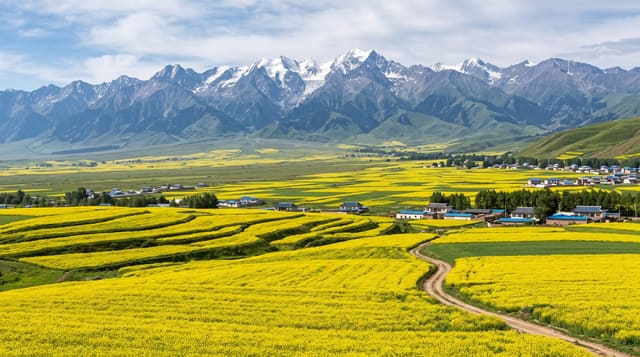
AI illustration
Tongren, known in Tibetan as Rebgong, is the centre of a painting tradition several centuries old in which whole villages, particularly Wutun and Nianduhu, live by making religious art: thangka scroll paintings, murals, appliqué and sculpture, with techniques passed from master to apprentice within families and boys often starting in childhood. Regong arts were inscribed by UNESCO in 2009. Workshops are open along the village lanes with painters at work on stretched canvases, grinding mineral pigments and applying gold. Wutun monastery and Longwu monastery hold examples in place, and the June festival brings village dancing and rituals.
History
The Regong arts - painting, sculpture, carving, architecture and embroidery on Tibetan Buddhist subjects - trace their origins to the 10th century and belong to the communities of Tongren, known to Tibetans as Rebgong, and the villages along the Rongwo River. Their best-known form is the thangka, painted with pigments from plants and minerals and with gold, and in 2009 the Regong arts were added to UNESCO's list of intangible cultural heritage (Wikipedia, Regong arts).
Highlights
- The painting workshops - thangka in progress in village houses.
- The mineral pigments - stone colours ground and mixed by hand.
- Wutun and Longwu monasteries - murals and sculpture in situ.
- The summer festival - village rituals and dancing in June.
When to go
April to October for mild weather; the Regong festival falls in the sixth lunar month, usually around July, and is the liveliest time. Winter is cold at 2,500 metres.
What to expect
Workshops are working businesses and expect sales interest. Prices for genuine hand-painted thangka are high, and printed copies are sold as originals in tourist shops. Photography inside monasteries is restricted.
Nearby
Kanbula lies north; Xining is northwest.
What to pack for Tongren
Chosen from what this place is for. Tap a kit for the full checklist.
- Layers for big temperature swings - Warm sun by day, near-freezing at night, even near the equator. Find on Amazon
- Comfortable walking shoes - Sightseeing means kilometres of pavement and cobbles daily. Find on Amazon
- Modest clothing - Shoulders and knees covered - the single most common requirement. Find on Amazon
- Extra-strong sun protection - Thin air means fierce UV; hat, sunglasses and high-SPF sunscreen. Find on Amazon
Some links on this page are Amazon affiliate links - if you buy through them we may earn a small commission at no extra cost to you.
All packing kitsPlan your trip
Where to start if Tongren is going on the list.
Booking links on this page are affiliate links - if you book through them we may earn a small commission at no extra cost to you. It never changes what we write about a place.
Opening times, ticket prices and seasonal closures change - check the official source before you go: official site.