Malabo
A Spanish-colonial city in the tropics - the capital of Equatorial Guinea until 2026, on Bioko Island, of faded Spanish colonial architecture and a colonial cathedral by the harbour, oil-boom towers and the unique character of the only Spanish-speaking nation in Africa.
Updated 19 October 2026

AI illustration
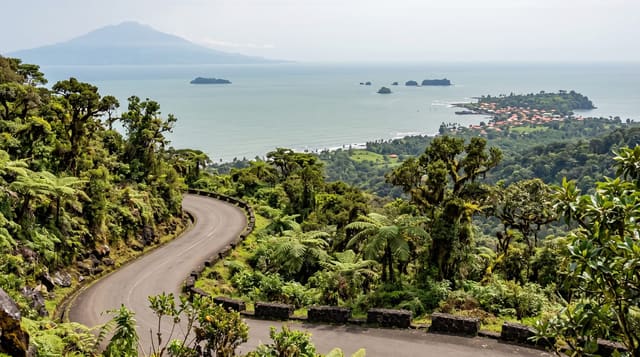
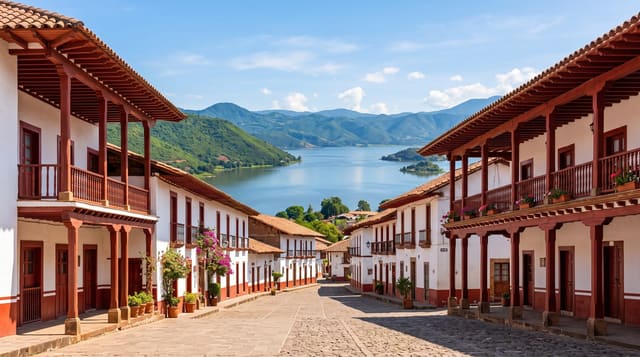
Malabo, the capital of Equatorial Guinea until the seat of government moved to Ciudad de la Paz on the mainland in January 2026, set on the island of Bioko beneath its volcanic peaks and beside a natural harbour, is a fascinating and unusual city, blending faded Spanish colonial charm with oil-fuelled modern development. Equatorial Guinea is the only country in Africa with Spanish as an official language, a legacy of its colonial past, and this heritage lingers in Malabo's atmosphere: in the pastel colonial buildings and arcaded streets of the old town, the landmark neo-Gothic Saint Elizabeth's Cathedral overlooking the port, and the Spanish spoken in its streets. Alongside these, gleaming towers and new districts reflect the country's oil wealth, making Malabo a striking city of contrasts.
History
The Portuguese navigator Fernão do Pó reached the island in 1472, and in 1507 Ramos de Esquivel made the first attempt to settle it, with a trading post and sugarcane plantations at Concepción, now Riaba. Portugal ceded the island to Spain by the treaties of 1777 and 1778, but Spain took little interest, and on 25 December 1827 the British captain William Fitzwilliam Owen founded Port Clarence here, on the ruins of an earlier Portuguese settlement, as a base for ships hunting slave traders, naming it after the Duke of Clarence, later King William IV; the Bubi called it Ripotó, "place of the foreigners". Slaves freed by the British were settled in the town, and with migrant workers from West Africa their descendants formed the Creole community known as Fernandinos, whose language is Pichinglis; the governor John Beecroft modernised the town and was later honoured by Spain with a monument at Punta Fernanda. Spain took the island back under its own control in 1855 and renamed the town Santa Isabel after Queen Isabella II, and in 1973 it took its present name from Malabo Lopelo Melaka, the last Bubi king (Wikipedia, Malabo).
What's there
- Saint Elizabeth's Cathedral - the landmark neo-Gothic cathedral by the port.
- The colonial old town - the faded Spanish pastel buildings.
- The harbour - the natural port beneath the volcanic peaks.
- The oil-boom districts - the gleaming modern towers.
When to go
November to February, the drier season, for the most comfortable weather, as Bioko is one of the wettest places in Africa; the colonial old town, cathedral and harbour are best explored in the cooler, drier hours. Malabo is the main arrival point and base for exploring Bioko Island.
Things to know
Equatorial Guinea is heavily regulated and one of Africa's most difficult and restrictive countries to visit, with difficult visas, security controls, restrictions on photography and an authoritarian government despite oil wealth, so travel is challenging and requires care and up-to-date advice. As an atmospheric and unusual former capital, though, blending faded Spanish colonial charm, a landmark cathedral and oil-boom modernity, and offering the unique character of the only Spanish-speaking nation in Africa, Malabo is a fascinating window into a little-known country.
Nearby
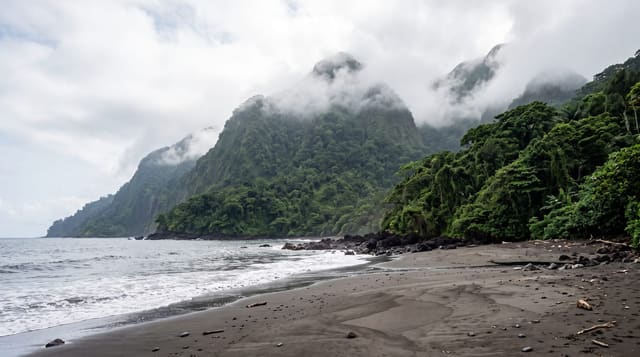
Bioko Island's rainforest, Pico Basile and the turtle beaches are within reach.
Key facts
Source: Wikidata, item Q3818, read on 18 October 2026.
What to pack for Malabo
Chosen from what this place is for. Tap a kit for the full checklist.
- Reef-safe sunscreen - High SPF that will not bleach the coral you are swimming over. Find on Amazon
- Binoculars - The single best wildlife tool - even a compact pair transforms a sighting. Find on Amazon
- Strong insect repellent - DEET or picaridin; the jungle is where bites and disease risk are highest. Find on Amazon
- Comfortable walking shoes - Sightseeing means kilometres of pavement and cobbles daily. Find on Amazon
Some links on this page are Amazon affiliate links - if you buy through them we may earn a small commission at no extra cost to you.
All packing kitsPlan your trip
Where to start if Malabo is going on the list.
Booking links on this page are affiliate links - if you book through them we may earn a small commission at no extra cost to you. It never changes what we write about a place.
Opening times, ticket prices and seasonal closures change - check the official source before you go: official site.