Perast
A single street of baroque palaces on the Bay of Kotor - no traffic, sixteen churches and two islets, one of them entirely artificial.
Updated 18 October 2026

AI illustration
UNESCO World Heritage
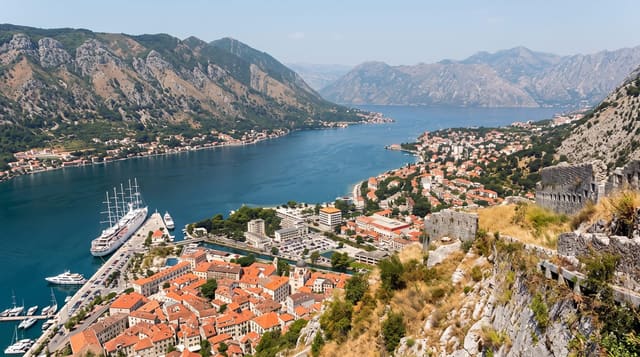
Perast is one long waterfront street of grey stone baroque palaces built by sea captains, backed by a steep mountain and facing two small islands. St George is natural, with a Benedictine monastery and cypresses; Our Lady of the Rocks is not - local sailors created it over centuries by sinking old ships and dropping stones after a Madonna icon was found on a reef there, and the tradition of adding rocks continues each July in a boat procession called fasinada. The town has no through traffic, which makes it one of the calmest places on a bay that gets extremely busy.
History
Archaeologists suppose the first settlements here go back to the Neolithic, and there are Illyrian, Roman and early Christian remains; the town's name may come from the Illyrian tribe of the Pirusti. Perast is first recorded in 1336 as a small fishing village with a shipyard, slow to grow beside Kotor's island of St George, and it prospered under Venice, becoming important on the border around 1482; it built the fortress of the Holy Cross and a dozen defensive towers, and after holding off a Turkish siege led by Mehmed-beg Rizvanagić in 1654 it won the right to guard the Venetian flag of St Mark. Our Lady of the Rocks, the only artificial island in the Adriatic at 3,030 square metres, was built up on a rock where two sailors of Perast found a picture of the Virgin Mary, and when Napoleon defeated Venice in 1797 Perast stayed loyal for several months before it had to lower the flag of St Mark. Matija Zmajević, an admiral of the Russian navy, came from the town (Wikipedia, Perast).
What's there
- Our Lady of the Rocks - the man-made islet church and its museum.
- The waterfront palaces - captains' houses along the single street.
- St Nicholas bell tower - the climb for the bay view.
- The fasinada - the July boat procession that keeps building the island.
When to go
May, June, September and October are the sweet months - warm water and manageable crowds. July and August bring cruise-ship day traffic through the bay and packed boat shuttles. The fasinada falls in late July. Winter is beautifully quiet with most places closed.
What to expect
Boats to the islet run constantly and cost little, but touts on the promenade quote inflated prices - the standard fare is modest. Swimming in Perast is from concrete platforms and small pebble patches rather than proper beaches. Parking is severely limited and paid; arriving by bus or boat from Kotor is easier. Restaurants on the waterfront charge for the view.
Nearby
Kotor old town, Risan's Roman mosaics and the bay road to Herceg Novi.
Key facts
Source: Wikidata, item Q998789, read on 18 October 2026.
What to pack for Perast
Chosen from what this place is for. Tap a kit for the full checklist.
- Travel rod + reel - A packable multi-piece rod fits in a case and covers most holiday fishing. Find on Amazon
- Reef-safe sunscreen - High SPF that will not bleach the coral you are swimming over. Find on Amazon
- Comfortable walking shoes - Sightseeing means kilometres of pavement and cobbles daily. Find on Amazon
- Modest clothing - Shoulders and knees covered - the single most common requirement. Find on Amazon
Some links on this page are Amazon affiliate links - if you buy through them we may earn a small commission at no extra cost to you.
All packing kitsPlan your trip
Where to start if Perast is going on the list.
Booking links on this page are affiliate links - if you book through them we may earn a small commission at no extra cost to you. It never changes what we write about a place.
Opening times, ticket prices and seasonal closures change - check the official source before you go: official site.