The Bay of Kotor
A fjord in the Mediterranean - a stunning, winding bay of deep blue water ringed by soaring mountains and dotted with ancient stone towns, islands and churches, one of the most beautiful in southern Europe.
Updated 18 October 2026

AI illustration
UNESCO World Heritage
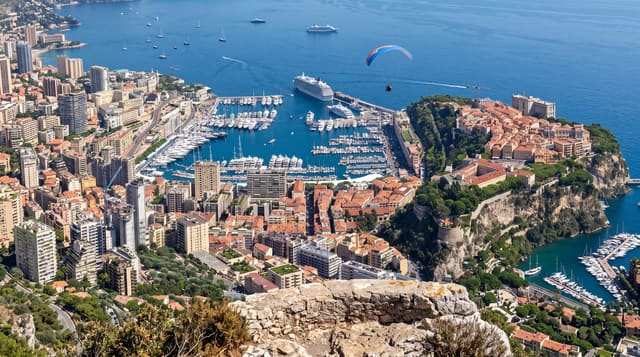
The Bay of Kotor is one of the most beautiful bays in southern Europe, a stunning, deeply indented inlet of the Adriatic that winds far inland between soaring, dramatic mountains, often compared to a Mediterranean fjord. Its calm blue waters are ringed by a string of atmospheric old stone towns and villages, from Kotor to pretty Perast, and dotted with tiny islands and churches, most famously the man-made islet of Our Lady of the Rocks, best explored on a leisurely drive or boat trip around its shores.
History
South Slavs settled in the Balkans in the 6th century, and in De Administrando Imperio of about 960 Risan belonged to the principality of Travunia; after the Great Schism of 1054 the coast came under both churches, and from 1171, when Stefan Nemanja launched an offensive towards Kotor, the bay was ruled by the Nemanjić dynasty, Nemanja and his son Vukan building St Luke's Church in Kotor in 1195 and Saint Sava founding the seat of the Eparchy of Zeta on Prevlaka in 1219. In 1420 Kotor accepted Venetian rule, which lasted until 1797, while the north of the bay remained under Bosnia and the south under Zeta and later the Serbian Despotate. The Treaty of Campo Formio of 1797 gave the bay to the Habsburgs, the Austrian Empire annexed it in 1815 as part of Dalmatia, the Serbian army entered on 7 November 1918, and in 1979 the Natural and Culturo-Historical Region of Kotor became a World Heritage Site (Wikipedia, Bay of Kotor).
The landscape
- The winding bay - the dramatic fjord-like inlet and mountains.
- Perast - the elegant baroque town on the bay.
- Our Lady of the Rocks - the church on a man-made islet.
- The coastal drive or boat trip - the tour around the bay's shores.
When to go
May to June and September to October for pleasant weather and calmer crowds; the summer is hot and busy. A boat trip on the bay is lovely, and the winding coastal road offers spectacular views, especially the serpentine climb up to the Lovcen heights for a panorama over the whole bay.
What to expect
The bay is busiest in summer, especially when cruise ships dock at Kotor, and the narrow coastal road can be slow and congested. The serpentine mountain roads, while spectacular, are winding and demand careful driving. It is genuinely one of the most beautiful bays in Europe, best enjoyed by combining the towns, a boat trip and the mountain viewpoints.
Nearby
Kotor, Perast, Budva and the Lovcen mountain are around the bay.
Key facts
Source: Wikidata, item Q207468, read on 18 October 2026.
What to pack for The Bay of Kotor
Chosen from what this place is for. Tap a kit for the full checklist.
- Broken-in walking shoes or boots - Grip and ankle support matter more than looks; never hike in brand-new boots. Find on Amazon
- Spare batteries + cards - Cold and long shoots drain power; never run out at the good light. Find on Amazon
- Layers + a waterproof shell - Mountain weather turns fast; a packable rain jacket saves the day. Find on Amazon
- A compact tripod - Essential for night skies, aurora, waterfalls and low light. Find on Amazon
Some links on this page are Amazon affiliate links - if you buy through them we may earn a small commission at no extra cost to you.
All packing kitsPlan your trip
Where to start if The Bay of Kotor is going on the list.
Booking links on this page are affiliate links - if you book through them we may earn a small commission at no extra cost to you. It never changes what we write about a place.
Opening times, ticket prices and seasonal closures change - check the official source before you go: official site.