Real de Catorce
A silver ghost town high in the San Luis Potosí desert, reached through a two-kilometre tunnel bored under the mountain.
Updated 20 October 2026
AI illustration
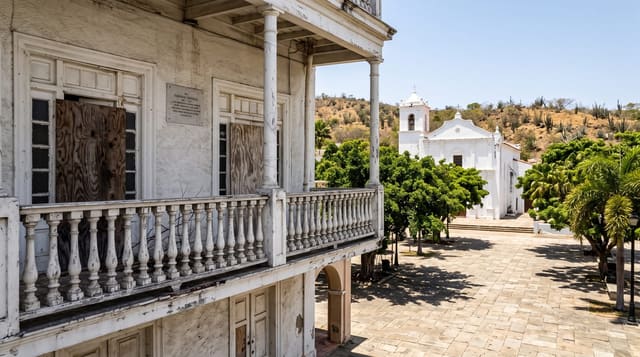
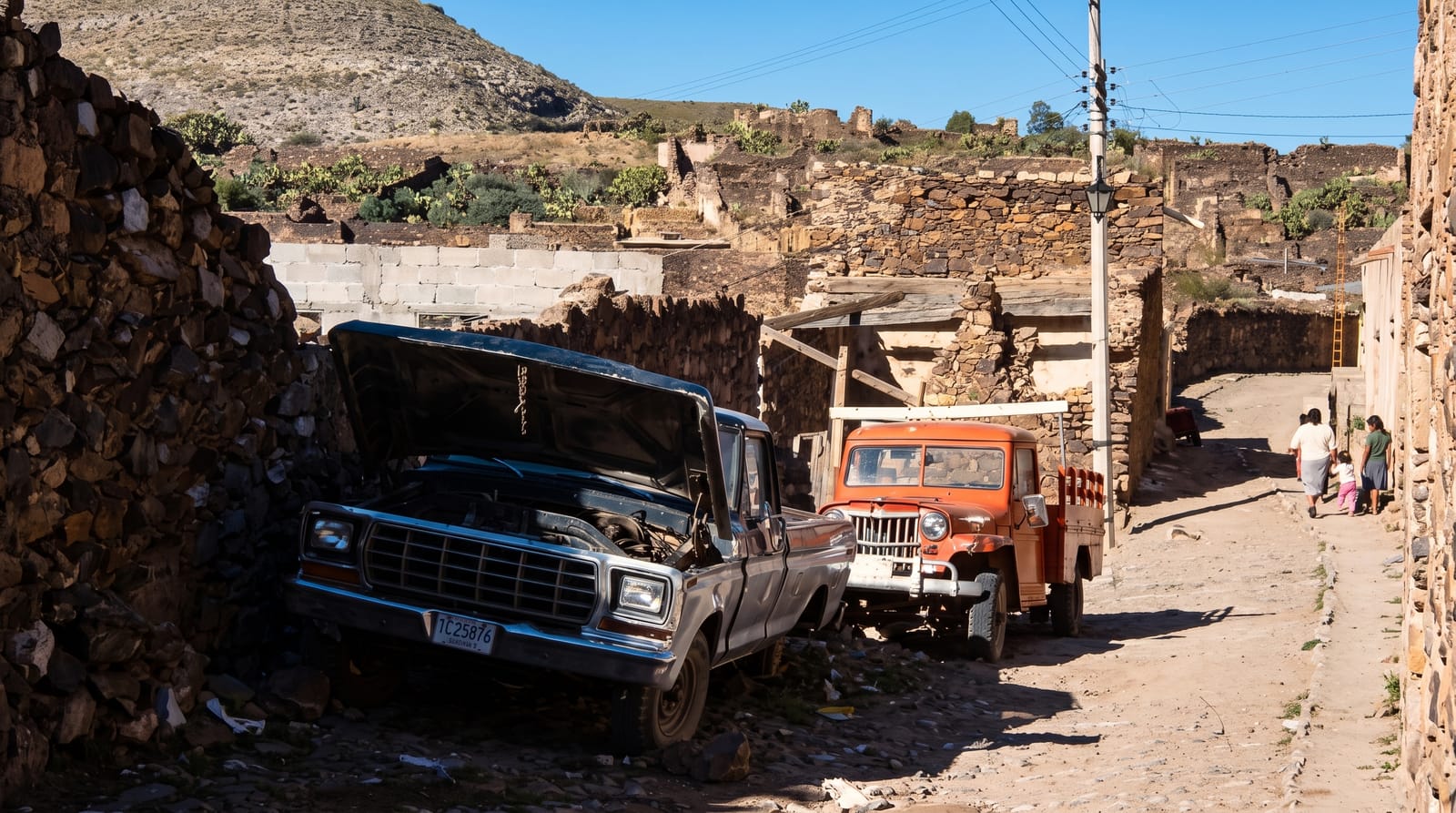
Real de Catorce was one of the richest silver towns in Mexico and held some fifteen thousand people in its heyday; when the price collapsed early in the twentieth century almost everyone left, and what remains is a small settlement of under a thousand living among the roofless shells of the rest, at around two thousand seven hundred metres in the high desert. The only road in runs through the Ogarrio tunnel, a former mine adit two kilometres long and wide enough for one vehicle, controlled by traffic lights at either end, which makes the arrival memorable. Cobbled streets climb between ruins to a church holding a much-venerated image of Saint Francis. Horses and jeeps take visitors out to the Pueblo Fantasma ruins and the desert plateau beyond.
History
Silver was found in the mountains in 1772, and the town was officially founded in 1779; its parish church was built between 1790 and 1817. In its heyday in the late 19th century Real de Catorce had 15,000 people, some of the richest silver mines in Mexico, a mint and a bullring, and after the silver price fell around 1900 only a few stayed, living from the mine tailings and the pilgrims who came to the image of St Francis (Wikipedia, Real de Catorce).
What's there
- The Ogarrio tunnel - the two-kilometre single-lane mine adit that is the only way in.
- The ruined town - roofless silver-era buildings among the inhabited streets.
- The church of Saint Francis - the pilgrimage image and its wall of retablos.
- The high desert - horseback and jeep trips out to the plateau and ghost workings.
When to go
October to April is drier and clearer; the altitude keeps it cool year-round and cold at night. The Saint Francis pilgrimage in early October fills the town completely. Weekdays are very quiet, which suits the place.
Good to know
The altitude is nearly two thousand seven hundred metres and visitors feel it on the steep cobbled streets. The tunnel is single-lane and controlled, so there can be a wait at either end. Facilities are simple. The surrounding desert is sacred to the Wixárika people, who make an annual pilgrimage here, and peyote tourism is both illegal and deeply resented locally.
Nearby
Matehuala is an hour below; San Luis Potosí city is three hours south.
Key facts
Source: Wikidata, item Q1027749, read on 18 October 2026.
What to pack for Real de Catorce
Chosen from what this place is for. Tap a kit for the full checklist.
- Loose, light, long clothing - Covering up beats bare skin in the desert - and locals dress this way for a reason. Find on Amazon
- Comfortable walking shoes - Sightseeing means kilometres of pavement and cobbles daily. Find on Amazon
- Modest clothing - Shoulders and knees covered - the single most common requirement. Find on Amazon
- A wide-brim hat + sunglasses - Shade for your face and eyes where there is none overhead. Find on Amazon
Some links on this page are Amazon affiliate links - if you buy through them we may earn a small commission at no extra cost to you.
All packing kitsPlan your trip
Where to start if Real de Catorce is going on the list.
Booking links on this page are affiliate links - if you book through them we may earn a small commission at no extra cost to you. It never changes what we write about a place.
Opening times, ticket prices and seasonal closures change - check the official source before you go: official site.