Tazumal
A stepped Maya pyramid in the western highlands - the country's best-restored pre-Columbian structure, in the middle of a modern town.
Updated 19 October 2026
AI illustration
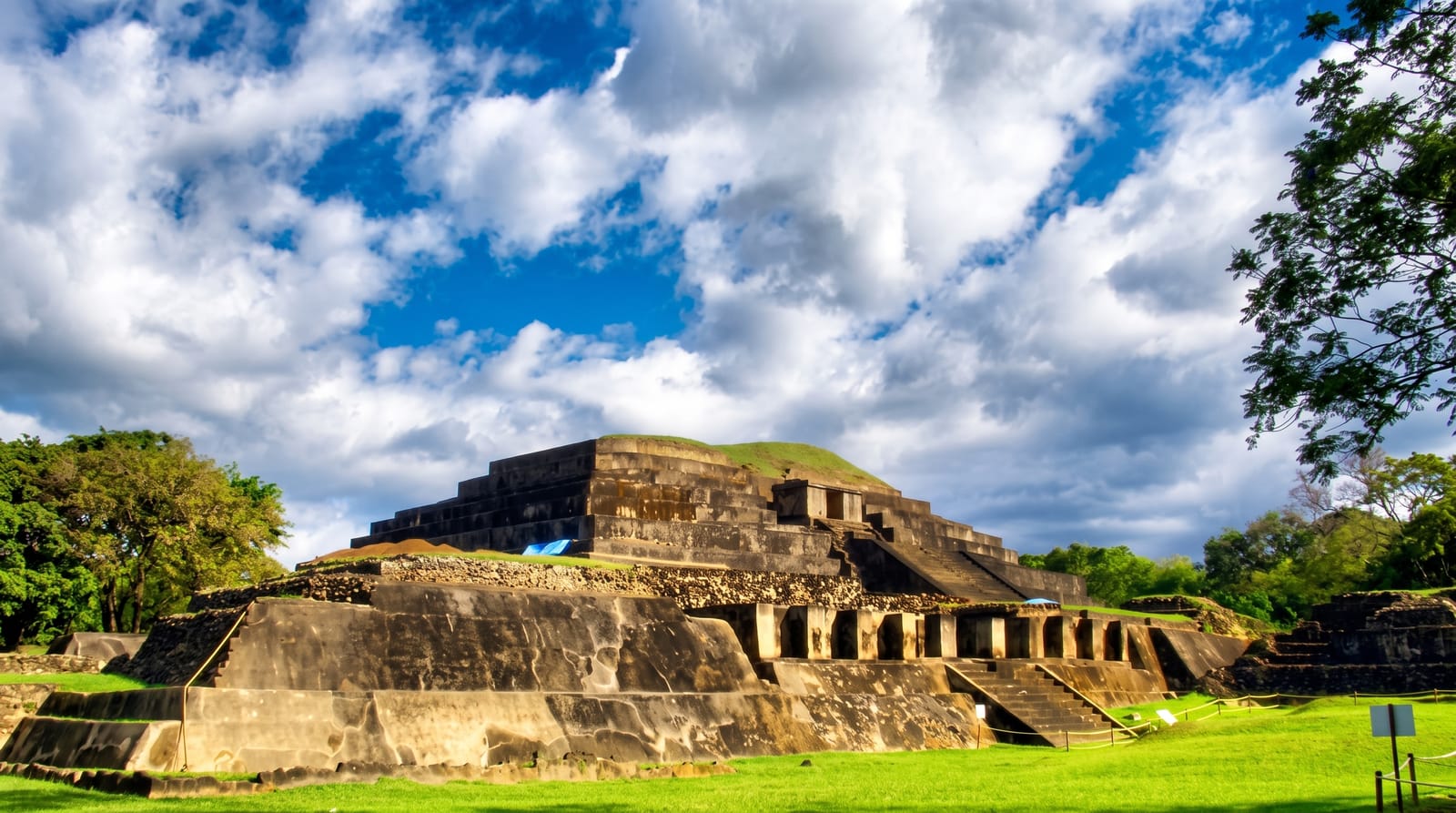
Tazumal sits in the middle of Chalchuapa, surrounded by an ordinary Salvadoran town, and its stepped pyramid is the most completely restored pre-Columbian structure in the country. The site was occupied for well over a thousand years and shows influences from across Mesoamerica - Maya, Teotihuacan and later Pipil - reflecting Chalchuapa's position on trade routes. Excavations recovered jade, ceramics and a famous stone figure, with much of it displayed in the site museum. The 1940s restoration used concrete, which archaeologists now regret, but the shape and scale still land.
History
Tazumal forms the southern part of the ancient city of Chalchuapa, inhabited since the Preclassic period; building here was interrupted around the end of the Late Preclassic by the eruption of the Ilopango volcano, some 75 km to the east, and resumed only after a pause that may have lasted generations. Its main structures date from the Classic period, when Tazumal had links with the Maya city of Kaminaljuyu and through it with Teotihuacan, and later with Copán, and metal objects found here, dating from the 8th century AD, are among the earliest evidence of metalworking in Mesoamerica. Its people lived alongside the Nahua-speaking Pipils until at least AD 1200, after which the site was largely abandoned as settlement moved west to the centre of modern Chalchuapa. Between 1942 and 1944 Stanley Boggs excavated and restored structures B1-1 and B1-2, coating them in modern cement, and in 1947 Tazumal was declared a National Historic Monument; until 2001 it appeared on the 100 colón note, and new research began in the early 21st century, including a project by the Japanese University of Nagoya (Wikipedia, Tazumal).
The main sights
- The main pyramid - the restored stepped structure at the site's centre.
- The site museum - jade, ceramics and finds from the excavations.
- The ball court remains - the Mesoamerican court within the complex.
- Casa Blanca and San Andres - other sites in the same archaeological zone.
When to go
The dry season from November to April is more comfortable; the site is open and shadeless. Mornings avoid the worst heat. It is open year round with a closed day midweek, so check before travelling.
Things to know
The concrete restoration is obvious and disappointing to visitors who have seen sites in Guatemala or Mexico - Tazumal is modest by regional standards and largely still buried under the town. The visit takes an hour or two. Labelling is mostly in Spanish. It works best combined with Joya de Ceren and San Andres on a single archaeology day.
Nearby
Joya de Ceren, San Andres, Santa Ana and Lake Coatepeque.
Key facts
Source: Wikidata, item Q690372, read on 18 October 2026.
What to pack for Tazumal
Chosen from what this place is for. Tap a kit for the full checklist.
- Comfortable walking shoes - Sightseeing means kilometres of pavement and cobbles daily. Find on Amazon
- A slim anti-theft daypack - Zips that close properly; keep it in front in crowds and on transit. Find on Amazon
- A refillable water bottle - Many cities have public fountains; save money and plastic. Find on Amazon
- A light layer + compact umbrella - For museum air-con and a sudden shower. Find on Amazon
Some links on this page are Amazon affiliate links - if you buy through them we may earn a small commission at no extra cost to you.
All packing kitsPlan your trip
Where to start if Tazumal is going on the list.
Booking links on this page are affiliate links - if you book through them we may earn a small commission at no extra cost to you. It never changes what we write about a place.
Opening times, ticket prices and seasonal closures change - check the official source before you go: official site.


