The Sierpe-Térraba Mangroves
Costa Rica's largest mangrove forest, inside a protected wetland of over three hundred square kilometres at the mouth of two rivers.
Updated 14 October 2026
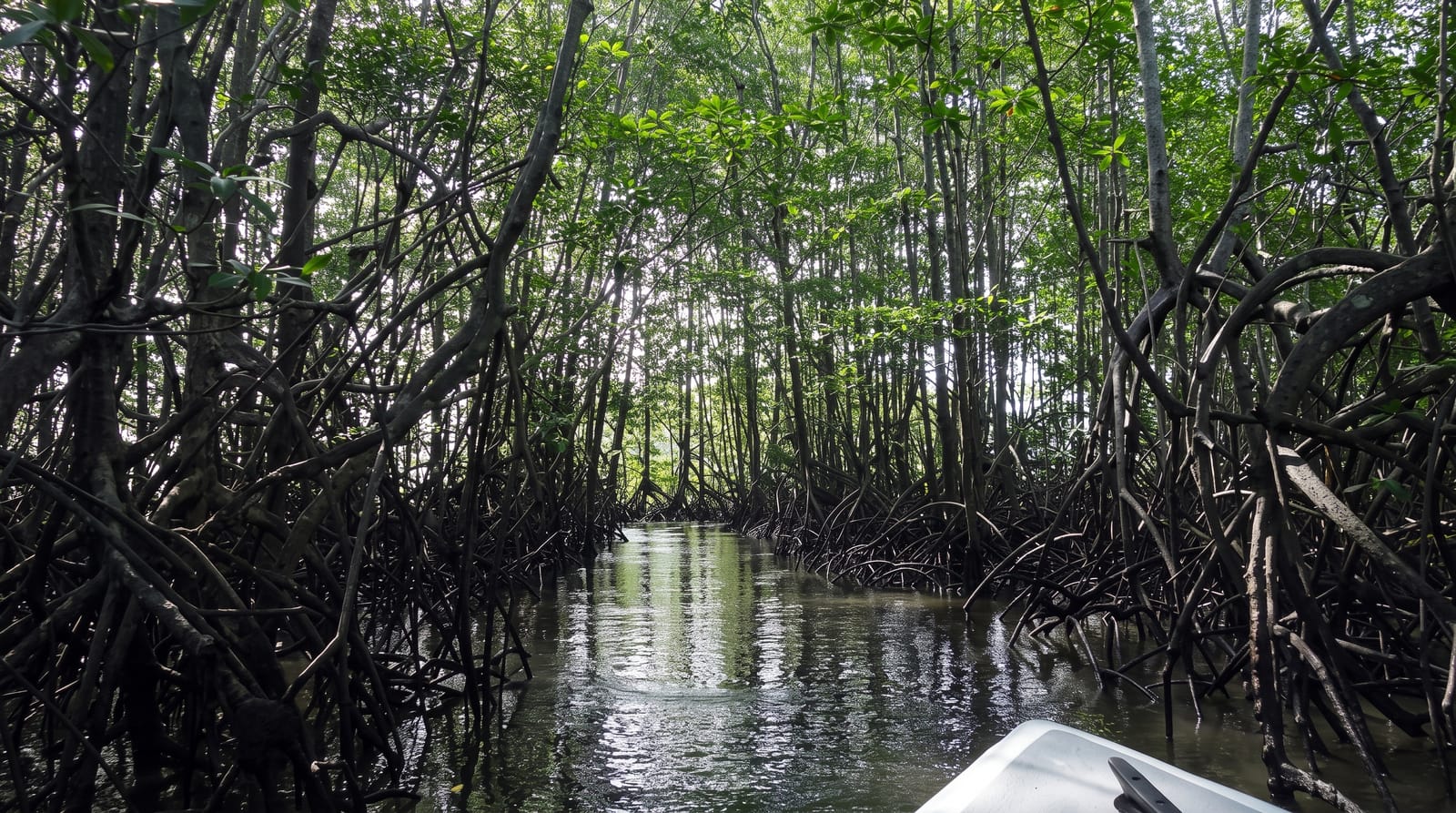
AI illustration
Where the Térraba and Sierpe rivers reach the Pacific they spread into the largest continuous mangrove forest in Costa Rica, inside a protected wetland of more than three hundred square kilometres of tidal channels and forest holding all six mangrove species found in the country. Boats run from the village of Sierpe up the narrow side channels, where the roots close overhead and the water goes still, and the wildlife is dense: crocodiles, boa constrictors in the branches, silky anteaters, three species of monkey, ibis, herons and the mangrove hummingbird, which is endemic to this coastline. Most visitors pass through on the way to Drake Bay without stopping, which is a waste.
What's there
- The narrow channels - mangrove roots closing overhead on the small boats.
- Crocodiles and boas - both common along the banks and branches.
- The mangrove hummingbird - endemic to this stretch of coast.
- All six mangrove species - present in one system.
When to go
December to April is drier and the water clearest. Trips run on the tide, so times vary by day; early morning and late afternoon are best for wildlife. The channels are hot and humid at midday.
Good to know
The boat transfer to Drake Bay passes through the mangroves but does not stop, so a dedicated tour is needed to see anything properly. Mosquitoes and no-see-ums are severe, particularly at dawn and dusk. The river mouth bar at Sierpe is genuinely dangerous in swell and crossings have capsized. Book with operators who know it.
Nearby
The Diquís spheres at Finca 6 are twenty minutes; Drake Bay is by boat downriver.
What to pack for The Sierpe-Térraba Mangroves
Chosen from what this place is for. Tap a kit for the full checklist.
- Broken-in walking shoes or boots - Grip and ankle support matter more than looks; never hike in brand-new boots. Find on Amazon
- Binoculars - The single best wildlife tool - even a compact pair transforms a sighting. Find on Amazon
- Strong insect repellent - DEET or picaridin; the jungle is where bites and disease risk are highest. Find on Amazon
- Layers + a waterproof shell - Mountain weather turns fast; a packable rain jacket saves the day. Find on Amazon
Some links on this page are Amazon affiliate links - if you buy through them we may earn a small commission at no extra cost to you.
All packing kitsPlan your trip
Where to start if The Sierpe-Térraba Mangroves is going on the list.
Booking links on this page are affiliate links - if you book through them we may earn a small commission at no extra cost to you. It never changes what we write about a place.
Opening times, ticket prices and seasonal closures change - check the official source before you go: official site.