Grand Cul-de-Sac Marin
The mangrove sea - a reef-ringed bay of mangrove forests, seagrass and islets between the butterfly's wings, explored by kayak and flat-bottomed boat.
Updated 7 August 2026
AI illustration
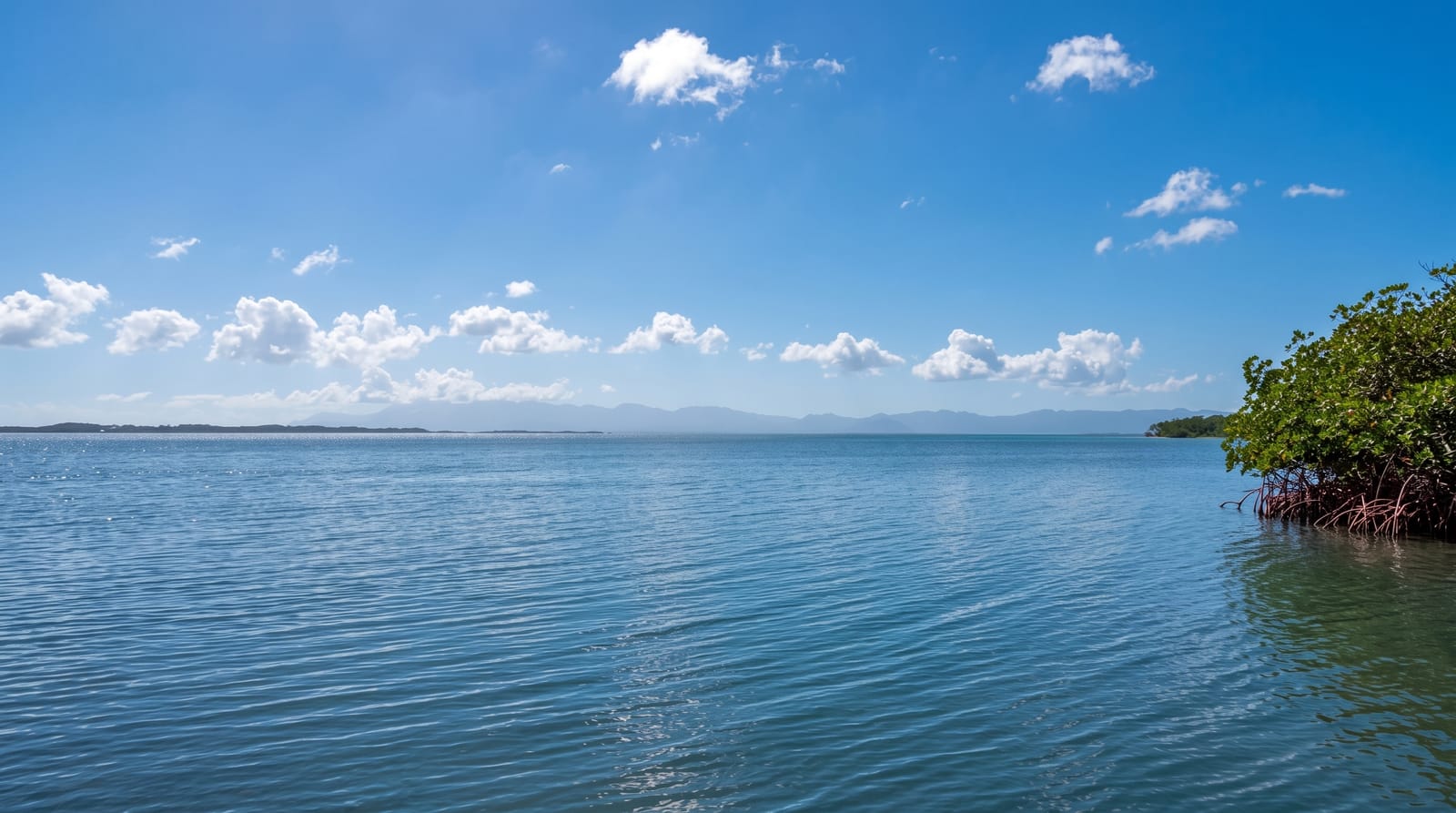
Between Guadeloupe's two wings, the Grand Cul-de-Sac Marin spreads a shallow inland sea sealed by one of the Lesser Antilles' longest coral barriers - and its shores are the mangrove kingdom: forests of red-rooted trees threading brackish channels where herons stalk, upside-down jellyfish pulse over the mud and young reef fish shelter among the roots. Trips from Sainte-Rose and Vieux-Bourg run the repertoire - kayak silences through the tunnels, flat-boat rides to the barrier's islets (Caret's sandbar the fragile favourite), snorkel stops on seagrass where turtles commute - inside a reserve that treats the nursery as the treasure it is.
Highlights
- The mangrove tunnels - kayak channels through the root cathedrals.
- The barrier islets - Caret and company on the reef line.
- The seagrass turtles - grazing commuters of the shallow sea.
- The bird margins - herons, kingfishers and frigates working the edges.
When to go
December to May for glassy mornings - the bay chops by afternoon breeze; kayaks favour the earliest departures. Caret islet erodes and rests by regulation at times - operators know the current rules.
What to expect
Choose operators by their reserve manners: small groups, no islet trampling, no jellyfish handling - the nursery's health is the product. Mosquitoes rule the mangrove edges at dusk; mornings are kinder. The 'sea' is shallow and warm rather than swimming-dramatic - snorkelling here is about small wonders.
Nearby
Sainte-Rose, the Route de la Traversee's rainforest and Deshaies' beaches.
Key facts
Source: Wikidata, item Q3113579, read on 18 October 2026.
What to pack for Grand Cul-de-Sac Marin
Chosen from what this place is for. Tap a kit for the full checklist.
- Broken-in walking shoes or boots - Grip and ankle support matter more than looks; never hike in brand-new boots. Find on Amazon
- Reef-safe sunscreen - High SPF that will not bleach the coral you are swimming over. Find on Amazon
- Your own mask + snorkel - A well-fitting mask is the single biggest comfort upgrade underwater. Find on Amazon
- Quick-dry clothing - Board shorts or synthetics that shrug off spray and dry fast. Find on Amazon
Some links on this page are Amazon affiliate links - if you buy through them we may earn a small commission at no extra cost to you.
All packing kitsPlan your trip
Where to start if Grand Cul-de-Sac Marin is going on the list.
Booking links on this page are affiliate links - if you book through them we may earn a small commission at no extra cost to you. It never changes what we write about a place.
Opening times, ticket prices and seasonal closures change - check the official source before you go: official site.