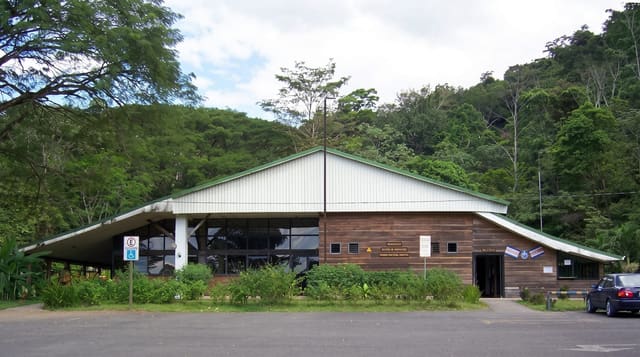
Curu Wildlife Refuge
A privately owned refuge on the southern Nicoya peninsula with dry forest, mangrove and quiet coves.
Updated 21 October 2026
Curu is a private refuge of around twelve square kilometres on the southern Nicoya peninsula, one of the earliest private conservation areas in Costa Rica, set up by the Schutt family who kept part of a working hacienda under forest from the 1930s and had it declared a refuge in 1983. It holds tropical dry forest, mangrove, and several small coves with calm water backed by trees where howler and white-faced monkeys come down to the beach. Spider monkeys were reintroduced here. Trails run from the entrance through the forest and along the shore. It is a common stop on boat trips from Puntarenas and Montezuma and a good place to see wildlife easily.
History
Federico Schutt de la Croix settled the land in 1933 and built a hacienda, meaning to run it as a self-sufficient farm with selective logging and cattle, and grew rice, beans, maize, plantains, mangoes and teak; over time the family turned towards conserving wildlife. After squatters occupied part of the land in 1974 they asked the government for protection, most of it was declared a protected forest in 1981, and in 1983 the Curú Wildlife Refuge was established, the first private national wildlife refuge in Costa Rica; since then the Schutts have made it a place for ecotourism and research (Wikipedia, Curú Wildlife Refuge).
Highlights
- Beach coves - the calm bays with forest running to the sand.
- Monkeys - howler, white-faced and reintroduced spider monkeys.
- Dry forest trails - the routes through the deciduous woodland.
- Mangrove - the estuary vegetation within the refuge.
When to go
December to April in the dry season, when trails are firm and animals concentrate near water; the forest is leafless then, which makes wildlife easier to see. Early morning is best.
Practical notes
It is a private working property as well as a refuge and cattle are kept in parts. Accommodation on site is very basic. Boat trips arrive in groups mid-morning. The dry forest is bare for much of the season.
Nearby
Paquera lies north; Montezuma is south.
Key facts
Source: Wikidata, item Q5196146, read on 18 October 2026.
What to pack for Curu Wildlife Refuge
Chosen from what this place is for. Tap a kit for the full checklist.
- Broken-in walking shoes or boots - Grip and ankle support matter more than looks; never hike in brand-new boots. Find on Amazon
- Binoculars - The single best wildlife tool - even a compact pair transforms a sighting. Find on Amazon
- Layers + a waterproof shell - Mountain weather turns fast; a packable rain jacket saves the day. Find on Amazon
- A zoom camera or long lens - Animals rarely come close; reach beats megapixels. Find on Amazon
Some links on this page are Amazon affiliate links - if you buy through them we may earn a small commission at no extra cost to you.
All packing kitsPlan your trip
Where to start if Curu Wildlife Refuge is going on the list.
Booking links on this page are affiliate links - if you book through them we may earn a small commission at no extra cost to you. It never changes what we write about a place.
Opening times, ticket prices and seasonal closures change - check the official source before you go: official site.