Guanacaste National Park
Fifty acres of riverside forest at a highway junction, protected because of one enormous guanacaste tree the loggers could not use.
Updated 2 September 2026
AI illustration
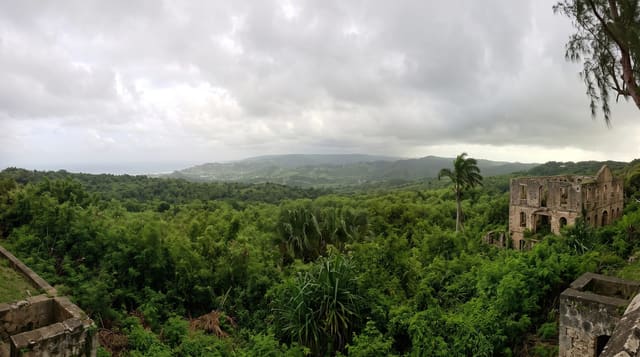
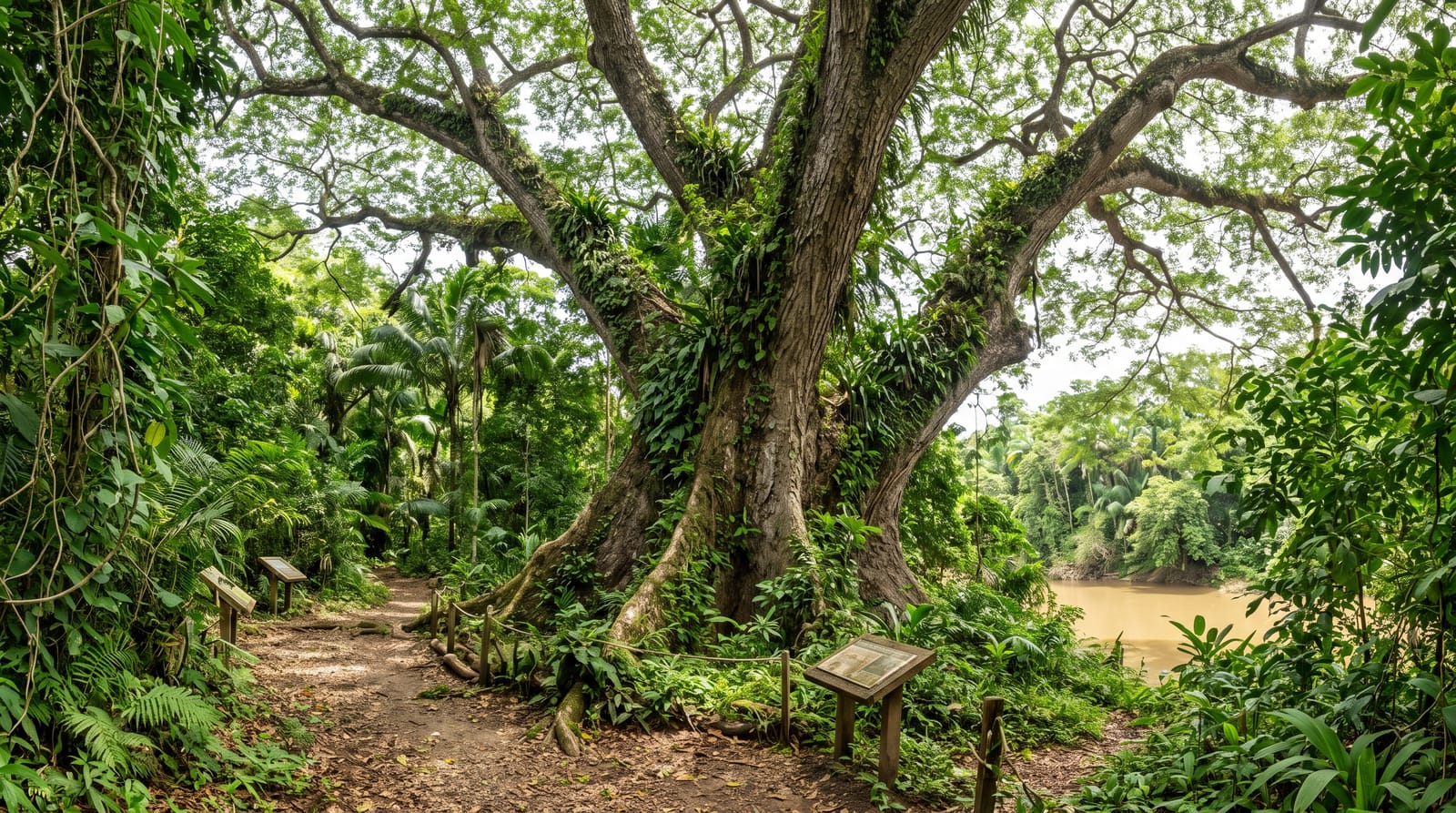
This is a very small park, about twenty hectares at the junction of two highways outside Belmopan, and it exists because of a single tree: an enormous guanacaste, or tubroos, that grew a divided trunk close to the ground, which made it useless for the dugout canoes loggers wanted from the species, so it was left standing while the rest were cut. It now carries dozens of epiphytes on its branches, effectively a garden in the air. Around it a short trail network runs through riverside forest along the Belize River and Roaring Creek, with howler monkeys, agoutis, iguanas and around a hundred bird species.
The landscape
- The guanacaste tree - the huge specimen the park was created for.
- The epiphyte load - dozens of species growing on its branches.
- The riverside trails - a short loop along the Belize River.
- The swimming spot - on the river at the bottom of the trail.
When to go
December to April is the dry season. Early morning is best for birds and for howler monkeys, which are audible from the road. It takes about ninety minutes and works as a stop on the drive between Belize City and San Ignacio.
Things to know
It is tiny and sits at a busy highway junction, so traffic noise carries through the whole park. Ninety minutes covers it. Facilities are minimal. It is worth a stop rather than a journey, and the river swimming spot varies in quality with water levels.
Nearby
Belmopan is five minutes; the Belize Zoo is half an hour east.
Key facts
Source: Wikidata, item Q973934, read on 18 October 2026.
What to pack for Guanacaste National Park
Chosen from what this place is for. Tap a kit for the full checklist.
- Broken-in walking shoes or boots - Grip and ankle support matter more than looks; never hike in brand-new boots. Find on Amazon
- Reef-safe sunscreen - High SPF that will not bleach the coral you are swimming over. Find on Amazon
- Quick-dry clothing - Board shorts or synthetics that shrug off spray and dry fast. Find on Amazon
- Layers + a waterproof shell - Mountain weather turns fast; a packable rain jacket saves the day. Find on Amazon
Some links on this page are Amazon affiliate links - if you buy through them we may earn a small commission at no extra cost to you.
All packing kitsPlan your trip
Where to start if Guanacaste National Park is going on the list.
Booking links on this page are affiliate links - if you book through them we may earn a small commission at no extra cost to you. It never changes what we write about a place.
Opening times, ticket prices and seasonal closures change - check the official source before you go: official site.