Christmas Island National Park
A rainforest island of rare wildlife - the lush national park that covers most of Christmas Island, a haven of dense tropical rainforest, dramatic cliffs, seabird colonies and unique species found nowhere else on earth.
Updated 19 October 2026
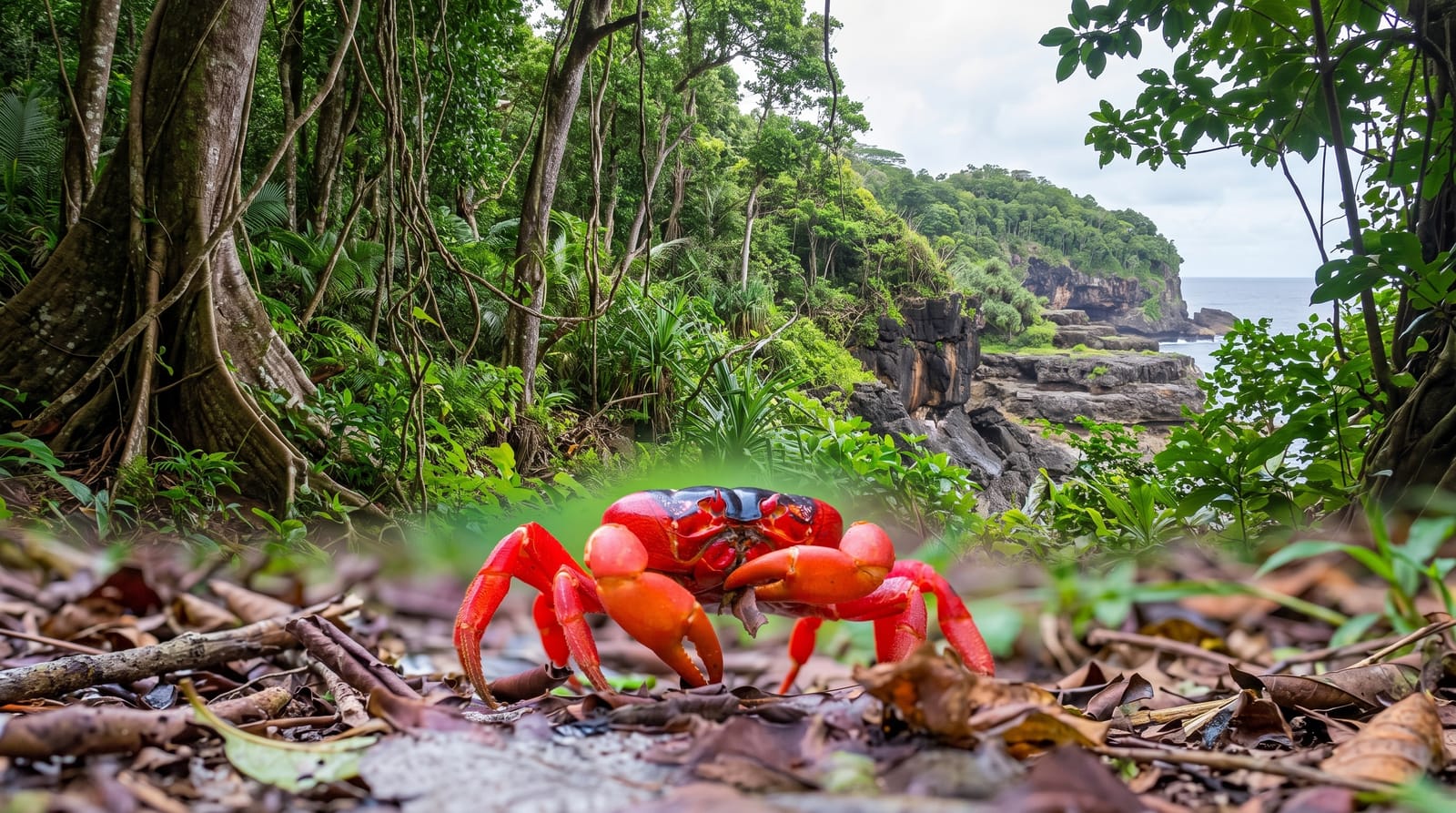
AI illustration
Christmas Island National Park, which covers the majority of this remote Indian Ocean island, protects a wonderfully lush and biologically rich wilderness of dense tropical rainforest, towering trees, hidden grottoes and dramatic sea cliffs. Isolated for millions of years, the island has evolved a wealth of unique wildlife: not only its famous red crabs and the giant, powerful robber crabs, the world's largest land invertebrate, but also rare endemic birds such as the golden bosun and the Christmas Island frigatebird, which nest in great seabird colonies on the cliffs. Waterfalls, freshwater springs, coral reefs and jungle trails complete a pristine natural paradise. For nature lovers, this green, teeming island is a genuinely special and unspoiled corner of the world.
History
In the early 1970s concern grew over what phosphate mining was doing to the island's plants and animals, especially to the habitat of Abbott's booby, which seemed close to extinction. A government committee looked into it in 1974 and recommended setting land aside, and Christmas Island National Park was established on 21 February 1980 in the south-west corner of the island; it was extended in 1986 and 1989 to take in most of the rainforest and now covers about 85 square kilometres, 63 percent of the island (Wikipedia, Christmas Island National Park).
The landscape
- The rainforest - the lush jungle covering most of the island.
- The robber crabs - the giant land crabs of the forest.
- The seabird colonies - the frigatebirds and rare endemic birds.
- The cliffs and reefs - the dramatic coast and coral reefs.
When to go
April to October, the drier season, brings the most settled weather for hiking, diving and wildlife watching, avoiding the wettest months; the famous crab migration, however, comes with the wet season around October to December. The tropical climate is warm year-round.
Practical notes
Christmas Island is remote, reached by limited flights, and much of its rainforest wilderness is rugged and best explored on trails with care, so it suits nature lovers rather than resort seekers. As a lush national park teeming with unique wildlife, from giant robber crabs to rare seabirds, amid rainforest, cliffs and reefs, though, Christmas Island is a genuinely special and unspoiled paradise.
Nearby
Flying Fish Cove, the blowholes and the island's beaches lie within it.
Key facts
Source: Wikidata, item Q1089780, read on 18 October 2026.
What to pack for Christmas Island National Park
Chosen from what this place is for. Tap a kit for the full checklist.
- Broken-in walking shoes or boots - Grip and ankle support matter more than looks; never hike in brand-new boots. Find on Amazon
- Reef-safe sunscreen - High SPF that will not bleach the coral you are swimming over. Find on Amazon
- Your own mask + snorkel - A well-fitting mask is the single biggest comfort upgrade underwater. Find on Amazon
- Head torch + spare batteries - Hands-free light is essential; caves are truly dark. Find on Amazon
Some links on this page are Amazon affiliate links - if you buy through them we may earn a small commission at no extra cost to you.
All packing kitsPlan your trip
Where to start if Christmas Island National Park is going on the list.
Booking links on this page are affiliate links - if you book through them we may earn a small commission at no extra cost to you. It never changes what we write about a place.
Opening times, ticket prices and seasonal closures change - check the official source before you go: official site.