The Forbidden City
The vast imperial palace at the heart of Beijing - a sprawling complex of golden-roofed halls, courtyards and gates that was the seat of the Chinese emperors for five centuries, a UNESCO site.
Updated 18 October 2026

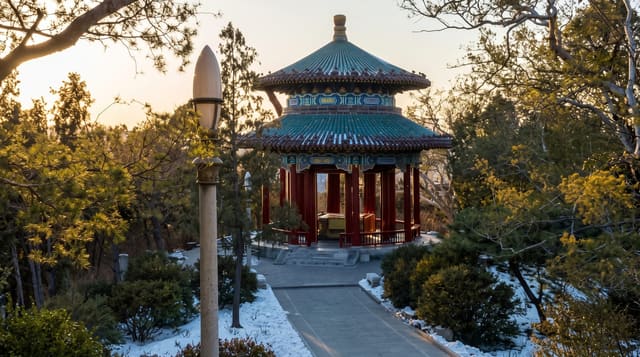
AI illustration
UNESCO World Heritage
The Forbidden City is the vast imperial palace at the very heart of Beijing, the seat of the Chinese emperors for nearly five centuries from the Ming to the last Qing ruler, and the largest palace complex in the world. A UNESCO masterpiece of Chinese architecture, its sprawling succession of golden-roofed ceremonial halls, red-walled courtyards, gates and gardens, once forbidden to ordinary people, offers an overwhelming sense of imperial power and ceremony.
History
When Zhu Di became the Yongle Emperor and moved the capital from Nanjing to Beijing, work began here in 1406; it took 14 years and more than a million workers, using whole logs of precious nanmu wood from the forests of the south-west, marble from quarries near Beijing and "golden bricks" baked in Suzhou for the floors of the main halls. From 1420 it was the seat of the Ming emperors, until rebel forces under Li Zicheng took it in April 1644 and set fire to parts of it as they fled; the Qing then proclaimed the young Shunzhi Emperor here, renamed some of the main halls and made the nameplates bilingual, in Chinese and Manchu. Anglo-French forces occupied it in 1860 at the end of the Second Opium War, and troops of the treaty powers in 1900-1901 after the Boxer Rebellion. It was home to 24 emperors, 14 Ming and 10 Qing, until Puyi's abdication in 1912; he stayed on in the Inner Court until 1924, and the Palace Museum was founded here in 1925. Part of the collection, evacuated in 1933, went to Taiwan in 1948 and is now the core of the National Palace Museum in Taipei, and the palace became a World Heritage Site in 1987 (Wikipedia, Forbidden City).
Highlights
- The great ceremonial halls - the golden-roofed throne halls on marble terraces.
- The courtyards and gates - the vast red-walled courts and ornate gates.
- The Imperial Garden - the tranquil garden at the palace's rear.
- The treasures - the imperial collections in the palace museum.
When to go
Spring and autumn for the mildest weather; go early on a weekday to beat the vast crowds. Tickets are timed, capped and must be booked online in advance with your passport, so plan ahead, as walk-up is not possible.
Good to know
Tickets are capped, timed and must be booked online in advance with your passport, and it sells out, so plan ahead; there is no walk-up. It is enormous and extremely crowded, so wear good shoes and pace yourself along the long central axis. It closes on Mondays. A guide or audio guide greatly enriches the visit.
Nearby
Tiananmen Square, the Temple of Heaven and the hutong lanes are in Beijing.
Key facts
Source: Wikidata, item Q80290, read on 18 October 2026.
What to pack for The Forbidden City
Chosen from what this place is for. Tap a kit for the full checklist.
- Comfortable walking shoes - Sightseeing means kilometres of pavement and cobbles daily. Find on Amazon
- Modest clothing - Shoulders and knees covered - the single most common requirement. Find on Amazon
- A slim anti-theft daypack - Zips that close properly; keep it in front in crowds and on transit. Find on Amazon
- A scarf or shawl - To cover the head or shoulders on entry; women especially at mosques. Find on Amazon
Some links on this page are Amazon affiliate links - if you buy through them we may earn a small commission at no extra cost to you.
All packing kitsPlan your trip
Where to start if The Forbidden City is going on the list.
Booking links on this page are affiliate links - if you book through them we may earn a small commission at no extra cost to you. It never changes what we write about a place.
Opening times, ticket prices and seasonal closures change - check the official source before you go: official site.