Nymphenburg Palace
A summer palace with a gallery of thirty-six portraits of women a king found beautiful.
Updated 19 October 2026
AI illustration
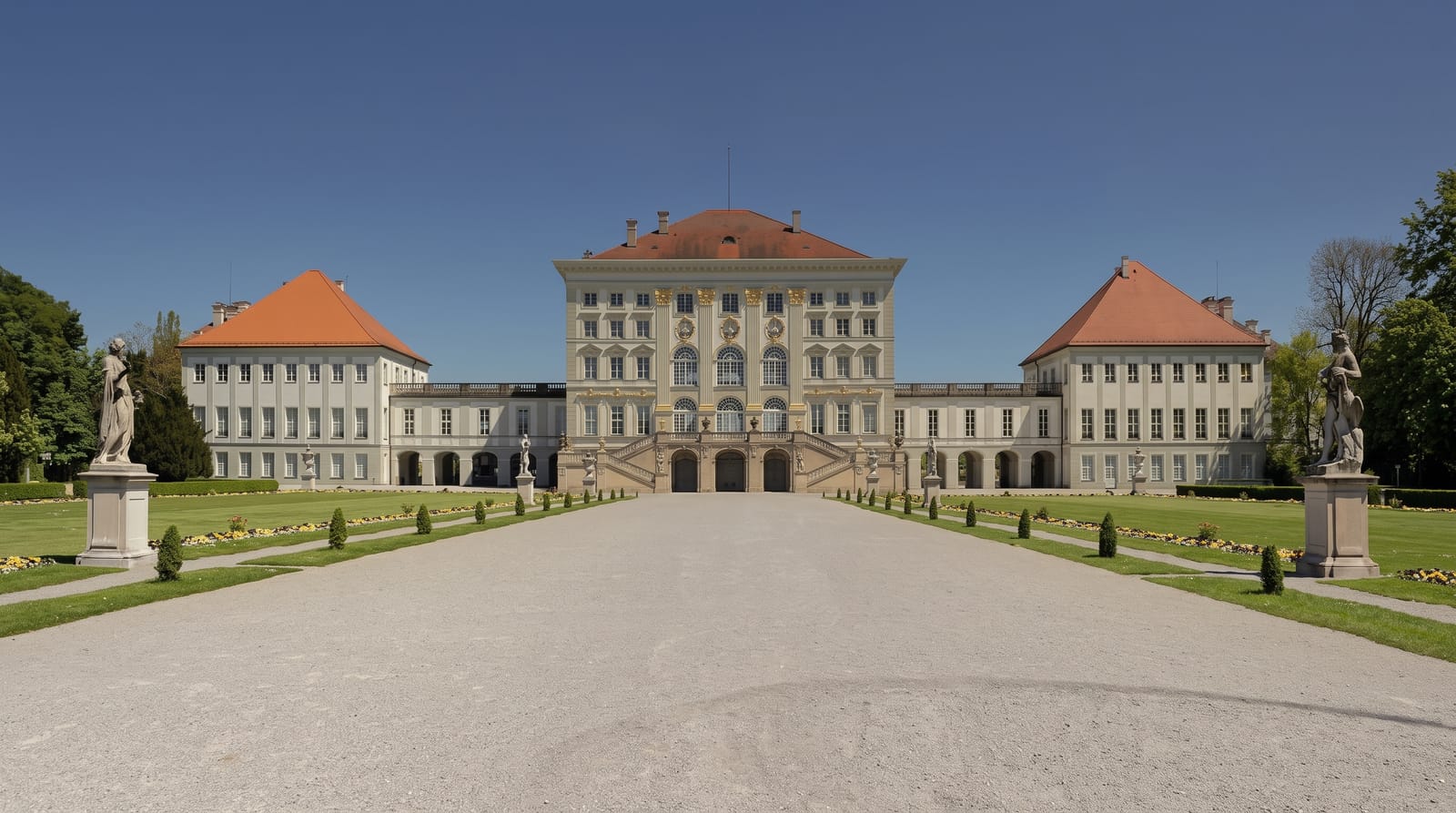
Begun in 1664 as a summer residence and extended into a long front of pavilions linked by galleries, Nymphenburg stretches further across its park than most European palaces of its type. Ludwig I commissioned the Gallery of Beauties, thirty-six portraits of women he considered beautiful, painted by Joseph Karl Stieler between 1827 and 1850, ranging from aristocrats to a shoemaker's daughter and the dancer Lola Montez. In the park stand four garden pavilions, of which the Amalienburg is a small hunting lodge whose mirrored Hall of Mirrors in silver and blue is among the finest rococo interiors in Europe.
History
The palace was commissioned in 1664 by the Elector Ferdinand Maria and Henriette Adelaide of Savoy after the birth of their son Maximilian II Emanuel, to designs by Agostino Barelli, replaced in 1674 by Enrico Zuccalli; the central pavilion was finished in 1675, built of Kelheim limestone. From 1701 Max Emanuel added two pavilions on each side joined by galleries, in 1716 Joseph Effner gave the centre a French Baroque facade, and the court stables followed in 1719; Charles Albert lived here as Holy Roman Emperor and died here in 1745, in 1747 Max III Joseph founded the Nymphenburg Porcelain Manufactory, and in 1792 Charles Theodore opened the park to the public. In 1826 Leo von Klenze reworked the roofline for Ludwig I, and King Max I Joseph died here in 1825 (Wikipedia, Nymphenburg Palace).
What's there
- The Gallery of Beauties - thirty-six portraits commissioned by Ludwig I.
- The Amalienburg - a rococo hunting lodge with a silvered mirror hall.
- The park - two hundred hectares of canals, lawns and pavilions.
- The porcelain factory - the Nymphenburg manufactory still on the estate.
When to go
April to October for the park and pavilions, which close for winter while the main palace stays open. The park is free and used by locals year-round.
Before you go
The garden pavilions close from roughly mid-October to Easter. The park is very large with long walks between buildings. Separate tickets apply to different parts.
Nearby
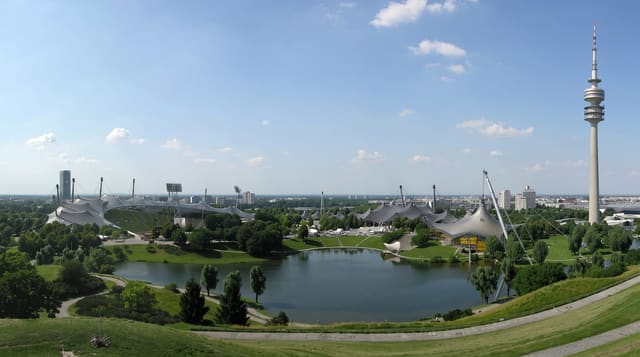
Central Munich lies east; the Olympiapark is northeast.
Key facts
Source: Wikidata, item Q131631, read on 18 October 2026.
What to pack for Nymphenburg Palace
Chosen from what this place is for. Tap a kit for the full checklist.
- Comfortable walking shoes - Sightseeing means kilometres of pavement and cobbles daily. Find on Amazon
- A slim anti-theft daypack - Zips that close properly; keep it in front in crowds and on transit. Find on Amazon
- A refillable water bottle - Many cities have public fountains; save money and plastic. Find on Amazon
- A light layer + compact umbrella - For museum air-con and a sudden shower. Find on Amazon
Some links on this page are Amazon affiliate links - if you buy through them we may earn a small commission at no extra cost to you.
All packing kitsPlan your trip
Where to start if Nymphenburg Palace is going on the list.
Booking links on this page are affiliate links - if you book through them we may earn a small commission at no extra cost to you. It never changes what we write about a place.
Opening times, ticket prices and seasonal closures change - check the official source before you go: official site.