Leh Palace
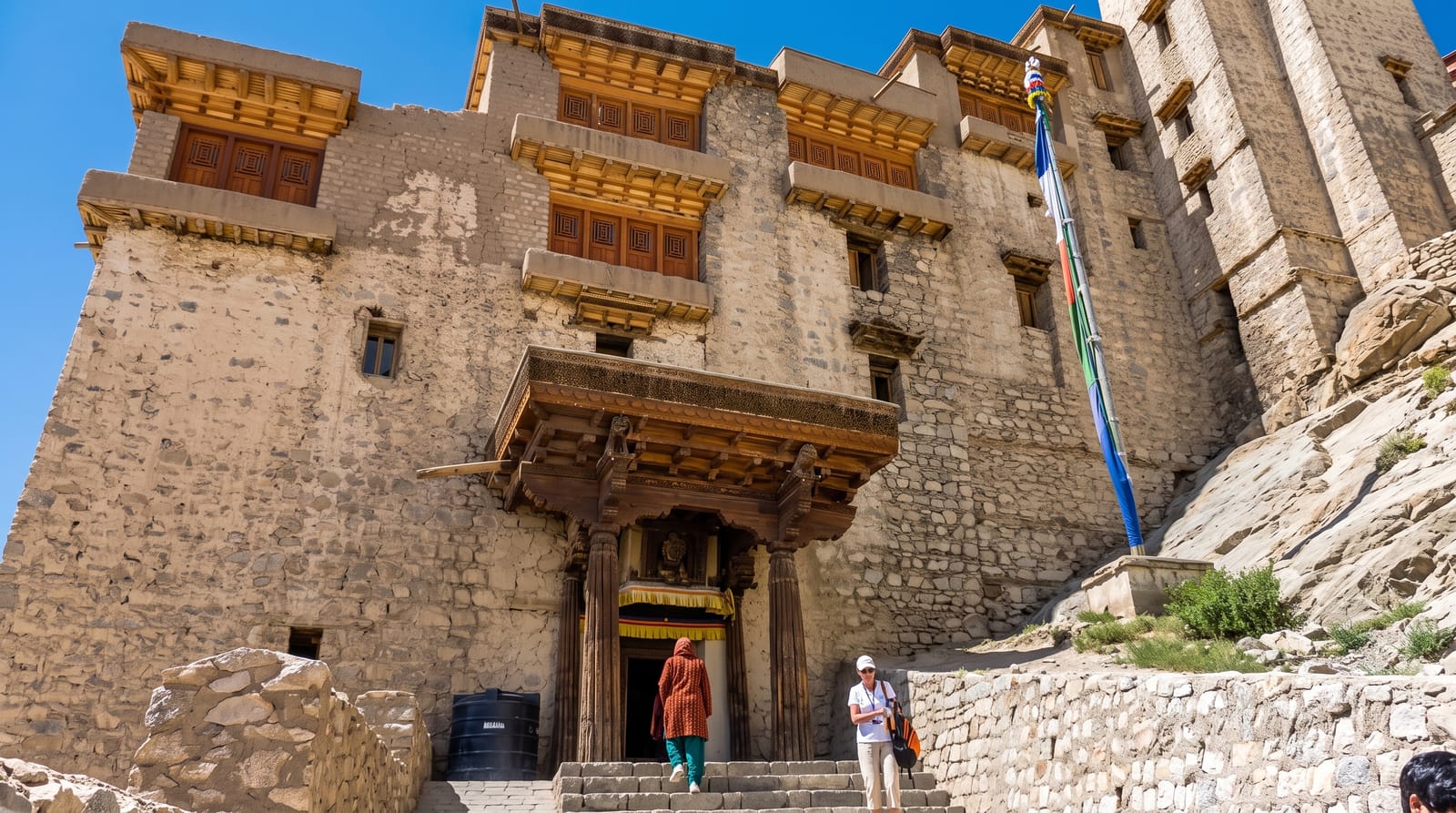
A nine-storey mud-brick palace above the old town, built on the model that produced the Potala.
Updated 4 September 2026
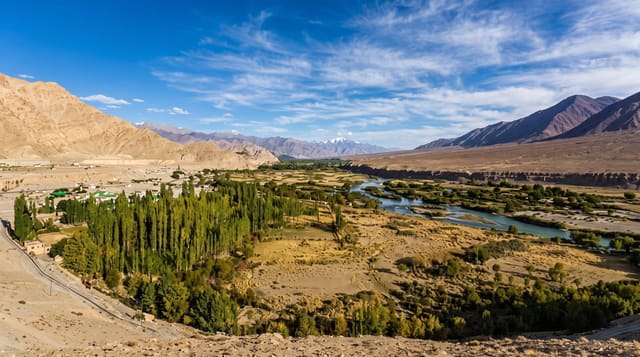
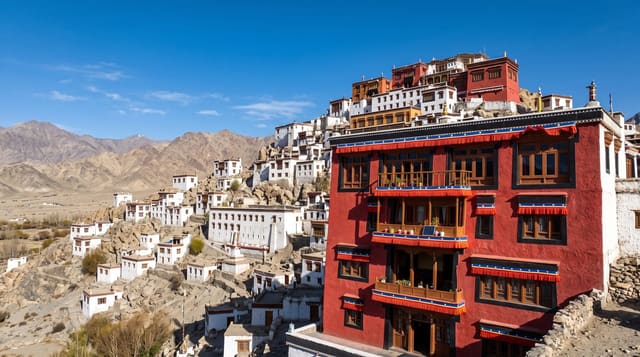
AI illustration
Sengge Namgyal built the palace in the early seventeenth century, nine storeys of rammed earth, mud brick and timber stepping up a spur above Leh, with the royal apartments at the top and stores and stables below, on the same architectural model that later produced the Potala in Lhasa. The royal family left for Stok in the nineteenth century and the building was abandoned, and much of the interior is bare, with restoration ongoing. The value is in the structure and the position: rooms and stairways climb through the thickness of the building, and the roof looks over the old town to the Stok range.
The main sights
- The nine storeys - mud brick and timber stepping up the spur.
- The internal stairways - dark passages climbing through the building.
- The roof view - Leh old town below and the Stok range beyond.
- The restoration work - conservation in progress through the structure.
When to go
May to September; Leh's winter is severe and some access is limited. Late afternoon light on the palace face from the town below is the best photograph. Sunset from the roof is the usual timing.
Good to know
Interiors are largely empty with limited display. Stairways are dark, uneven and unlit in places, and a torch helps. The climb from the bazaar is short but felt at 3,500 metres by new arrivals.
Nearby
Shanti Stupa lies across the town; Leh bazaar is below.
Key facts
Source: Wikidata, item Q3043543, read on 18 October 2026.
What to pack for Leh Palace
Chosen from what this place is for. Tap a kit for the full checklist.
- Layers for big temperature swings - Warm sun by day, near-freezing at night, even near the equator. Find on Amazon
- Comfortable walking shoes - Sightseeing means kilometres of pavement and cobbles daily. Find on Amazon
- Extra-strong sun protection - Thin air means fierce UV; hat, sunglasses and high-SPF sunscreen. Find on Amazon
- A slim anti-theft daypack - Zips that close properly; keep it in front in crowds and on transit. Find on Amazon
Some links on this page are Amazon affiliate links - if you buy through them we may earn a small commission at no extra cost to you.
All packing kitsPlan your trip
Where to start if Leh Palace is going on the list.
Booking links on this page are affiliate links - if you book through them we may earn a small commission at no extra cost to you. It never changes what we write about a place.
Opening times, ticket prices and seasonal closures change - check the official source before you go: official site.