Ladakh
A high-altitude desert in the far north, a land of stark mountains, Buddhist monasteries, turquoise lakes and villages, often called Little Tibet.
Updated 19 October 2026
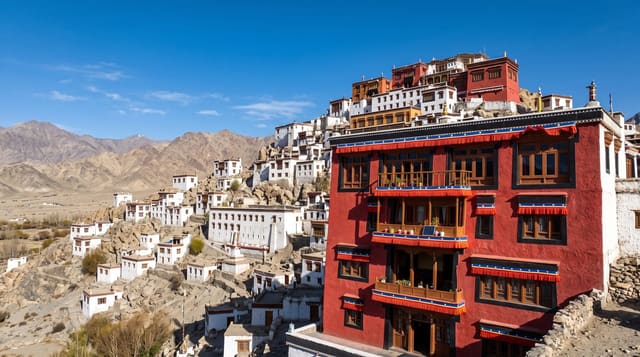
AI illustration
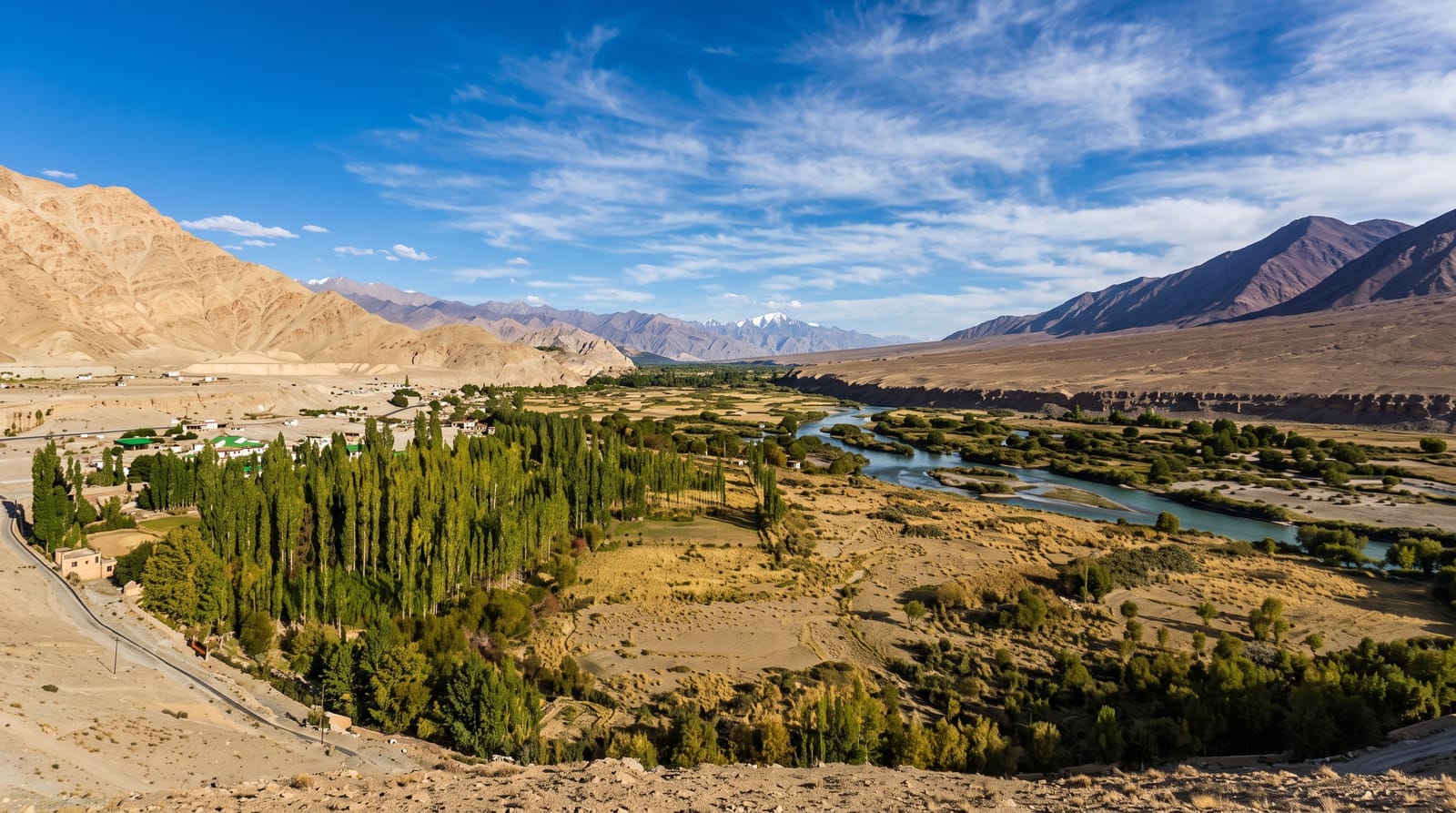
Ladakh, in the far north of India between the Himalaya and the Karakoram, is a high-altitude cold desert of extraordinary starkness and beauty, a land of bare ochre and violet mountains, deep river valleys, and skies of an intense blue, sitting mostly above three thousand metres. Long isolated and culturally Tibetan, it is dotted with Buddhist monasteries, or gompas, that cling to crags above the villages, among them Thiksey, which resembles a miniature Potala, and Hemis, famous for its summer festival of masked dances. From the capital, Leh, roads climb over some of the highest motorable passes in the world to the sand dunes and double-humped camels of the Nubra valley and to Pangong Lake, a vast ribbon of water that shifts through blues and greens against the mountains. It is a place for slow travel, acclimatisation and quiet wonder, one of the most spectacular regions in the country.
History
Rock carvings show that Ladakh has been inhabited since Neolithic times; its earliest people were nomads known as Kampa, and later settlements were founded by Mons from Kullu and Brokpas from Gilgit. Around the 1st century Ladakh was part of the Kushan Empire, and Buddhism spread into western Ladakh from Kashmir; for much of the first millennium it lay between Kashmir and the Zhangzhung kingdoms of western Tibet, and around 900 CE Kyide Nyimagon, a descendant of the Tibetan king Langdarma, founded a new West Tibetan kingdom in Ngari, the heart of old Zhangzhung (Wikipedia, Ladakh).
Highlights
- The monasteries - hilltop gompas such as Thiksey and Hemis above the valleys.
- Pangong Lake - the vast high-altitude lake shifting through blues and greens.
- Nubra Valley - the desert valley with its dunes and double-humped camels.
- Leh and its old town - the capital below its ruined palace and the surrounding villages.
When to go
June to September is the main season, when the high passes and roads are open and the weather mildest; winter is bitterly cold and access is limited to flights. Whenever you come, spend the first days acclimatising to the altitude before exerting yourself. The Hemis festival falls in summer.
What to expect
The altitude is the serious consideration: Leh sits above 3,500 metres and the passes and lakes are far higher, so altitude sickness is a real risk, and rushing in and straight up will make people ill; allow days to acclimatise. The roads are long, rough and slow, and the region is remote with basic facilities. Some border areas need permits. In winter much of it is inaccessible. Reward it with time rather than haste.
Nearby
The valleys of Kashmir lie over the passes to the west; Manali and Himachal are the southern road gateway.
Key facts
Source: Wikidata, item Q200667, read on 18 October 2026.
What to pack for Ladakh
Chosen from what this place is for. Tap a kit for the full checklist.
- Broken-in walking shoes or boots - Grip and ankle support matter more than looks; never hike in brand-new boots. Find on Amazon
- Loose, light, long clothing - Covering up beats bare skin in the desert - and locals dress this way for a reason. Find on Amazon
- Layers for big temperature swings - Warm sun by day, near-freezing at night, even near the equator. Find on Amazon
- Modest clothing - Shoulders and knees covered - the single most common requirement. Find on Amazon
Some links on this page are Amazon affiliate links - if you buy through them we may earn a small commission at no extra cost to you.
All packing kitsPlan your trip
Where to start if Ladakh is going on the list.
Booking links on this page are affiliate links - if you book through them we may earn a small commission at no extra cost to you. It never changes what we write about a place.
Opening times, ticket prices and seasonal closures change - check the official source before you go: official site.