Robinson Crusoe Island
Where a Scottish sailor was marooned for four years, on an island of species found nowhere else.
Updated 19 October 2026
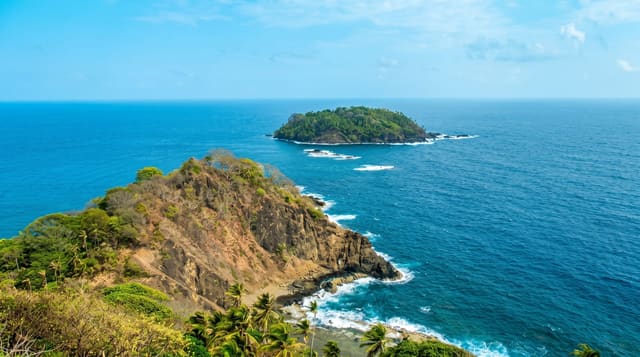
Alexander Selkirk, a Scottish privateer, asked to be put ashore here in 1704 after quarrelling with his captain about the state of the ship, and lived alone on the island for four years and four months before being picked up in 1709; Defoe's novel of 1719 drew on the case, and Chile renamed the island in 1966. The archipelago is far more significant biologically than literarily: something over a hundred plant species grow here and nowhere else, along with the Juan Fernandez firecrown, a hummingbird down to a few hundred birds. Introduced goats, rabbits and rats have done most of the damage. A tsunami in 2010 destroyed much of the village.
History
The Spanish captain Juan Fernández was the first to land here, in 1574, and the island was long called Más a Tierra; there is no evidence that Polynesians or Native Americans reached it earlier. A Miskito man known as Will was marooned here from 1681 to 1684, and in 1704 Alexander Selkirk asked to be left ashore, fearing for his ship, the Cinque Ports, which sank soon after, and lived alone for four years and four months. Richard Henry Dana Jr. found a young prison colony at the port in 1840, which was soon abandoned; a permanent colony was set up later in the 19th century, Joshua Slocum stopped here from 26 April to 5 May 1896 and wrote about its 45 inhabitants, and in 1966 Chile renamed the island after Defoe's novel (Wikipedia, Robinson Crusoe Island).
What you'll find
- Selkirk's island - marooned 1704, taken off in 1709.
- Renamed in 1966 - for Defoe's novel.
- Over a hundred endemic plants - found nowhere else on earth.
- The Juan Fernandez firecrown - a hummingbird down to a few hundred.
When to go
October to March. Several days, given the transport.
Things to know
Flights are in small aircraft, expensive, and cancelled by weather regularly - being stranded for days is normal. The airstrip is an hour and a half by boat from the village. Accommodation is limited. The 2010 tsunami is recent history here.
Nearby
Santa Clara and Selkirk islands are in the same archipelago.
Key facts
Source: Wikidata, item Q329422, read on 18 October 2026.
What to pack for Robinson Crusoe Island
Chosen from what this place is for. Tap a kit for the full checklist.
- Reef-safe sunscreen - High SPF that will not bleach the coral you are swimming over. Find on Amazon
- Quick-dry towel - A microfibre towel packs small and dries in minutes. Find on Amazon
- Water shoes - Protect your feet on rocky entries, hot sand and sea-urchin spines. Find on Amazon
- Dry bag - Keeps phone, cash and keys safe while you are in the water. Find on Amazon
Some links on this page are Amazon affiliate links - if you buy through them we may earn a small commission at no extra cost to you.
All packing kitsPlan your trip
Where to start if Robinson Crusoe Island is going on the list.
Booking links on this page are affiliate links - if you book through them we may earn a small commission at no extra cost to you. It never changes what we write about a place.
Opening times, ticket prices and seasonal closures change - check the official source before you go: official site.