Isla Escudo de Veraguas
A remote island off the Caribbean coast holding the pygmy three-toed sloth, found nowhere else and among the rarest mammals alive.
Updated 21 October 2026
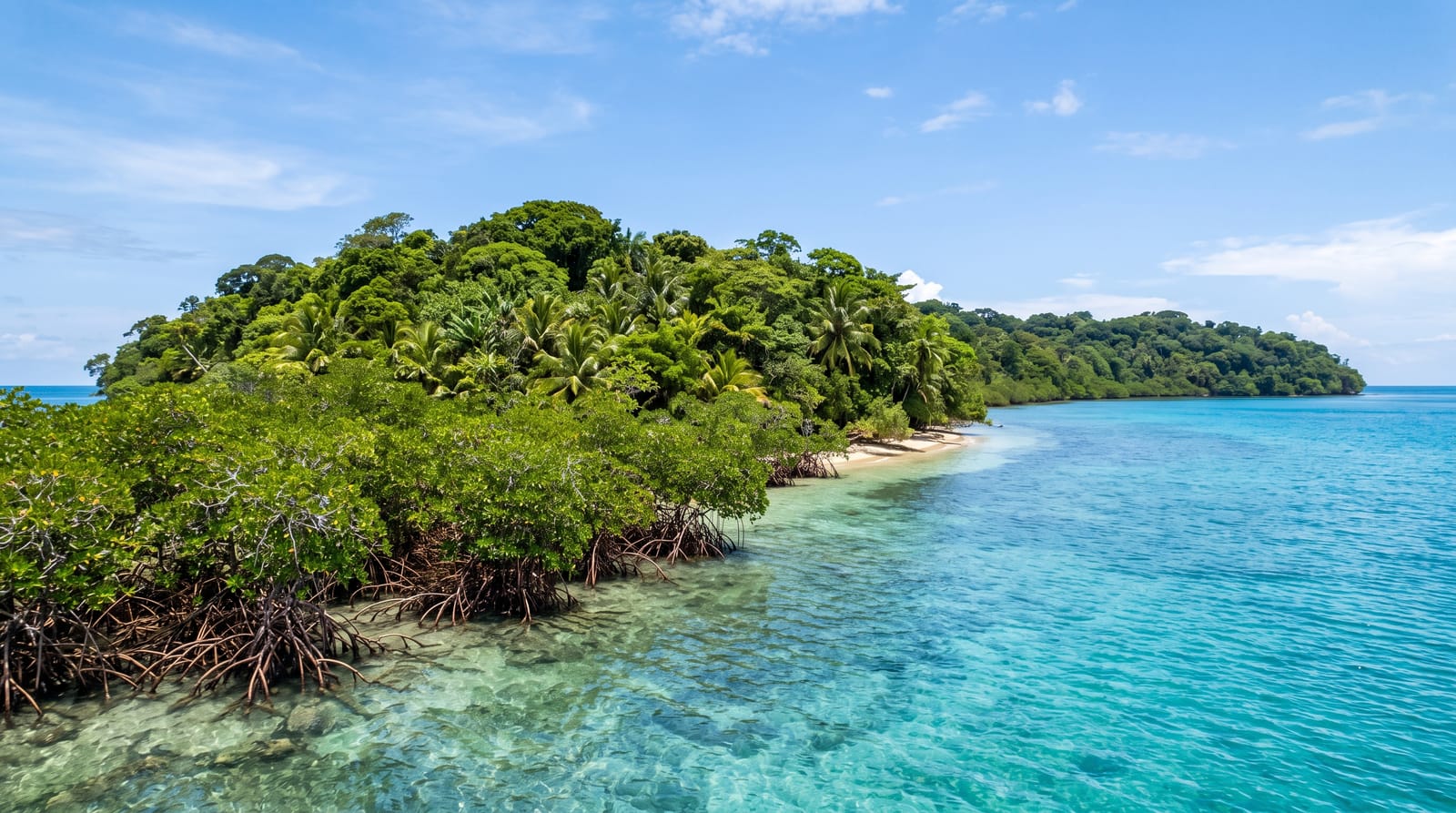
AI illustration
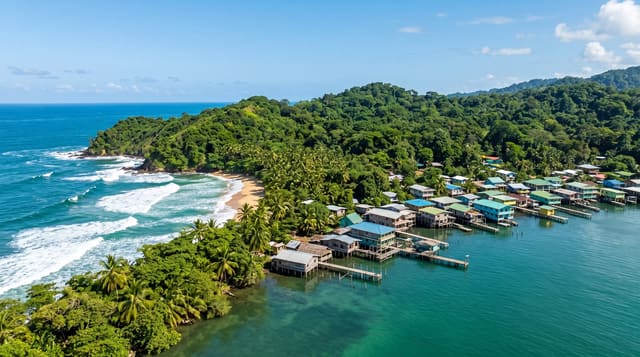
Escudo de Veraguas lies about seventeen kilometres off the Caribbean coast and separated from the mainland around nine thousand years ago, long enough for its animals to change: the pygmy three-toed sloth evolved here, smaller than its mainland relative, living almost entirely in the red mangroves around the shore, and it exists nowhere else on earth. Population estimates have ranged from a few hundred down to under a hundred, which puts it among the most endangered mammals anywhere. The island is part of the Ngäbe-Buglé comarca and is used seasonally by fishing families. Access is difficult, occasional and should be arranged through the comarca.
History
Escudo de Veraguas is traditionally held to be the birthplace of the Ngöbe-Buglé people. The island, only 4.3 square kilometres, was largely uninhabited until 1995, when Ngöbe-Buglé fishermen from the coast began using it as a fishing base and later settled; by 2012 about 120 fishermen and their families lived there (Wikipedia, Isla Escudo de Veraguas).
What you'll find
- The pygmy sloth - found only here, in the shoreline mangroves.
- The mangrove fringe - the entire habitat of the species.
- The isolation - nine thousand years separated from the mainland.
- The Ngäbe fishing camps - seasonal use of the island.
When to go
February to April and September to October offer the calmest crossings, which matter because the trip is long and exposed. Visits are infrequent and must be arranged with the comarca authorities rather than booked as a tour.
Good to know
This is not a tourist destination and should not be treated as one: the sloth population is tiny and disturbance is a real threat, there is a documented history of animals being taken for the illegal pet trade, and access is controlled by the Ngäbe-Buglé for good reason. The crossing is long and rough. Go only through a properly arranged and permitted trip, or not at all.
Nearby
Bocas del Toro is to the west; the Ngäbe-Buglé mainland coast is closest.
Key facts
Source: Wikidata, item Q1367364, read on 18 October 2026.
What to pack for Isla Escudo de Veraguas
Chosen from what this place is for. Tap a kit for the full checklist.
- Travel rod + reel - A packable multi-piece rod fits in a case and covers most holiday fishing. Find on Amazon
- Reef-safe sunscreen - High SPF that will not bleach the coral you are swimming over. Find on Amazon
- A small tackle selection - Hooks, weights, line and a few lures or flies suited to local waters. Find on Amazon
- Quick-dry towel - A microfibre towel packs small and dries in minutes. Find on Amazon
Some links on this page are Amazon affiliate links - if you buy through them we may earn a small commission at no extra cost to you.
All packing kitsPlan your trip
Where to start if Isla Escudo de Veraguas is going on the list.
Booking links on this page are affiliate links - if you book through them we may earn a small commission at no extra cost to you. It never changes what we write about a place.
Opening times, ticket prices and seasonal closures change - check the official source before you go: official site.