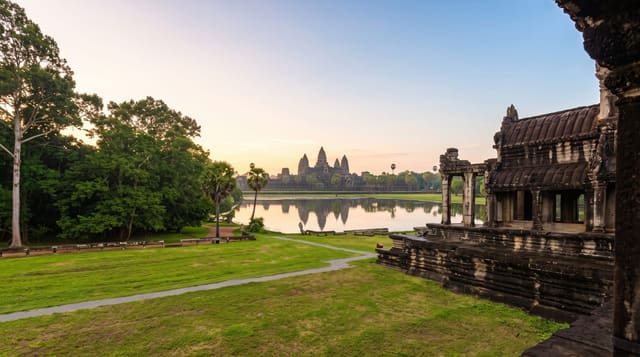
Siem Reap
The town at the gate of Angkor, grown from a village into a city of hotels, markets, craft workshops and old French streets.
Updated 19 October 2026
Siem Reap exists in its modern form because of Angkor, and the growth has been fast: a small colonial town on a river became a city of several hundred hotels within a couple of decades. What survives of the older place is worth finding, in the French quarter around the Old Market with its shuttered shophouses, the covered market itself, and the wats along the river. Beyond the temple traffic the town has developed a genuine crafts and food scene: silk farms and stone-carving workshops training young Cambodians, the Artisans Angkor project, night markets, and a strong restaurant culture. Pub Street is the loud centre of the nightlife and easily avoided. The Angkor National Museum and the landmine museum sit on the edges of town.
History
In the Angkor period a town called Dvijendrapura probably stood here, by the old temple of Prah Einkosei, where inscriptions of 968 and 970 record gifts by Princess Indralakshmi, daughter of Rajendravarman II, and her husband Divakarabhatta. The name Siem Reap is often read as the defeat of Siam and tied by oral tradition to King Ang Chan I driving back a Siamese army in 1549, but scholars such as Michael Vickery treat this as a modern folk etymology and hold that the true origin is unknown (Wikipedia, Siem Reap).
What you'll find
- The French quarter - shophouses and shuttered facades near the Old Market.
- Craft workshops - silk, stone and lacquer training centres.
- Markets - the Old Market by day and the night markets after dark.
- Riverside wats - working pagodas along the water through town.
When to go
November to March is the cool dry season and the peak. April and May are very hot. The rains from June to October bring green landscapes, full moats and far fewer people, which many prefer.
What to expect
The town is heavily geared to visitors and prices reflect it. Tuk-tuk drivers and touts are persistent. Pub Street is very loud until late and choosing accommodation away from it matters. The Angkor pass is separate and expensive, and must be bought at the official ticket office.
Nearby
The Angkor park lies north; the Tonle Sap villages are south.
Key facts
Source: Wikidata, item Q11711, read on 18 October 2026.
What to pack for Siem Reap
Chosen from what this place is for. Tap a kit for the full checklist.
- Comfortable walking shoes - Sightseeing means kilometres of pavement and cobbles daily. Find on Amazon
- Modest clothing - Shoulders and knees covered - the single most common requirement. Find on Amazon
- A slim anti-theft daypack - Zips that close properly; keep it in front in crowds and on transit. Find on Amazon
- A scarf or shawl - To cover the head or shoulders on entry; women especially at mosques. Find on Amazon
Some links on this page are Amazon affiliate links - if you buy through them we may earn a small commission at no extra cost to you.
All packing kitsPlan your trip
Where to start if Siem Reap is going on the list.
Booking links on this page are affiliate links - if you book through them we may earn a small commission at no extra cost to you. It never changes what we write about a place.
Opening times, ticket prices and seasonal closures change - check the official source before you go: official site.