The Hawksbill Turtles
One of the largest hawksbill nesting populations in the Caribbean, recovered by a project that has been running since 1987.
Updated 3 September 2026
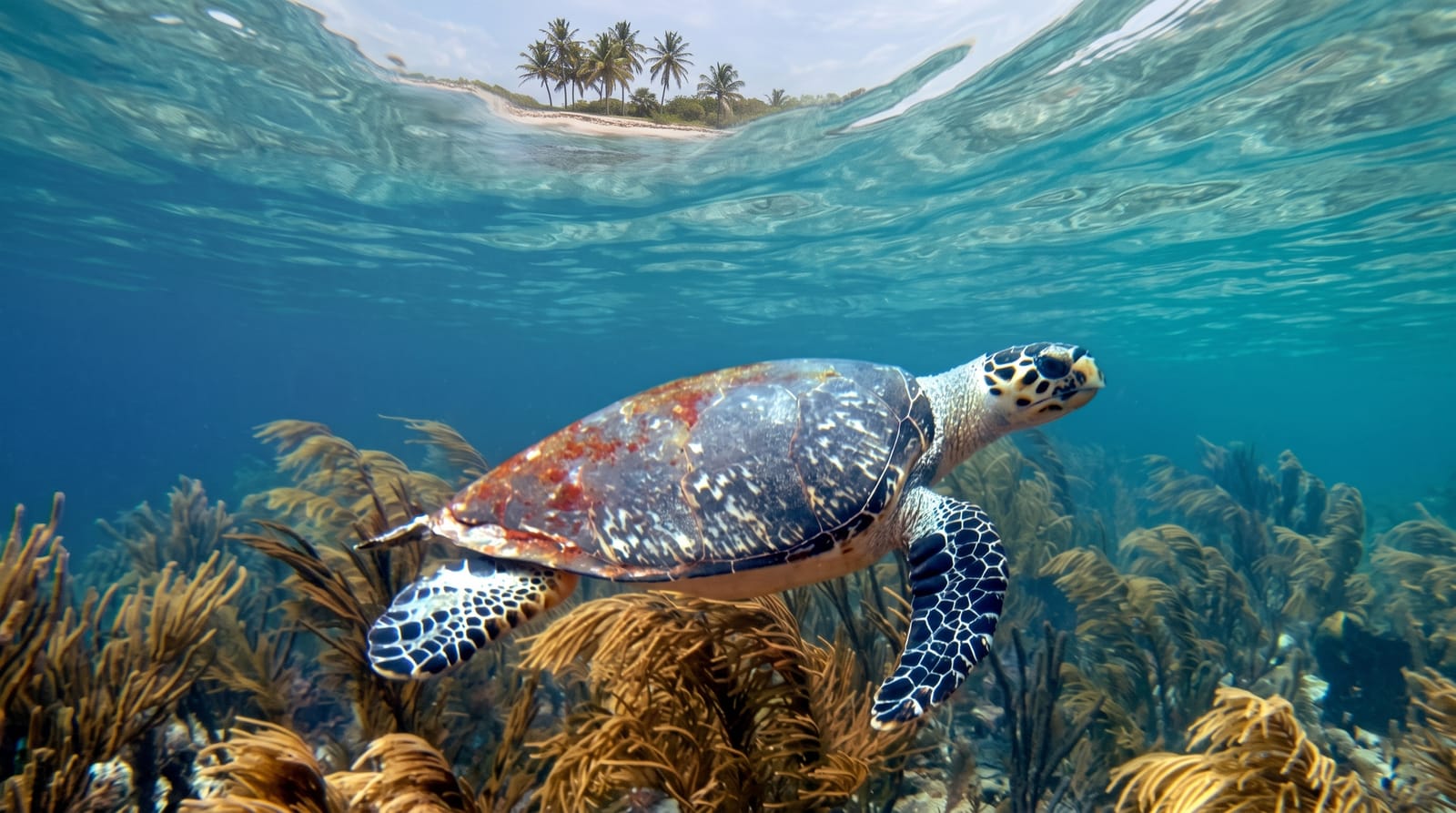
AI illustration
Barbados holds one of the largest hawksbill nesting populations in the wider Caribbean, and it is a genuine conservation success: when the Barbados Sea Turtle Project started in 1987 the numbers were very low, and decades of nest monitoring, hatchling rescue and public engagement have brought them back substantially. Females nest on beaches around the island from around May to October, and green turtles nest less commonly. Hatchlings emerge about two months later and are frequently disoriented by hotel and street lighting, which is why the project runs a twenty-four-hour hotline that anyone finding a nest or a stranded hatchling can call.
The landscape
- Nesting females - hauling out on beaches from May to October.
- Hatchlings - emerging from around July, often at night.
- Feeding turtles - in the shallows off the west coast year-round.
- The sea turtle project - the monitoring effort behind the recovery.
When to go
Nesting runs roughly May to October with hatchlings from July onward. Turtles feed in the west coast shallows year-round and are seen while snorkelling. The project's hotline handles reports at any hour.
Practical notes
Do not use lights or flash near nesting turtles or hatchlings; artificial light is the main cause of hatchling deaths here and hotels along the coast are a documented problem. Touching, riding or chasing turtles is illegal. Boat trips that feed turtles to guarantee sightings alter behaviour and concentrate animals unnaturally; choose operators that do not.
Nearby
West coast beaches for feeding turtles; nesting happens island-wide.
What to pack for The Hawksbill Turtles
Chosen from what this place is for. Tap a kit for the full checklist.
- Broken-in walking shoes or boots - Grip and ankle support matter more than looks; never hike in brand-new boots. Find on Amazon
- Reef-safe sunscreen - High SPF that will not bleach the coral you are swimming over. Find on Amazon
- Your own mask + snorkel - A well-fitting mask is the single biggest comfort upgrade underwater. Find on Amazon
- Binoculars - The single best wildlife tool - even a compact pair transforms a sighting. Find on Amazon
Some links on this page are Amazon affiliate links - if you buy through them we may earn a small commission at no extra cost to you.
All packing kitsPlan your trip
Where to start if The Hawksbill Turtles is going on the list.
Booking links on this page are affiliate links - if you book through them we may earn a small commission at no extra cost to you. It never changes what we write about a place.
Opening times, ticket prices and seasonal closures change - check the official source before you go: official site.