Heiligenblut
A village under the Grossglockner whose Gothic spire lines up with the mountain, at the end of the high road.
Updated 18 October 2026
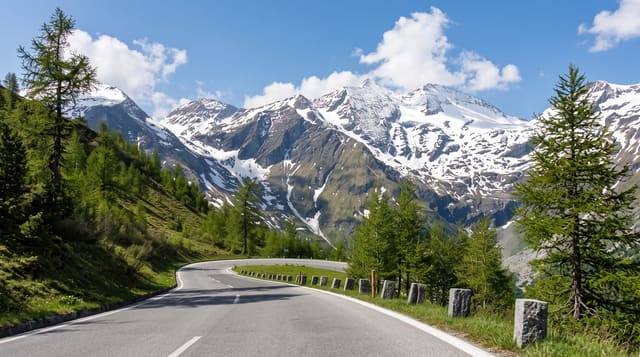
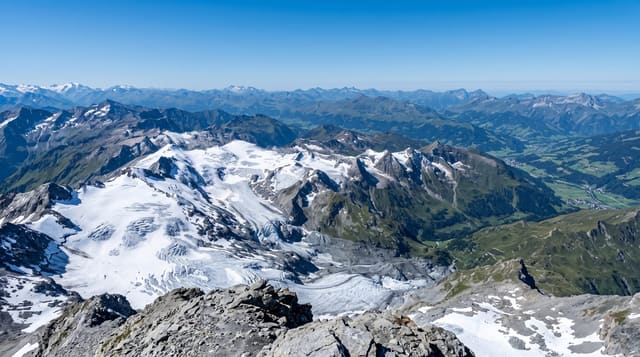
Heiligenblut sits at about thirteen hundred metres at the Carinthian end of the Grossglockner high alpine road, and the reason it appears on every poster of the Alps is an alignment: the late Gothic spire of St Vincent's church stands in the foreground with the Grossglockner, Austria's highest mountain, directly behind it, and the two read as one composition from the road below. The name means holy blood, from a relic said to have been brought by a Danish nobleman, Briccius, who died in an avalanche here; the church was built from the fifteenth century to house it and has a carved winged altar of 1520. The village is a base for climbing the Grossglockner and for the Pasterze glacier, reached from the Franz-Josefs-Höhe up the road.
History
A chapel here holding a relic of the Blood of Christ is first recorded in 1271, and legend says that a Danish knight, Briccius, brought the flask from the Hagia Sophia in 914 and, buried by an avalanche on his way home, hid it in a wound in his calf, his body later found where three ears of wheat broke through the snow, as the village arms still show. The pilgrimage church of St. Vincent was built between 1460 and 1491, with a winged altar of 1520 and a crypt with Briccius' tomb, in a valley of alpine farming and gold mining on the old bridle path over the Hochtor; Archduke John had the first mountain hut built below the pass in 1834, a carriage road followed from 1875, and the Grossglockner Road of 1935 made the village a resort (Wikipedia, Heiligenblut am Großglockner).
Highlights
- Spire and mountain aligned - the Gothic tower with the Grossglockner behind it.
- A 1520 winged altar - the carved altarpiece in the pilgrimage church.
- The holy blood relic - the reason the church was built here at all.
- The high alpine road - the toll route north over the pass to Salzburg.
When to go
June to September; the high road closes for winter. A day.
Practical notes
The Grossglockner road is tolled and shut by snow much of the year. Cloud hides the mountain often, which ruins the alignment. The village is small and busy in season.
Nearby
The Franz-Josefs-Höhe and Pasterze glacier are up the road; Lienz is south.
Key facts
Source: Wikidata, item Q875812, read on 18 October 2026.
What to pack for Heiligenblut
Chosen from what this place is for. Tap a kit for the full checklist.
- Warm base layers - Merino or synthetic against the skin - never cotton, which chills when damp. Find on Amazon
- Comfortable walking shoes - Sightseeing means kilometres of pavement and cobbles daily. Find on Amazon
- Modest clothing - Shoulders and knees covered - the single most common requirement. Find on Amazon
- Shelter suited to the place - Tent, tarp or hut booking - match it to the terrain and rules. Find on Amazon
Some links on this page are Amazon affiliate links - if you buy through them we may earn a small commission at no extra cost to you.
All packing kitsPlan your trip
Where to start if Heiligenblut is going on the list.
Booking links on this page are affiliate links - if you book through them we may earn a small commission at no extra cost to you. It never changes what we write about a place.
Opening times, ticket prices and seasonal closures change - check the official source before you go: official site.