Cayastá
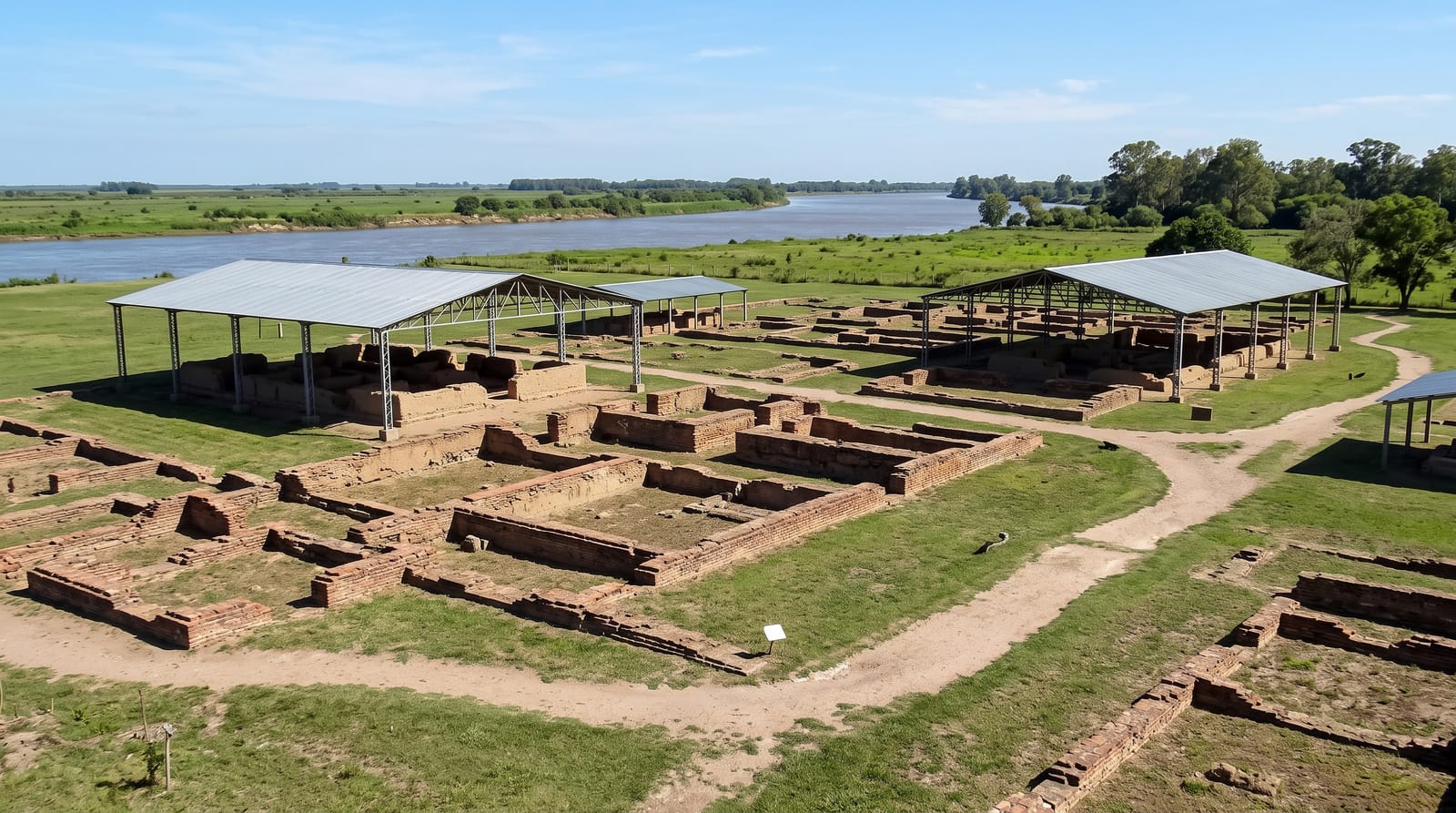
The excavated remains of the first Santa Fe, a sixteenth-century Spanish town abandoned to the river and rediscovered under the soil.
Updated 4 September 2026
AI illustration
Santa Fe la Vieja was founded in 1573 on the bank of the San Javier river, and after some seventy years its inhabitants gave up on a site that flooded and eroded relentlessly, dismantled what they could and moved the whole town south to the present Santa Fe. What they left was buried, and twentieth-century excavation uncovered the street grid, the foundations of houses, the plaza, and three churches, along with burials beneath the church floors that included both Spanish settlers and indigenous converts. The site is laid out for visiting with walkways and covers over the most fragile areas, and a museum holds ceramics, tools and personal objects. The river has since eaten part of the town, and the eroding bank is visible at the site's edge.
Highlights
- The excavated street grid - foundations of houses and the colonial plaza.
- The church floors - burial sites of settlers and indigenous converts.
- The site museum - ceramics, tools and objects from the excavation.
- The eroding riverbank - the water that forced the town's abandonment.
When to go
April to November for comfortable weather; summer is hot, humid and heavy with mosquitoes from the river. The site is largely open air with limited shade. Weekdays are quiet.
Good to know
What survives is foundations and outlines rather than standing buildings, and interpretation is in Spanish. The visit is short. Access is by a slow provincial road, and the surrounding area has few services.
Nearby
Santa Fe city lies south; the RP1 continues north along the river through wetland country.
What to pack for Cayastá
Chosen from what this place is for. Tap a kit for the full checklist.
- Strong insect repellent - DEET or picaridin; the jungle is where bites and disease risk are highest. Find on Amazon
- Comfortable walking shoes - Sightseeing means kilometres of pavement and cobbles daily. Find on Amazon
- Long, light, quick-dry clothing - Covers skin from insects and sun without cooking you in the humidity. Find on Amazon
- A slim anti-theft daypack - Zips that close properly; keep it in front in crowds and on transit. Find on Amazon
Some links on this page are Amazon affiliate links - if you buy through them we may earn a small commission at no extra cost to you.
All packing kitsPlan your trip
Where to start if Cayastá is going on the list.
Booking links on this page are affiliate links - if you book through them we may earn a small commission at no extra cost to you. It never changes what we write about a place.
Opening times, ticket prices and seasonal closures change - check the official source before you go: official site.