Atapuerca
Cave sites in Burgos holding the oldest human fossils in western Europe, with a museum of human evolution in the city.
Updated 30 September 2026

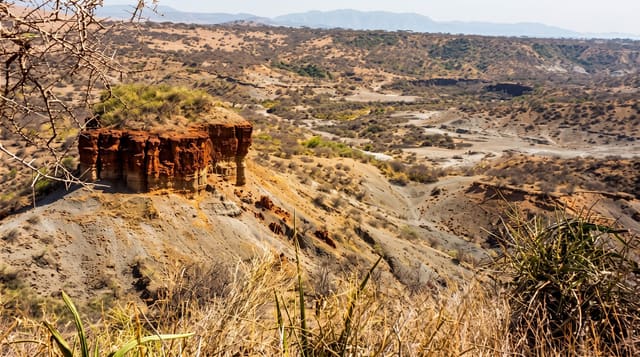
AI illustration
UNESCO World Heritage
A nineteenth-century railway cutting through the Atapuerca hills exposed a series of cave fills, and excavation since 1978 has made them the most important early human sites in Europe. The Sima del Elefante has produced the oldest human fossils in western Europe, a partial face between 1.1 and 1.4 million years old; the Gran Dolina produced remains dated to around 800,000 years ago, assigned to Homo antecessor; the Sima de los Huesos, at the bottom of a thirteen-metre shaft, has yielded the bones of at least twenty-eight individuals from around 430,000 years ago, an accumulation whose cause is debated and which represents the largest such assemblage anywhere. UNESCO listed the sites in 2000. The Museum of Human Evolution in Burgos holds the finds and interprets them.
What you'll find
- The Gran Dolina - the trench section holding 800,000-year-old remains.
- The railway cutting - the nineteenth-century trench that exposed the caves.
- The Museum of Human Evolution - the finds and interpretation, in Burgos.
- The guided excavation route - a visit through the working archaeological sites.
When to go
April to June and September to November; site visits are guided only, must be booked, and are affected by the summer excavation season when parts close. The Burgos museum is open year-round.
Before you go
The sites themselves are excavation trenches with nothing on display; the fossils are in the Burgos museum, twenty kilometres away. Visits are guided in Spanish with limited English. Booking is essential and slots fill.
Nearby
Burgos and its cathedral are fifteen kilometres west; the Camino Frances passes through Atapuerca village.
Key facts
Source: Wikidata, item Q923894, read on 18 October 2026.
What to pack for Atapuerca
Chosen from what this place is for. Tap a kit for the full checklist.
- Head torch + spare batteries - Hands-free light is essential; caves are truly dark. Find on Amazon
- Comfortable walking shoes - Sightseeing means kilometres of pavement and cobbles daily. Find on Amazon
- Modest clothing - Shoulders and knees covered - the single most common requirement. Find on Amazon
- Grippy closed shoes - Cave floors are wet, muddy and slick with formations. Find on Amazon
Some links on this page are Amazon affiliate links - if you buy through them we may earn a small commission at no extra cost to you.
All packing kitsPlan your trip
Where to start if Atapuerca is going on the list.
Booking links on this page are affiliate links - if you book through them we may earn a small commission at no extra cost to you. It never changes what we write about a place.
Opening times, ticket prices and seasonal closures change - check the official source before you go: official site.