Burgos Cathedral
A Gothic cathedral of openwork spires and star vaults, built over centuries and packed with chapels, carving and one comic clock.
Updated 18 October 2026

AI illustration
UNESCO World Heritage
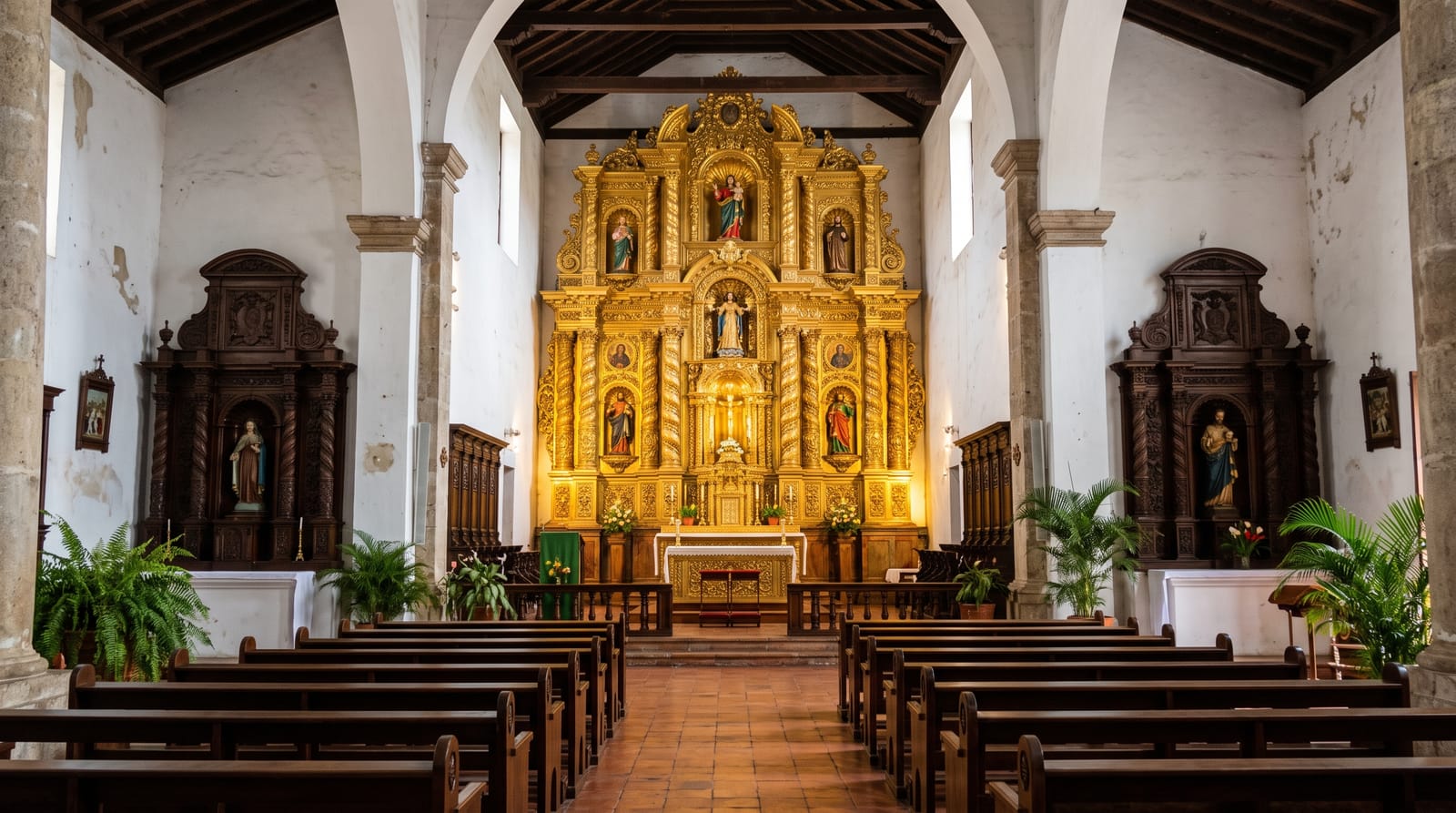
Begun in 1221 on a French Gothic plan, Burgos Cathedral kept growing for three hundred years, and the additions are the interesting part. The openwork spires, pierced stone lace against the sky, went up in the fifteenth century, as did the Constable's Chapel with its eight-pointed star vault glazed at the centre. Diego de Siloe's Golden Staircase drops in two curving flights against a wall that has no door at street level any more. High in the nave, a jointed figure called the Papamoscas opens its mouth as the hour strikes, which draws a small crowd every sixty minutes. The tomb of El Cid and his wife lies under the crossing.
History
Alfonso VI made Burgos a bishopric in 1075, continuing the old see of Oca, and gave the grounds of his father's palace for a cathedral, probably Romanesque, finished in 1096; the growing city soon outgrew it. King Ferdinand III and Bishop Maurice laid the first stone of the Gothic cathedral on 20 June 1221, after the bishop's journey to France and Germany to arrange the king's marriage to Elisabeth of Swabia, held in the old cathedral; its first master was probably an anonymous French architect, and from 1240 Master Enrique, who also built León Cathedral, led the works. The Romanesque church was taken down as work went on in the 1240s and 1250s, and after a pause of almost 200 years the 15th and 16th centuries brought the openwork spires, the Constable's Chapel and the crossing dome in flamboyant Gothic, with the last major works, the sacristy and the Chapel of Saint Thecla, in the 18th century (Wikipedia, Burgos Cathedral).
What you'll find
- The openwork spires - fifteenth century stone tracery pierced right through.
- The Constable's Chapel - a glazed eight-pointed star vault over the east end.
- The Golden Staircase - Siloe's double flight of steps against a blind wall.
- The Papamoscas - a jointed clock figure that opens its mouth on the hour.
When to go
Spring and autumn suit Burgos best; the city is high, windy and cold well into April. Mornings are quietest, though the hourly clock figure gathers a knot of people whenever you go. Services close parts of the interior on Sunday mornings, and the last admission runs well before the doors actually shut.
Things to know
The interior is a maze of gated side chapels, and without the audio guide much of it blurs into carved stone. The ticket is not cheap by Spanish cathedral standards. Scaffolding on some part of the exterior is close to permanent given the conservation load, and Burgos itself is a cold, sober city that few people stay in for long.
Nearby
The Cartuja de Miraflores, the monastery of Las Huelgas and the Ribera del Duero vineyards south of the city.
Key facts
Source: Wikidata, item Q744420, read on 18 October 2026.
What to pack for Burgos Cathedral
Chosen from what this place is for. Tap a kit for the full checklist.
- Comfortable walking shoes - Sightseeing means kilometres of pavement and cobbles daily. Find on Amazon
- Modest clothing - Shoulders and knees covered - the single most common requirement. Find on Amazon
- A slim anti-theft daypack - Zips that close properly; keep it in front in crowds and on transit. Find on Amazon
- A scarf or shawl - To cover the head or shoulders on entry; women especially at mosques. Find on Amazon
Some links on this page are Amazon affiliate links - if you buy through them we may earn a small commission at no extra cost to you.
All packing kitsPlan your trip
Where to start if Burgos Cathedral is going on the list.
Booking links on this page are affiliate links - if you book through them we may earn a small commission at no extra cost to you. It never changes what we write about a place.
Opening times, ticket prices and seasonal closures change - check the official source before you go: official site.