Old Nisa
The Parthians' royal stronghold - a clay fortress platform at the Kopet Dag's feet whose halls yielded ivory rhytons and an empire's beginnings.
Updated 7 August 2026

AI illustration
UNESCO World Heritage
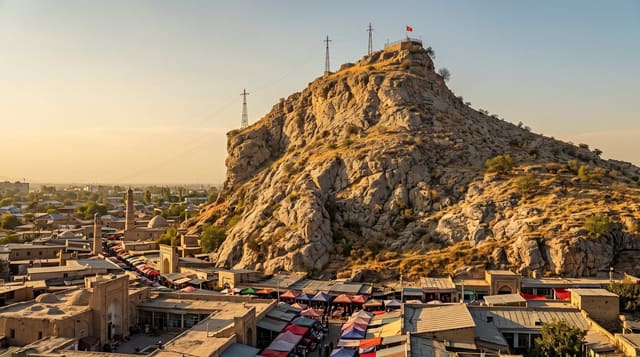
Before Rome learned to fear Parthian cavalry, the dynasty's kings built their stronghold at Nisa - a five-sided fortress platform raised in clay at the foot of the Kopet Dag range in the third century BC, holding audience halls, treasuries and temples whose excavation produced the famous ivory rhytons, wine-horns carved with Greek myths for Parthian lords, now the pride of Ashgabat's museums. UNESCO inscribed the fortresses in 2007. What the visitor walks today is architecture returned to earth: massive walls and column bases in weathered adobe, legible with a guide's help, with the mountains behind and the capital's marble glinting on the plain.
The main sights
- The fortress platform - the five-sided citadel's clay ramparts.
- The audience halls - column bases of the Parthian ceremonial core.
- The Kopet Dag backdrop - the range walling the site to the south.
- The rhytons' story - the ivory treasures, seen afterwards in Ashgabat's museum.
When to go
Spring and autumn for walkable temperatures - the clay bowl bakes in summer. Late afternoon light turns the adobe gold and throws the wall lines into relief.
What to expect
Nisa asks imagination: unrestored clay architecture reads as sculpted mounds, and without a guide (or the museum visit first) the significance stays buried. The site is compact - two hours suffices. Independent travel in Turkmenistan runs on arranged tours and permits; Nisa is an easy add to any Ashgabat programme.
Nearby
Ashgabat's museums and marble quarters, and the Kopet Dag foothill villages.
What to pack for Old Nisa
Chosen from what this place is for. Tap a kit for the full checklist.
- Comfortable walking shoes - Sightseeing means kilometres of pavement and cobbles daily. Find on Amazon
- Modest clothing - Shoulders and knees covered - the single most common requirement. Find on Amazon
- A slim anti-theft daypack - Zips that close properly; keep it in front in crowds and on transit. Find on Amazon
- A scarf or shawl - To cover the head or shoulders on entry; women especially at mosques. Find on Amazon
Some links on this page are Amazon affiliate links - if you buy through them we may earn a small commission at no extra cost to you.
All packing kitsPlan your trip
Where to start if Old Nisa is going on the list.
Booking links on this page are affiliate links - if you book through them we may earn a small commission at no extra cost to you. It never changes what we write about a place.
Opening times, ticket prices and seasonal closures change - check the official source before you go: official site.