Sukur Cultural Landscape
Nigeria's first World Heritage site - a hilltop chiefdom of stone-paved ways, terraced fields and iron-smelting heritage in the Mandara Mountains.
Updated 18 October 2026
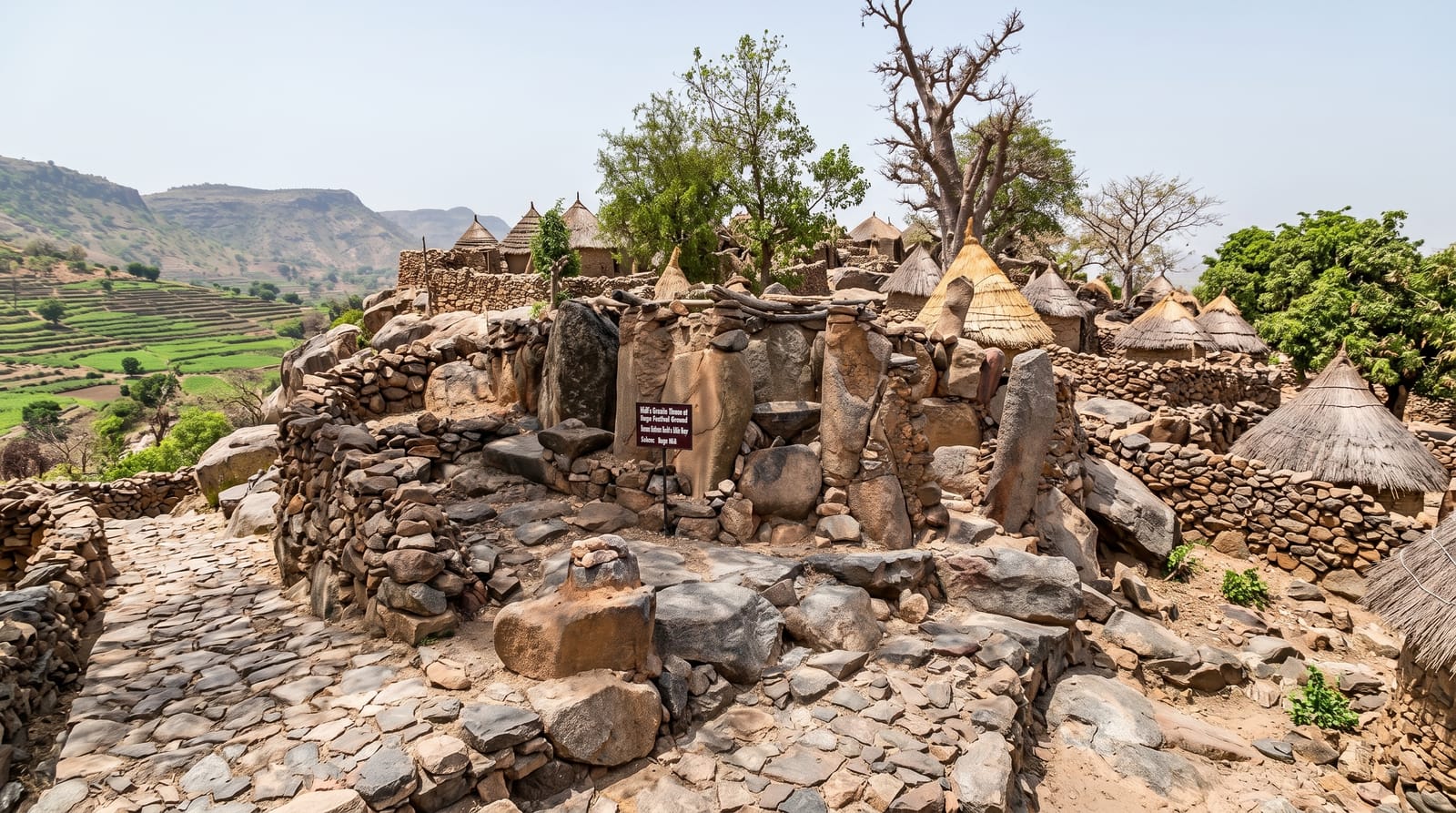
AI illustration
UNESCO World Heritage
On a plateau in the Mandara Mountains, Sukur preserves a complete highland chiefdom in stone: the Hidi's palace compound above, villages of dry-stone walls and sunken paved walkways below, terraced fields stitching the slopes, and the furnaces of an iron-smelting economy that made Sukur a regional power for centuries. UNESCO made it Nigeria's first World Heritage inscription in 1999, honouring a cultural landscape whose institutions - the chieftaincy, the ritual calendar, the terrace farming - continue in living form. The ascent is on foot up the old paved ways, with the community's guides leading and the plateau's views across the mountains as escort.
History
Iron Age furnaces, ore and grindstones at the site predate the Sukur people, and there are Neolithic finds too; the recent history begins with the Dur dynasty of the 17th century, which made Sukur a main supplier of iron raw material to northeastern Nigeria until the first decade of the 20th century. From 1912 to 1922 the raids of Hamman Yaji, the Fulani chief of Madagali, ravaged Sukur, iron smelting declined until 1960 and many people moved to the plains, while British rule from 1927 changed little of its way of life; the researchers Nic David and Judy Sterner brought the little-known site to wider notice. In 1999 Sukur, with the Hidi's palace, its villages and its intact terraced fields, became Africa's first cultural landscape on the World Heritage List; the name means vengeance in Margi and Libi (Wikipedia, Sukur).
What to look for
- The paved ways - the stone-slabbed ascent routes to the plateau.
- The Hidi's palace - the chief's dry-stone compound above the villages.
- The terraced fields - the living agricultural landscape.
- The smelting heritage - furnace sites of the old iron economy.
When to go
November to February, the dry harmattan months, give the coolest climbing and clearest mountain light. The walk up asks a fit half day; festivals on the traditional calendar transform the plateau when they fall.
Good to know
Sukur is remote and reached on foot - this is community-hosted cultural travel, not drop-in sightseeing; arrangements go through local contacts and conditions in the wider region should be checked when planning. Facilities are village-level. The reward is a UNESCO landscape visitors often have entirely, and hosts whose welcome is the visit's heart.
Nearby
The Mandara range villages and Yola's Benue river country to the south.
What to pack for Sukur Cultural Landscape
Chosen from what this place is for. Tap a kit for the full checklist.
- Comfortable walking shoes - Sightseeing means kilometres of pavement and cobbles daily. Find on Amazon
- A slim anti-theft daypack - Zips that close properly; keep it in front in crowds and on transit. Find on Amazon
- A refillable water bottle - Many cities have public fountains; save money and plastic. Find on Amazon
- A light layer + compact umbrella - For museum air-con and a sudden shower. Find on Amazon
Some links on this page are Amazon affiliate links - if you buy through them we may earn a small commission at no extra cost to you.
All packing kitsPlan your trip
Where to start if Sukur Cultural Landscape is going on the list.
Booking links on this page are affiliate links - if you book through them we may earn a small commission at no extra cost to you. It never changes what we write about a place.
Opening times, ticket prices and seasonal closures change - check the official source before you go: official site.