Caminito
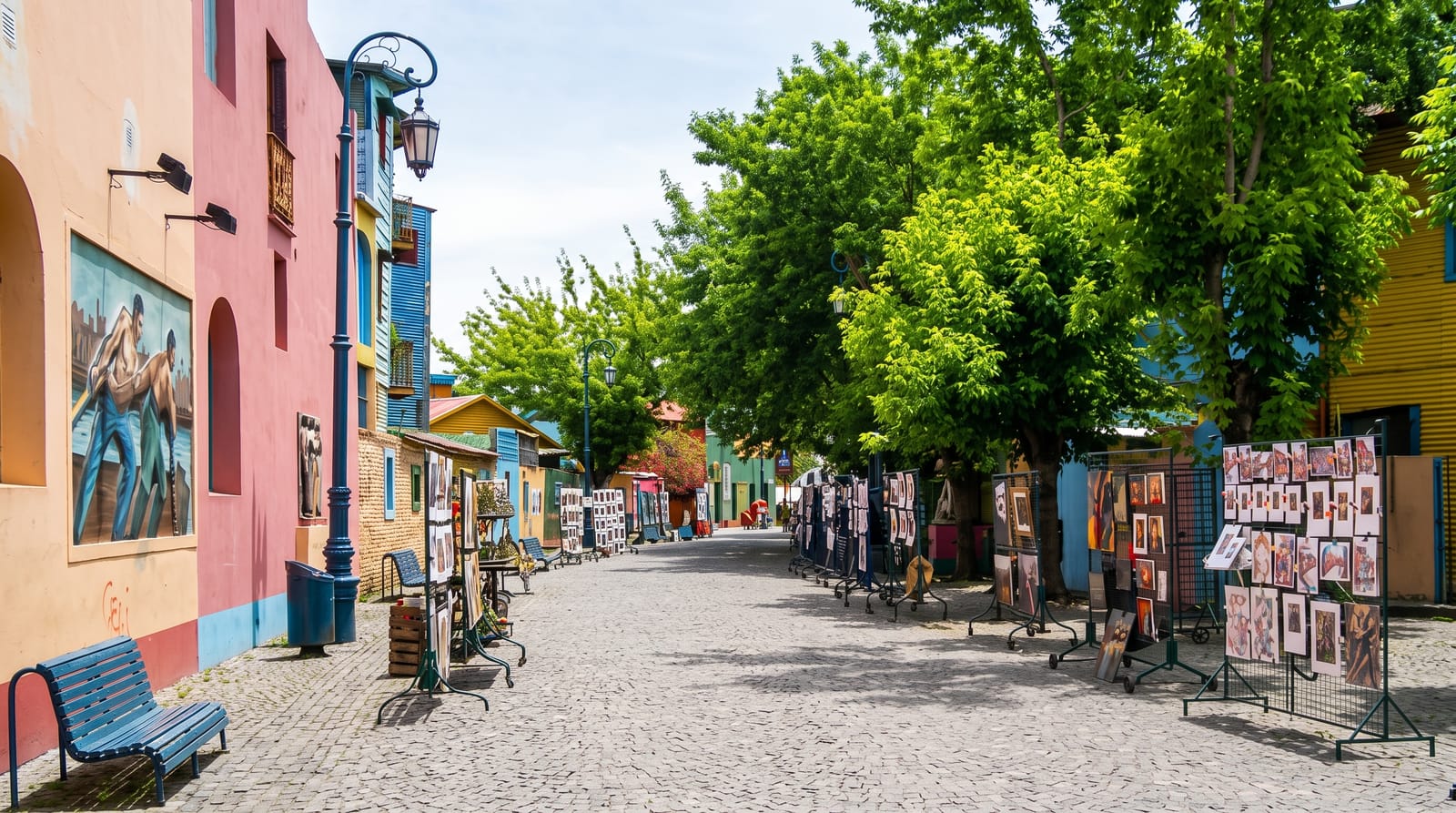
A short pedestrian street of brightly painted corrugated iron houses in La Boca, the postcard image of old immigrant Buenos Aires.
Updated 18 October 2026
AI illustration
Caminito is a curving pedestrian street of a hundred and fifty metres in La Boca, the old port district settled by Genoese immigrants who built houses of corrugated iron and painted them with leftover ship's paint, which is why the block is a patchwork of blue, yellow, red and green. Abandoned when the rail line closed, it was reclaimed in the 1950s by the painter Benito Quinquela Martín, who turned it into an open-air museum of murals, sculpture and colour and gave it the name of a tango. Today it is intensely touristic: tango dancers pose for tips, restaurants have touts, and stalls sell souvenirs, but the colours, the tenement architecture and the nearby Quinquela Martín museum still repay a visit.
History
In the 1800s a small stream running into the Riachuelo followed the line of today's street, crossed by a little bridge that gave the spot the Genoese name Puntin, and when the stream dried up the tracks of the Buenos Aires and Ensenada Port railway were laid along it; disused rails still lie at the end of the street, on Garibaldi. The railway closed in 1954 and the strip became a rubbish dump, until over the following three years the artist Benito Quinquela Martín, who lived nearby, prepared the walls facing it and painted them in pastel colours, putting up a stage at the southern end by 1960, replaced by a nearby theatre in 1972; the name comes from the 1926 tango by his friend Juan de Dios Filiberto (Wikipedia, Caminito).
What to look for
- The painted houses - corrugated iron tenements in patchwork colour.
- The street art - murals, reliefs and sculptures along the walk.
- The tango dancers - performers working the street for tips and photos.
- The Quinquela Martín museum - the painter's collection nearby.
When to go
Year-round in daylight hours, ideally mid-morning before the biggest crowds. The area is best avoided after dark and away from the tourist blocks, which is standard local advice rather than alarmism.
Good to know
Caminito is small, crowded and heavily commercial, and prices in the surrounding restaurants are inflated. Photographs with dancers are expected to be paid for. The wider La Boca neighbourhood requires the usual city-centre caution.
Nearby
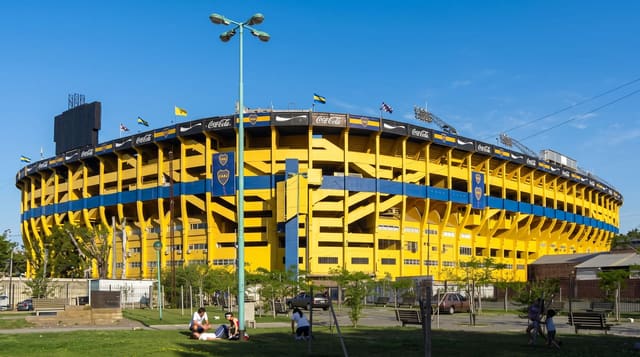
La Bombonera stadium is a few blocks away; San Telmo lies north.
Key facts
Source: Wikidata, item Q1029566, read on 18 October 2026.
What to pack for Caminito
Chosen from what this place is for. Tap a kit for the full checklist.
- Comfortable walking shoes - Sightseeing means kilometres of pavement and cobbles daily. Find on Amazon
- A slim anti-theft daypack - Zips that close properly; keep it in front in crowds and on transit. Find on Amazon
- A refillable water bottle - Many cities have public fountains; save money and plastic. Find on Amazon
- A light layer + compact umbrella - For museum air-con and a sudden shower. Find on Amazon
Some links on this page are Amazon affiliate links - if you buy through them we may earn a small commission at no extra cost to you.
All packing kitsPlan your trip
Where to start if Caminito is going on the list.
Booking links on this page are affiliate links - if you book through them we may earn a small commission at no extra cost to you. It never changes what we write about a place.
Opening times, ticket prices and seasonal closures change - check the official source before you go: official site.