Bulawayo
Zimbabwe's second city, laid out on very wide streets with a strong colonial-era built fabric.
Updated 16 October 2026
Bulawayo was laid out in the 1890s on streets wide enough, the story goes, to turn a full span of oxen, and that width still gives the centre an unusual openness. It kept more of its early twentieth-century building than Harare: verandaed shopfronts, the railway station and the Bulawayo Club among them. The city was the seat of the Ndebele state before that, and it remains the country's second city and its railway centre.
Background
The settlement began around 1840, when a group led by Gundwane Ndiweni founded it as the kraal of the Ndebele king Mzilikazi, under the name Gibixhegu. Lobengula, his son, took over in the 1860s and renamed it koBulawayo. It became a municipality in 1897 and a city in 1943. The city covers 546 square kilometres along the Matsheumhlope River at an elevation of 1358 m, with 156 suburbs around a central business district of 5.4 km2. It has long been the main industrial centre of Zimbabwe, making cars, building materials, textiles, furniture and food, and the National Railways of Zimbabwe have their headquarters here. The 2022 census counted 665,940 residents.
Source: Wikipedia, "Bulawayo"
Highlights
- The wide streets - the centre laid out on an unusual scale in the 1890s.
- The colonial-era buildings - verandaed shopfronts and public buildings in the centre.
- The Railway Museum - locomotives and carriages from the Rhodesian railways.
- The Natural History Museum - the country's main natural history collection.
When to go
April to October is the dry season and most comfortable. October before the rains is very hot. Museums close on some days.
What to expect
The economy has been difficult for a long time and parts of the centre are run down. Water supply in the city has been intermittent for years. Facilities vary a great deal.
Nearby
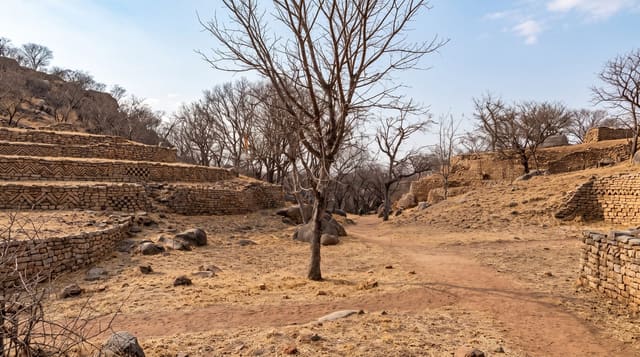
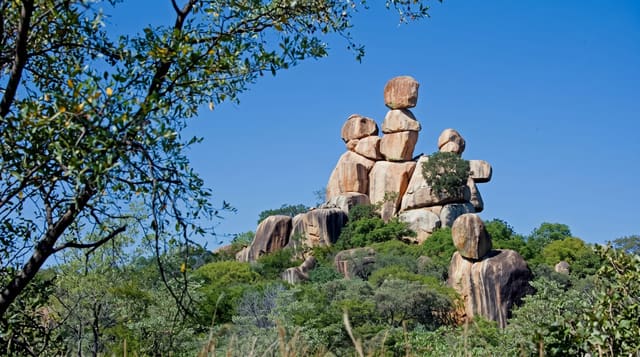
Matobo Hills are south, and Khami Ruins are west.
Key facts
Source: Wikidata, item Q193250, read on 18 October 2026.
What to pack for Bulawayo
Chosen from what this place is for. Tap a kit for the full checklist.
- Comfortable walking shoes - Sightseeing means kilometres of pavement and cobbles daily. Find on Amazon
- A slim anti-theft daypack - Zips that close properly; keep it in front in crowds and on transit. Find on Amazon
- A refillable water bottle - Many cities have public fountains; save money and plastic. Find on Amazon
- A light layer + compact umbrella - For museum air-con and a sudden shower. Find on Amazon
Some links on this page are Amazon affiliate links - if you buy through them we may earn a small commission at no extra cost to you.
All packing kitsPlan your trip
Where to start if Bulawayo is going on the list.
Booking links on this page are affiliate links - if you book through them we may earn a small commission at no extra cost to you. It never changes what we write about a place.
Opening times, ticket prices and seasonal closures change - check the official source before you go: official site.